
- We’re on your favourite socials!


Today, students are not limited to looking at courses or facilities when selecting a university, although both are important. Increasingly, students (
- Sandip University Overview
- Sandip University Accreditation and Recognition
- Why Accreditation Matters
- Sandip University Ranking
- Factors That Influence University Rankings
- Infrastructure and Campus Facilities
- Courses Approved by Regulatory Bodies
- Placement Opportunities and Industry Exposure
- Why Many Students Choose Sandip University
- Future Growth and Reputation
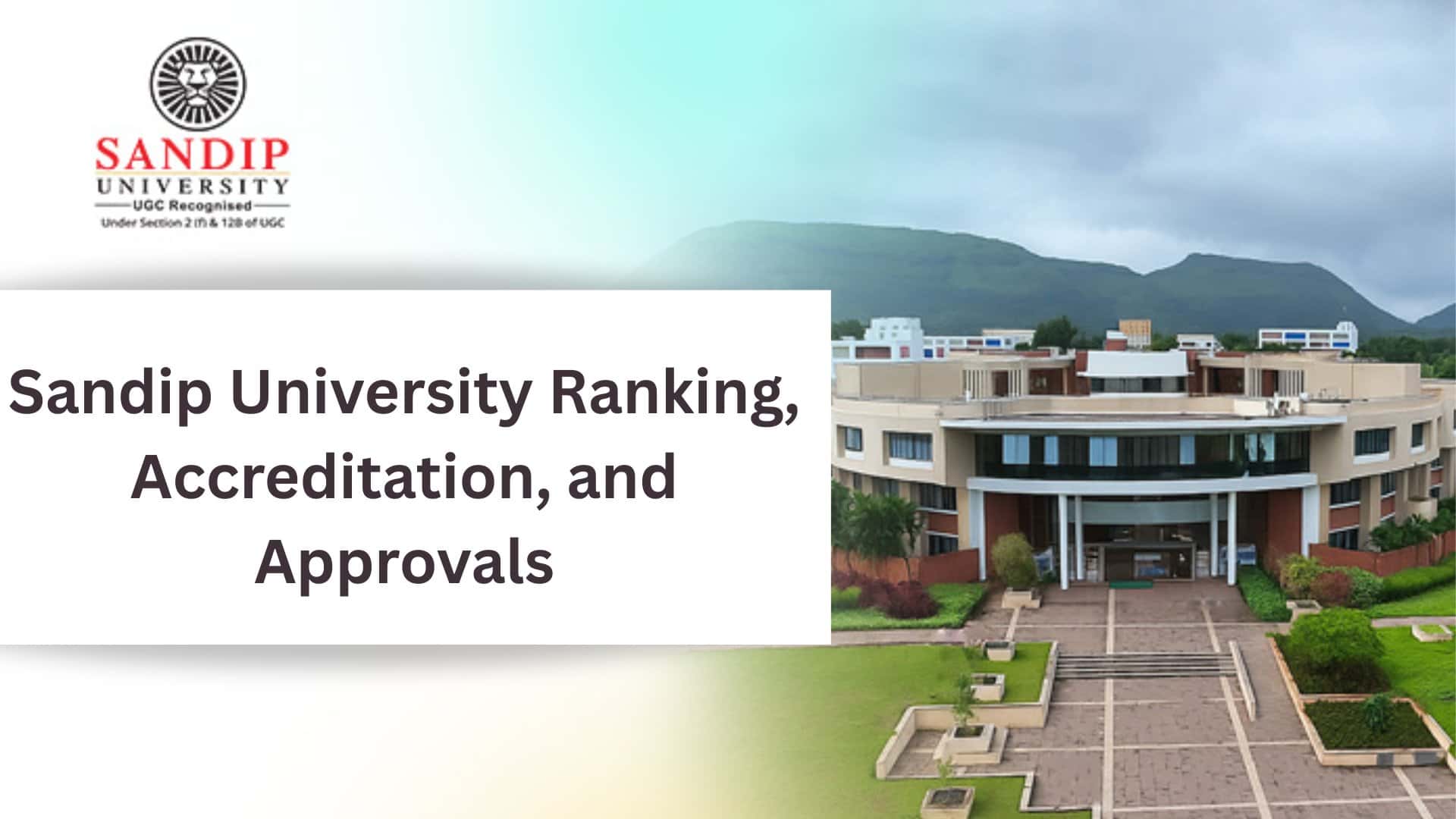
Today, students are not limited to looking at courses or facilities when selecting a university, although both are important. Increasingly, students (and their parents) will consider several other factors before selecting where to attend university. These factors include the ranking of the university, recognition, accreditation, and official approval from regulatory authorities. All of these factors affect the recognition of any degree from that university for governmental employment, further education, and professional employment.
Sandip University is now recognized as one of the leading private universities in India because of its modern facilities, its degree programs, and its recognition from various national regulatory bodies. However, there will still be students seeking clarification as to the university’s registration by government bodies; the university's accreditation from regulatory boards/councils; and the ranking of the university.
This article will provide information regarding the ranking, accreditation, and recognition of Sandip University so that students may assess the legitimacy and validity of the institution prior to applying.
Sandip University Overview
Sandip University operates as a standalone post-secondary educational institution which provides educational programs across various disciplines which encompass engineering, management, pharmacy, agriculture, law, design and science. The institution prepares its students through both theoretical and practical application of the coursework to create the skills necessary to fulfill the needs of the industries they would like to enter.
Sandip University has received accreditation and recognition from many different bodies throughout the country, ensuring that any degree awarded from Sandip will be accepted for employment and for continuing education or professional development after graduation.
Key Facts About Sandip University
Feature | Details |
| University Type | Private University |
| Established | 2017 |
| Location | Nashik, Maharashtra |
| Campus Area | 250+ Acres |
| Programs Offered | Engineering, Management, Law, Pharmacy, Agriculture, Design, Science |
| Mode of Education | Full-time Regular Programs |
| Recognized By | UGC and professional regulatory councils |
The university has invested heavily in infrastructure and modern facilities to provide a practical learning environment.
Sandip University Accreditation and Recognition
Accreditation serves as the primary measure that evaluates institutional quality and validity. Accreditation verifies that the university maintains compliance with national educational standards which govern curriculum development and faculty standards and campus facilities and student support services. The university functions under multiple essential regulatory authorizations which it has obtained from major Indian regulatory organizations.
Major Accreditation and Recognition
Authority | Purpose | Importance for Students |
| University Grants Commission | Recognizes universities in India | Ensures degrees are valid nationwide |
| All India Council for Technical Education | Regulates technical education | Required for engineering and management programs |
| Bar Council of India | Approves law programs | Necessary for practicing law |
| Pharmacy Council of India | Regulates pharmacy education | Required for pharmacist licensing |
| Council of Architecture | Governs architecture courses | Required for professional architecture practice |
Note: These approvals confirm that the programs offered by the university meet national academic and professional standards.
Why Accreditation Matters
Students sometimes overlook accreditation while focusing on infrastructure or placement claims. However, accreditation plays a crucial role in determining the long-term value of a degree.
Importance of Accreditation for Students
Benefit | Explanation |
| Degree Validity | Ensures the degree is recognized across India |
| Government Job Eligibility | Required for public sector recruitment |
| Professional Practice | Necessary for fields like law, pharmacy, and architecture |
| Higher Education | Accepted by universities for postgraduate programs |
| Employer Trust | Recognized institutions carry better credibility |
Note: Without accreditation from the relevant authorities, graduates may face difficulties in career progression or professional licensing.
Sandip University Ranking
The private university Sandip University which started operating after 2010 requires several years of establishment before it will achieve permanent presence in national ranking systems. The ranking system uses research output and academic reputation and faculty publications and graduate outcomes as its evaluation criteria.
The university has established itself as a top educational institution through its modern infrastructure and industry-focused curriculum and growing academic offerings even though it does not yet meet the ranking requirements of established national ranking systems.
Ranking Indicators
Ranking Factor | Status |
| National Rankings | Emerging Private University |
| Infrastructure | Highly rated |
| Academic Programs | Expanding across disciplines |
| Industry Collaboration | Growing focus |
| Placement Support | Developing network |
Note: New universities usually improve their ranking position over time as they build research output, alumni success, and academic reputation.
Factors That Influence University Rankings
University rankings are typically determined by a combination of academic and institutional factors.
Common Ranking Parameters
Parameter | Importance |
| Faculty Qualification | High |
| Research Publications | High |
| Student Placements | High |
| Industry Collaboration | Medium |
| Infrastructure | Medium |
| Student Satisfaction | Increasingly important |
Note: Sandip University emphasizes practical training and industry exposure, which can positively influence its academic reputation over time.
Infrastructure and Campus Facilities
One of the strong aspects often highlighted by students is Sandip University's modern Campus infrastructure. The institution has developed facilities that support both academic learning and extracurricular activities.
Major Campus Facilities
Facility | Description |
| Smart Classrooms | Technology-enabled learning environments |
| Advanced Laboratories | Practical training for engineering and science students |
| Central Library | Digital and printed academic resources |
| Hostels | Separate residential facilities for boys and girls |
| Sports Complex | Indoor and outdoor sports infrastructure |
| Innovation Labs | Platforms for research and student startups |
Note: These facilities help create an environment that supports hands-on learning and skill development.
Courses Approved by Regulatory Bodies
Many professional courses in India require approval from national regulatory councils. Sandip University offers several programs that operate under such approvals.
Popular Programs and Approvals
Course | Regulatory Approval |
| B.Tech | AICTE |
| MBA | AICTE |
| B.Pharm | PCI |
| BA LLB | BCI |
| B.Arch | COA |
| B.Sc Agriculture | UGC guidelines |
Note: These approvals ensure that students graduating from these programs are eligible for professional practice and industry employment.
Placement Opportunities and Industry Exposure
Sandip University placement opportunities are an important factor when evaluating a university. Sandip University has established a placement cell that helps students connect with recruiters and prepare for employment.
Placement Support Initiatives
- Dedicated training and placement department
- Internship opportunities with industry partners
- Skill development workshops
- Corporate guest lectures
- Resume building and interview training
These initiatives aim to improve the employability of students by providing exposure to real-world industry practices.
Major Career Sectors
Sector | Example Roles |
| Information Technology | Software Developer, Data Analyst |
| Engineering | Design Engineer, Production Engineer |
| Management | Business Analyst, Marketing Executive |
| Pharmacy | Pharmacist, Drug Safety Associate |
| Law | Legal Advisor, Advocate |
Why Many Students Choose Sandip University
Apart from recognition and approvals, several factors influence students when choosing Sandip University.
Key Reasons
- Large modern campus with advanced facilities
- Wide variety of professional programs
- Focus on practical learning
- Growing industry partnerships
- Skill development initiatives
Students often prefer universities that offer both academic knowledge and industry exposure, and Sandip University aims to combine these elements
Future Growth and Reputation
Private universities experience continuous growth which leads to their development throughout their existence. The national reputation of institutions which spend money on research and faculty development and industry partnerships will experience gradual growth. The academic programs and infrastructure and corporate partnerships of Sandip University have been growing since its establishment. The university will experience improved national ranking and academic assessment results through its growing academic programs and infrastructure development and corporate partnerships.
Factors that can influence future recognition include:
- Research publications and innovation
- International collaborations
- Placement statistics
- Alumni success stories
- Academic partnerships with industry
Sandip University is a recognized private university operating with approvals from several major regulatory bodies in India. The university's degree programs fulfill national academic standards because they have received recognition from University Grants Commission, AICTE, Bar Council of India, Pharmacy Council of India, and Council of Architecture.
The institution has become popular with students because it provides modern infrastructure together with professional courses and industry-oriented education programs, even though it remains a young institution that has not yet achieved national ranking status. The university gains credibility through its accreditation and approved status, while research development and faculty recruitment and placement growth will enhance its reputation in the future.
Students need to research university rankings and accreditation status and institutional approvals because this information helps them select schools that provide accredited degrees which lead to good job prospects.
FAQs
Yes, Sandip University is recognized by the University Grants Commission. This recognition ensures that the degrees offered by the university are valid across India for higher education and employment. Students graduating from a UGC-recognized university are also eligible to apply for government jobs and pursue postgraduate studies at other institutions.
Yes, engineering and technical programs at Sandip University follow the guidelines of the All India Council for Technical Education. AICTE approval ensures that the course curriculum, faculty qualifications, laboratories, and infrastructure meet national standards. This helps students gain industry-relevant knowledge and improves their employment opportunities.
Yes, law courses offered by the university are approved by the Bar Council of India. This approval is important because it allows law graduates to register with the Bar Council and practice as advocates in India. Without this approval, graduates would not be eligible to appear for professional legal practice.
Yes, pharmacy programs at Sandip University are approved by the Pharmacy Council of India. PCI approval ensures that the pharmacy curriculum meets professional healthcare standards. Graduates from PCI-approved colleges can register as licensed pharmacists and work in hospitals, pharmaceutical companies, and research organizations.
Sandip University is considered an emerging private university in India. Since it was established relatively recently, it may not yet appear prominently in all national ranking frameworks. However, the university is gradually gaining recognition due to its modern campus, industry-oriented programs, and expanding academic departments.

- Colleges in Nashik
- Sandip University
- Sandip University Ranking, Accreditation, and Approvals