

 Karnataka 2nd PUC Biology Answer Key 2026 LIVE: Unofficial Key by Subject Expert; Exam Analysis
KSEAB concluded the Karnataka 2nd PUC Biology Exam 2026 today, March 16, 2026, at 1 PM. The unofficial answer key has been provided in this blog.
You can check the answer key and estimate your marks in the exam.
As per the reviews and feedback collected by actual test takers, the overall difficulty level was reported to be
"Easy to Moderate."
One mark questions were reported to be quite easy, with most students attempting them correctly. The majority of students we talked to claimed that they will score 60+ out of 70, which indicates a great performance across test takers.
Karnataka 2nd PUC Biology Answer Key 2026 (Unofficial)
The unofficial answer key of Biology has been provided below:| Q. No. | Question | Correct Answer |
| 1 | In artificial hybridisation approach, if the female parent produces unisexual flowers, there is no need for | d) Emasculation |
| 2 | The cells that secrete androgens are | b) Leydig cells |
| 3 | Sexually transmitted infection that can be completely curable is | a) Gonorrhea |
| 4 | Identify the correct match. | a) XO - Male grasshopper |
| 5 | Statement I: A nitrogenous base is linked to the -OH of 1'C pentose sugar through N-glycosidic linkage to form a nucleoside. Statement II: Two nucleosides are linked through 3'-5' phosphodiester linkage to form a dinucleoside. | c) Statement I is correct, but statement II is incorrect |
| 6 | Correct sequence of evolution of animal groups according to geological time scale is | d) Fishes - Amphibians - Reptiles - Mammals |
| 7 | The molecules trapped in the lymph nodes responsible for the activation of lymphocytes present there and cause the immune response are | c) Antigens |
| 8 | The plants with hallucinogenic properties are | b) Datura and Atropa |
| 9 | Match List-I (Microbe) with List-II (Product/Function): A. Rhizobium, B. Clostridium, C. Aspergillus, D. Methanogens | c) A-3, B-4, C-1, D-2 |
| 10 | Which of the following is the correct representation of primer annealing step in PCR? | c) (Primers bind to the 3' end of the template strands) |
| 11 | Identify the incorrect statement regarding restriction enzyme nomenclature. | d) The Roman letter after the strain indicate the Roman origin... |
| 12 | The corn borers are controlled by the protein encoded by the gene | a) Cry I Ab |
| 13 | Herbivores in a broad ecological context not very different from | b) Predators |
| 14 | Dead plant remains such as leaves, bark and flowers constitute | c) Detritus |
| 15 | An estimate of about 7 million global species diversity was made by | b) Robert May |
| 16 | The initial few days of milk produced after parturition is _______ | Colostrum |
| 17 | Homo erectus had a brain size around _______ | 900 CC |
| 18 | Human immuno deficiency virus replicates in _______ | Macrophages |
| 19 | A small amount of curd added to the fresh milk as _______ | Inoculum |
| 20 | Based on currently available species inventories, 70% of species recorded are _______ | Animals |
Stay tuned to our live blog below for more real-time updates on Karnataka 2nd PUC Biology Exam 2026, including student reactions, unofficial answer key, paper analysis, etc.
Karnataka 2nd PUC Biology Exam 2026 LIVE
03 30 PM IST - 16 Mar'26
Karnataka 2nd PUC Biology Live Coverage Ends
That’s a wrap for our live coverage of the Karnataka 2nd PUC Biology Exam. We hope today’s updates helped students and parents stay informed throughout the exam day. Best wishes to all students for their results!
02 40 PM IST - 16 Mar'26
Biology Paper Analysis and Reviews by Students
Initial reports from students and subject experts across the state suggest that the paper was well-balanced, sticking closely to the NCERT-based curriculum and the official KSEAB blueprint.
- Part A: Most students reported that the 15 MCQs and 5 Fill-in-the-Blanks were direct and scoring.
- Part B & C Difficulty: Moderate. These sections required precise biological terminology.
- Part D Difficulty: Moderate. The diagram-based questions were a highlight. Common requests included the Human Reproductive System and the pBR322 vector
02 00 PM IST - 16 Mar'26
Unofficial Answer Key OUT!
The unofficial answer key for the 2nd PUC Biology exam has been made available in this blog. You can now use the answer key to compare your answers, estimate scores, and understand the correct approach for each question.
01 06 PM IST - 16 Mar'26
Unofficial Answer Key & Paper Analysis to be out shortly
The unofficial answer key and detailed paper analysis for the Karnataka 2nd PUC Biology exam will be released shortly. CollegeDekho Experts are currently reviewing the question paper to prepare accurate solutions.
01 00 PM IST - 16 Mar'26
Karnataka 2nd PUC Biology Exam Concludes
The exam has now concluded. Students are coming out of their exam centres after completing the paper. Stay tuned for student reactions, paper analysis, and the answer key shortly.
12 00 PM IST - 16 Mar'26
Final Hour of the Exam
The exam has entered its final hour. Students must now be completing the remaining questions and revising their answers.
11 00 AM IST - 16 Mar'26
One Hour of the Exam Completed
The exam has been underway for about an hour now. Students are likely finishing the first few sections of the paper.
10 00 AM IST - 16 Mar'26
Biology Exam Begins
Karnataka 2nd PUC Biology exam 2026 has officially begun. Students are now writing their papers. Stay tuned for more updates!
09 00 AM IST - 16 Mar'26
Students Reaching Exam Centres
Many students are now reaching their exam centres. At most centres, entry formalities and verification processes are currently taking place. Invigilators are checking hall tickets and identification details.
08 00 AM IST - 16 Mar'26
Students Leaving for Exam Centres
Students across the state are now beginning to leave their homes for their respective exam centres.
07 00 AM IST - 16 Mar'26
Good morning, students. Exam Day Is Here!
Good morning to all students appearing for the Karnataka 2nd PUC Biology exam 2026 today. The big day has finally arrived. Stay calm, have a light breakfast, and quickly revise only the concepts you already know.
The exam starts at 10 AM sharp. Try and reach by 9:15 or 9:30 AM at max.
03 00 AM IST - 16 Mar'26
5-Mark Practice Question - 2
Check out another important 5-mark question to solve before the exam:

02 00 AM IST - 16 Mar'26
5-Mark Practice Question - 1
Check out an important 5-mark question to solve before the exam:
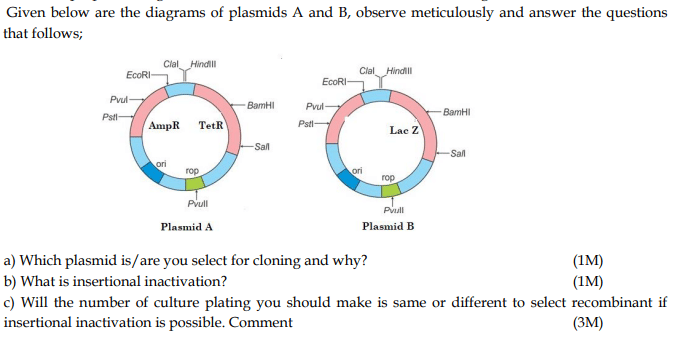
01 00 AM IST - 16 Mar'26
Essentials Checklist for Today’s Exam
Before going to bed, make sure all important items are ready for tomorrow’s exam. Keeping everything prepared now will help you avoid last-minute stress in the morning.
- Hall Ticket / Admit Card
- School ID Card (if required)
- 2-3 Blue or Black Ball Pens
- Pencil, Eraser, Sharpener
- Transparent Water Bottle
- Simple Wrist Watch
12 00 AM IST - 16 Mar'26
Get Proper Sleep Before the Exam
At this point, students preparing for the Karnataka 2nd PUC Biology exam 2026 should focus on getting proper rest. Avoid staying up too late trying to cover new topics. A good night’s sleep will help your mind stay calm and improve concentration during the exam. Try to sleep early so you wake up fresh and alert for the big day.
11 00 PM IST - 15 Mar'26
Human Health and Disease Question Bank - 1
- Mention any four means by which good health can be achieved.
- Name the host and the site where the following occur in the life cycle of a malarial parasite: (a) Formation of gametocytes (b) Fusion of gametes.
- What is immunity? Mention its types.
- Mention the types of barriers of innate immunity.
- Differentiate between innate and acquired immunity.
- Mention the roles of B and T lymphocytes.
- Name two chemicals released by the mast cells during an allergic reaction.
- What is auto-immune disease? Give an example.
- Mention any two characteristics of cancer cell.
- What are carcinogens? Give an example.
- Write a note on oncogenic viruses.
- Cancer is one of the most dreaded diseases. Explain 'Contact inhibition' and 'Metastasis' with respect to the disease.
- List the modes of transmission of HIV in humans.
- What is drug abuse? Name any three drugs that are commonly abused.
- List any four common warning signs of drug and alcohol abuse in youth.
- Name an opioid drug and its source plant (scientific name). How does it affect human body?
- Differentiate between addiction and dependence with reference to alcohol and drugs.
- List any four withdrawal symptoms exhibited by an alcohol or drug addict.
- List any four adverse effects of drug and alcohol abuse.
- Mention four side effects of the use of anabolic steroids in males.
- Mention four side effects of the use of anabolic steroids in females.
10 30 PM IST - 15 Mar'26
Molecular Basis of Inheritance Question Bank - 2
- Explain the central dogma of molecular biology with a schematic representation.
- Describe the double helix model of DNA proposed by Watson & Crick.
- Explain Griffith’s experiment to explain the ‘transforming principle’.
- Explain the steps involved in DNA replication.
- Explain the experiment that gave the final proof for DNA as the genetic material.
- Explain the experiment to prove that DNA replicates semiconservatively.
- Enumerate the characteristics of Genetic code.
- Explain the process of transcription in prokaryotes.
- Explain the regulation of operon that is involved in utilization of lactose in E. coli.
- Mention the goals of HGP.
- Explain the steps involved in translation process.
- Mention the salient features of human genome.
- Mention the steps involved in DNA finger printing technique developed by Alec Jeffrey.
10 00 PM IST - 15 Mar'26
Molecular Basis of Inheritance Question Bank - 1
- What is the structural unit of a nucleic acid called? Name the chemical components of the unit.
- Mention the four nitrogenous bases present in DNA.
- Mention the four nitrogenous bases present in RNA.
- List the nucleosides of DNA.
- Mention the nucleosides of RNA.
- If a double stranded DNA has 20% of cytosine, calculate the percent of adenine.
- Define the terms transcription and translation.
- How many base pairs of DNA are present in a typical nucleosome? Mention the types of proteins present in a nucleosome.
- Write the conclusion that can be drawn from Griffith’s experiment.
- "Both the strands of DNA molecule do not act as templates during transcription". Justify with two reasons.
- In a ds DNA of 400 bp, if there are 150 Adenine, find the number of the other bases.
- If a DNA 34nm in length has 30 Guanine, calculate the number of other nucleotides.
- Applying Chargaff’s rule, if cytosine content of a DNA sample is 100, calculate the length of DNA.
- In Meselson and Stahl experiment, in 40 min we obtain one light and one hybrid band. What would be the proportion of the band after 60 min?
- If Template strand of DNA has following sequence: 3’ T A C T G T G A G C T A C T C A T T 5’ Write a note on the role of sigma factor and the rho factor in transcription in prokaryotes.
- What is heterogeneous nuclear RNA (hnRNA)? How is it converted into functional mRNA?
- Name the two amino acids richly present in histones that impart positive charge.
- If 60% of a DNA is heterochromatinised, what percent of DNA is genetically active?
09 30 PM IST - 15 Mar'26
Principles of Inheritance Question Bank - 2
- Schematically represent the inheritance of stem height in pea plant.
- Schematically represent inheritance of seed shape and seed colour in pea plants.
- Schematically represent incomplete dominance in Antirrhinum.
- When a tall pea plant was selfed, it produced one-fourth of its progeny as dwarf. Explain with the help of a cross.
- A tall Pea plant with yellow seeds (heterozygous for both) is crossed with a dwarf Pea plant with green seeds. Using a Punnett square work out the cross to show the phenotypes and the genotypes of F1 generation.
- A woman with blood group O married a man with AB group. Show the possible blood groups of the progeny. List the alleles involved in this inheritance.
- Four children with four different blood groups are born to parents where the mother has blood group 'A' and the father has blood group 'B'. Work out the cross to show the genotypes of the parents and all four children.
- "Mendel's work was not recognized during his time." Why?
- Mention the similarities between the behaviours of chromosomes and genes according to chromosomal theory of inheritance.
- Explain how is sex determined in human beings.
- Explain sex determination in Drosophila melanogaster.
- Explain sex determination in birds.
- Explain sex determination mechanism in grasshopper.
- Explain sex determination mechanism in honey bees.
09 00 PM IST - 15 Mar'26
Principles of Inheritance Question Bank - 1
- What is test cross? Write its significance.
- State the law of segregation and law of independent assortment.
- What is incomplete dominance? Give an example.
- A pea plant with purple flowers was crossed with plant having white flowers. The progeny produced only purple flowers. On selfing, these plants produced 482 plants with purple flowers and 162 plants with white flowers. Explain the mechanism that accounts for these results?
- Name the respective pattern of inheritance where $F_1$ phenotype:
a) Does not resemble either of the two parents and is in between the two.
b) Resembles only one of the two parents. - What is codominance? Give an example.
- Distinguish between incomplete dominance and codominance.
- A child has blood group O. If the father has blood group A and mother blood group B, work out the genotypes of the parents and the possible genotypes of the other offspring.
- What is polygenic inheritance? Give an example.
- ABO blood grouping in human population exhibits four possible phenotypes from six different genotypes. Explain different mechanisms of inheritance involved in exhibiting the possibility of four phenotypes and six genotypes.
- List two features of Drosophila melanogaster which make it suitable for genetic experiments.
- Differentiate male heterogamety from female heterogamety.
- Write the genotype of:
a) An individual who is carrier of sickle-cell anaemia gene but apparently unaffected.
b) An individual affected with the sickle-cell anaemia disease. - Mention a Mendelian disorder and its types where there is reduced synthesis of haemoglobin.
08 30 PM IST - 15 Mar'26
Human Reproduction Diagrams to Practice
- Draw a neat labelled diagram of the sectional view of the seminiferous tubules.
- Draw a neat, labelled diagram of human sperm.
- Write the schematic representation of spermatogenesis.
- Schematically represent oogenesis.
- Draw a neat, labelled diagram of the sectional view of the human male reproductive system.
- Draw a neat, labelled diagram of the sectional view of the human female reproductive system.
- Draw a neat, labelled diagram of the sectional view of the mammary gland.
08 00 PM IST - 15 Mar'26
Human Reproduction Question Bank
- Why are the human testes located outside the abdominal cavity? Name the pouch in which they are present.
- List the accessory ducts of human male reproductive system.
- Mention the two functions of Sertoli cells.
- What are Leydig cells? Mention their function.
- Name any two accessory ducts of the human female reproductive system.
- Name any two accessory glands associated with the human male reproductive system.
- What is the number of chromosomes in the following cells of a human female? a) Primary oocyte b) Secondary oocyte.
- Mention any four parts of the external genitalia in human females.
- Trace the path of spermatozoa from the testes up to the ejaculatory duct.
- Explain the organisation of glandular tissue in a breast of human females.
- Mention the events that occur during the follicular phase of menstrual cycle.
- What is placenta? List the functions of human placenta.
- Parturition is induced by complex neuroendocrine mechanism. Comment.
- Explain the changes that occur in ovary and uterus during luteal phase of menstrual cycle.
- Briefly explain the process of fertilization in humans.
- In humans, sex of the baby is determined by the father and not the mother. Justify.
- When and where do chorionic villi appear in humans? State their function.
- Medically it is advised to all young mothers that breast feeding is the best for their newborn babies. Do you agree? Give reasons in support of your answer.
07 30 PM IST - 15 Mar'26
Sexual Reproduction in Flowering Plants: Diagrams to Practice
- Draw a neat, labelled diagram of a typical anatropous ovule.
- Draw a neat, labelled diagram of a mature embryo sac.
- Draw a neat, labelled diagram of a monocot seed.
- Draw a L.S. of a grass embryo and label: Scutellum, Coleoptile, Shoot apex, Radicle, Root cap, and Coleorhiza.
- Draw a labelled diagram of the fertilized female gametophyte and mention the ploidy of any one of the products of double fertilization.
- Draw a diagram of an angiospermic embryo sac where fertilization is just completed and label the part that develops into an embryo, the part that develops into endosperm, and the degenerating cells.
07 00 PM IST - 15 Mar'26
Sexual Reproduction in Flowering Plants Question Bank
- Write the significance of sporopollenin.
- Differentiate between chasmogamous and cleistogamous flowers.
- Justify why cleistogamous flowers are invariably autogamous.
- What are cleistogamous flowers? Name a plant showing this.
- Justify by giving two reasons: "The flowering plants have evolved strategies to prevent self-pollination."
- What is perisperm? Give an example.
- Name the phenomenon of formation of seed without fertilization in angiosperms. Give an example of a plant which exhibits this.
- How are parthenocarpic fruits produced by some plants and apomictic seeds by others?
- Explain the structure of pollen grain.
- How does pollination occur in Vallisneria and Zostera?
- "Flowering plants have developed many devices to discourage self-pollination and encourage cross pollination." Comment.
- Briefly explain why it is a unique event taking place in flowering plants.
- Banana is a parthenocarpic fruit whereas oranges show polyembryony. How are they different from each other with respect to seeds?
06 40 PM IST - 15 Mar'26
Question Bank of High-Weightage Chapters
To help you prepare better for the Karnataka 2nd PUC Biology exam, we will now provide a set of practice questions from the highest-weightage chapters in the syllabus. Stay tuned!
06 00 PM IST - 15 Mar'26
DNA Fingerprinting Technique
DNA Fingerprinting is a technique used to identify individuals based on unique DNA patterns.
The steps involved in DNA fingerprinting are:
- Isolation of DNA: DNA is extracted from biological samples such as blood, hair roots, skin, or semen.
- Cutting of DNA: The isolated DNA is cut into fragments using Restriction Enzymes.
- Separation of DNA Fragments: The DNA fragments are separated according to their size using Gel Electrophoresis.
- Transfer and Hybridization: The separated DNA fragments are transferred onto a nylon membrane and treated with labelled DNA probes that bind to specific DNA sequences.
- Detection of DNA Pattern: The hybridized fragments are detected using autoradiography, producing a pattern of bands known as the DNA fingerprint, which is unique for each individual.
05 40 PM IST - 15 Mar'26
Another Important 5-Mark Question
Mention the population interactions that exist among the following:
a) Abingdon tortoise and goats
b) Tiger and deer
c) Sea anemone and clown fish
d) Wasp laying eggs in fig fruit
e) Cuscuta growing on a hedge plant
05 20 PM IST - 15 Mar'26
Important 5-Mark Question
Schematically represent the inheritance of flower colour in snapdragon and draw conclusions.
05 00 PM IST - 15 Mar'26
Food-Chain Related Question to Practice
An example of a grazing food chain is given below:
Grass → Grasshopper → Birds → Man.
Graphically represent this food chain through a pyramid of energy and write different trophic levels with their energy content.
04 40 PM IST - 15 Mar'26
Drug Identification Solved Question
The name of the drugs, their source plants, and their nature are given in the table below. Identify A, B, and C.
Name of the Drug
Source Plant
Nature
A
Papaver somniferum
Depressant
Cannabinoids
B
Affects the cardiovascular system
Cocaine
Erythroxylum coca
C
Answer:
The correct identification of A, B, and C is as follows:Name of the Drug
Source Plant
Nature
Morphine
Papaver somniferum
Depressant
Cannabinoids
Cannabis sativa
Affects the cardiovascular system
Cocaine
Erythroxylum coca
Stimulant
04 20 PM IST - 15 Mar'26
Principles to Prevent Sexually Transmitted Diseases
Sexually Transmitted Diseases can be prevented by following certain precautions.
- Avoid sexual contact with unknown or multiple partners, as this increases the risk of infection.
- Maintain mutual faithfulness between partners to reduce the chances of transmission.
- Use protective methods such as condoms during sexual intercourse to prevent the spread of infections.
- Maintain proper personal and sexual hygiene.
- Seek early medical advice and treatment if any symptoms appear.
04 00 PM IST - 15 Mar'26
3-Mark Question from Menstruation Cycle Topics
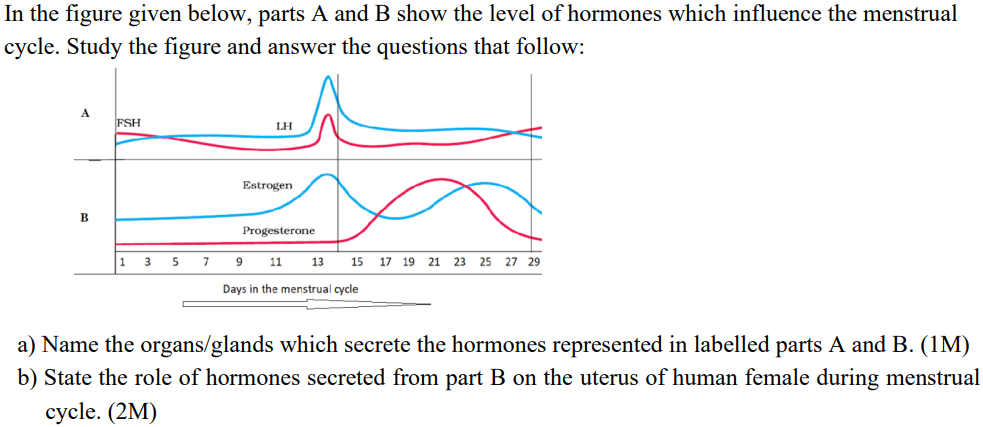
a)
- Part A: Pituitary Gland (secretes FSH and LH)
- Part B: Ovary (secretes estrogen and progesterone)
b) Hormones secreted from the ovary are Estrogen and Progesterone.
- Estrogen stimulates the repair and thickening of the endometrium (uterine lining) after menstruation.
- Progesterone maintains the thickened endometrium and prepares the uterus for implantation of the embryo.
- Part A: Pituitary Gland (secretes FSH and LH)
03 40 PM IST - 15 Mar'26
Statement-Based Question with Answer - 3
The pyramid of energy is always upright and can never be inverted. Give reasons.
The Ecological Pyramid of energy is always upright because energy flow in an ecosystem is unidirectional.
At each trophic level, a large amount of energy is lost as heat during metabolic activities, and only a small amount is transferred to the next level. Therefore, the energy available decreases from producers to higher trophic levels, making the pyramid always upright.03 20 PM IST - 15 Mar'26
Statement-Based Question with Answer - 2
The use of biocontrol measures will greatly reduce our dependence on toxic chemicals and pesticides. Justify with an example.
Biological Control helps control pests using natural enemies instead of harmful chemicals.
For example, Ladybird Beetle is used to control aphids in crop fields. This method reduces the use of chemical pesticides and helps protect the environment.03 00 PM IST - 15 Mar'26
Statement-Based Question with Answer - 1
“Potato tubers and Sweet potato tubers are the result of convergent evolution”. Justify the statement.
Convergent Evolution occurs when unrelated organisms develop similar features to perform the same function.
Potato is a modified underground stem, while Sweet Potato is a modified root. Although they have different origins, both perform the same function of food storage. Therefore, they are examples of convergent evolution.
02 40 PM IST - 15 Mar'26
Levels where gene expression can be regulated in eukaryotes
Gene expression in eukaryotes can be regulated at the following levels:
- Transcriptional level - control of the formation of RNA from DNA.
- Post-transcriptional level - processing of RNA, such as splicing and transport.
- Translational level - control of protein synthesis from mRNA.
- Post-translational level - modification and activation of proteins after synthesis.
02 20 PM IST - 15 Mar'26
DNA Replication Question with Answer
DNA replication is fast, accurate, energetically expensive, substrate and enzyme-dependent, initiated from a specific site, and cannot uncoil its entire length. Explain the process of DNA replication, considering all these features.
DNA Replication is the process by which a DNA molecule produces two identical DNA molecules before cell division.
DNA replication begins at a specific site called the origin of replication. The enzyme DNA Helicase breaks the hydrogen bonds between the two strands and uncoils the DNA, forming a replication fork. Since DNA molecules are very long, replication occurs only in small regions at a time, not along the entire length.
Each parental DNA strand acts as a template for the formation of a new strand. The enzyme DNA Polymerase adds nucleotides complementary to the template strand according to base-pairing rules (A-T and G-C).
Replication is fast and highly accurate because DNA polymerase checks and corrects mistakes during synthesis. The process is energetically expensive as it requires energy supplied by nucleotide triphosphates. It is also substrate-dependent, requiring deoxyribonucleotides, and enzyme-dependent, involving several enzymes such as helicase, polymerase, and ligase.
Finally, two identical DNA molecules are produced, each containing one parental strand and one newly synthesized strand. This type of replication is called Semiconservative Replication.
02 00 PM IST - 15 Mar'26
Important 3-Mark Question with Answer
During pregnancy, the level of hormones increases several-fold in the maternal blood. Name the hormones and write their importance.
During pregnancy, the placenta acts as an endocrine gland and secretes several hormones that help in the maintenance of pregnancy.
- Human Chorionic Gonadotropin (hCG) helps in maintaining the corpus luteum during early pregnancy.
- Progesterone maintains the uterine lining and supports the continuation of pregnancy.
- Estrogen helps in the growth of the uterus and the development of mammary glands.
01 40 PM IST - 15 Mar'26
Important LAQ with Solution
Some drug bottles in a hospital drug store were found without name labels. However, the effects of the drugs were still written on the bottles. The hospital staff must identify the drugs based on these effects and also determine the source of each drug.
Analyse the actions listed below and identify the name of each drug along with its source.
Drug
Effect
Drug 1
Used by doctors as a sedative and painkiller
Drug 2
Helps patients cope with insomnia and depression
Drug 3
Increases the consumer’s blood pressure and heart rate
Drug 4
Acts as a depressant and slows down body functions
Drug 5
Affects the cardiovascular system of the body
Answer:
Based on the given effects, the names of the drugs and their sources can be identified as follows:Drug
Name of the Drug
Source
Drug 1
Morphine
Papaver somniferum (opium poppy)
Drug 2
Tranquilizers
Synthetic drugs
Drug 3
Cocaine
Erythroxylum coca
Drug 4
Alcohol
Produced by fermentation of sugars by yeast
Drug 5
Cannabinoids
Cannabis sativa
These drugs are identified based on their characteristic physiological effects on the human body.
01 20 PM IST - 15 Mar'26
Curing ADA deficiency by Gene Therapy
Adenosine Deaminase Deficiency can be treated using gene therapy.
- In this method, lymphocytes are taken from the patient’s blood.
- A functional ADA gene is introduced into these cells using a suitable vector.
- The genetically modified lymphocytes are cultured in the laboratory and then reintroduced into the patient’s body.
- These cells produce the ADA enzyme, helping to improve immune function.
12 40 PM IST - 15 Mar'26
What is Adaptive Radiation?
Adaptive Radiation is the process by which different species evolve from a common ancestor in a geographical area and adapt to different ecological niches.
Examples:
- Darwin's finches that evolved into many species with different beak shapes on the Galápagos Islands.
- Australian marsupials that evolved into different forms such as kangaroo, koala, and wombat.
12 20 PM IST - 15 Mar'26
Properties of Cancerous Cells
Cancerous cells differ from normal cells in several important ways:
- Uncontrolled cell division: They divide continuously due to loss of normal regulatory mechanisms.
- Loss of contact inhibition: They continue to grow and divide even when they come in contact with neighbouring cells.
- Ability to invade tissues: Cancer cells can invade surrounding tissues and damage them.
- Metastasis: They can spread to other parts of the body through blood or lymph, a process called Metastasis.
These properties lead to the formation of tumours and abnormal tissue growth.
12 00 PM IST - 15 Mar'26
Functions of Genes cryIAb and cryIIAb
The genes cryIAb and cryIIAb are obtained from the bacterium Bacillus thuringiensis. These genes produce Bt toxin proteins that kill insect pests feeding on the plant. The cryIAb gene controls corn borer insects, while the cryIIAb gene controls cotton bollworms. These genes are used in developing insect-resistant Bt crops.
11 40 AM IST - 15 Mar'26
Short Note on Neanderthal Man
Neanderthals lived about 100,000-40,000 years ago in Europe and parts of Asia. They had a large brain capacity of about 1400 cc and a strong body structure. They used stone tools, wore animal hides, and were skilled hunters. Their fossils were first discovered in the Neander Valley in Germany.
11 20 AM IST - 15 Mar'26
Short Note on Sex Determination Method in Birds
In birds, sex determination follows the ZW-ZZ mechanism. The female has ZW chromosomes, while the male has ZZ chromosomes. The female produces two types of eggs (Z and W), but the male produces only Z sperms. Fertilization of a Z egg produces ZZ (male), while fertilization of a W egg produces ZW (female). This system is seen in birds such as the Chicken.
11 00 AM IST - 15 Mar'26
Geitonogamy vs Xenogamy
You can find the differences between Geitonogamy vs Xenogamy in the table below:
Feature
Geitonogamy
Xenogamy
Definition
Transfer of pollen from the anther of one flower to the stigma of another flower on the same plant
Transfer of pollen from the anther of a flower to the stigma of a flower on a different plant of the same species
Type of Pollination
Genetically similar to self-pollination
A form of cross-pollination
Genetic Variation
No significant genetic variation
Produces genetic variation
Pollinating Agents
Usually requires agents like insects, wind, etc.
Requires pollinating agents such as insects, wind, water
Example
Pollination between flowers of the same plant
Pollination between flowers of different plants
10 40 AM IST - 15 Mar'26
Important 2-Mark Questions with Answers
Mention the two medical grounds on which the pregnancies are subjected to termination.
Pregnancy can be medically terminated when:
- Continuation of pregnancy endangers the life of the mother.
- The fetus has serious congenital abnormalities or genetic defects.
Derive the phenotypic and genotypic ratios of a cross between AB blood group parents.
Parents: AB × AB
Genotype: IAIB × IAIBGametes produced: IA and IB
IA
IB
IA
IAIA (A)
IAIB (AB)
IB
IAIB (AB)
IBIB (B)
Genotypic ratio: 1 IAIA : 2 IAIB : 1 IBIB
Phenotypic ratio: 1 Blood group A : 2 Blood group AB : 1 Blood group B
10 20 AM IST - 15 Mar'26
Some More 2-Mark Questions with Answers
What is the haplodiploid sex determination mechanism? Mention an animal that exhibits this.
Haplodiploid sex determination is a system in which males develop from unfertilized haploid eggs, while females develop from fertilized diploid eggs.
This mechanism is seen in Honey bee.
Write a note on the role of sigma factor and the rho factor in transcription in prokaryotes
- Sigma (σ) factor helps RNA polymerase recognize the promoter region and initiate transcription.
- Rho (ρ) factor helps in the termination of transcription by releasing the newly formed RNA chain.
10 00 AM IST - 15 Mar'26
2-Mark Questions with Answers
What are emergency contraceptives? Write their hormonal combination.
Emergency contraceptives are birth control methods used to prevent pregnancy after unprotected sexual intercourse. They usually contain high doses of progesterone or a combination of estrogen and progesterone.
List the measures to check the population growth rate.
Measures to control population growth include:
- Raising the marriageable age of males and females.
- Promoting family planning methods and contraceptive use.
- Creating awareness through education about small family norms.
09 40 AM IST - 15 Mar'26
Important Fill-In-The-Blanks with Answers
Check some more important fill-in-the-blank questions below with the correct answers for your reference:
Questions
Correct Answer
_____________ make the uterus unsuitable for implantation and the cervix hostile to the sperm.
Hormone releasing IUDs
The process of evolution of different species in a given geographical area starting from a point and radiating to other areas is called _____________.
Adaptive radiation
_____________ is used for fermenting malted cereals and fruit juices, to produce ethanol.
Saccharomyces cerevisiae
The phenomenon of silencing of a specific mRNA due to a complementary dsRNA molecule is _____________.
RNA interference
_____________ are the tracts of forest were set aside and all the trees and wildlife within were given total protection.
sacred groves
09 20 AM IST - 15 Mar'26
Some More Fill-In-The-Blanks with Answers
Check some more important 1-mark fill-in-the-blank questions below with the correct answers for your reference:
Questions
Correct Answer
Statutory ban on _____________ is required to check increasing female foeticides.
Amniocentesis
A fish thought to be extinct and caught in South Africa in 1938 is _____________.
Coelacanth
An example for mycorrhiza forming fungi is _____________.
Glomus
Autonomously replicating circular extra-chromosomal DNA of bacteria is known as _____________.
Plasmid
Rate of formation of new organic matter by consumers is referred as _____________.
Secondary productivity
09 00 AM IST - 15 Mar'26
Fill-In-The-Blanks with Answers
Check some important 1-mark fill-in-the-blank questions below with the correct answers for your reference:
Questions
Correct Answer
The interstitial space in seminiferous tubules consists of immunologically _____________
Competent cells
The version of biogenesis is accepted by majority, as the first form of life arose slowly through evolutionary forces from _____________.
non-living molecule
Filariasis pathogens are transmitted to a healthy person through _____________
vectors
Swiss cheese with large holes is produced from _____________
Bacteria
The host cells which have the ability to incorporate foreign DNA within them are called _____________
Competent cells
08 40 AM IST - 15 Mar'26
Important 1-Mark MCQs with Answers
Given below are some solved MCQs for your preparation:
Complete Question
Options
Correct Answer
The ________ hormone is secreted by the ovary in the later phase of pregnancy.
a) Androgens, b) Estrogens, c) Relaxin, d) Progestogens
c) Relaxin
Sperms produced by the seminiferous tubules are transported through accessory ducts. Which duct should be tied and cut for male sterilization?
a) Vas deferens, b) Vasa efferentia, c) Rete testis, d) Epididymis
a) Vas deferens
In a dihybrid cross in pea plants, Mendel got 9:3:3:1 phenotypic ratio. It denotes that
a) Alleles interact, b) Polygenic inheritance, c) Multiple allelic inheritance, d) The alleles of two genes are segregating independently.
d) The alleles of two genes are segregating independently.
A DNA segment has a total of 1000 nucleotides, out of which 240 of them are adenine containing nucleotides. How many pyrimidines bases this DNA segment possesses?
a) 480, b) 500, c) 760, d) 260
b) 500
An agriculture labour was spraying some powder mixed with water onto fruit trees to get rid of insect larvae. Which of the following biocontrol agent could have been used here?
a) Bacillus thuringiensis, b) Trichoderma, c) Dragonflies, d) Ladybird
a) Bacillus thuringiensis
Use of bioresources by multinational companies and other organisations without proper authorisation and compensatory payment is referred as
a) Biopiracy, b) Biofortification, c) Bioprospecting, d) Bioprocessing
a) Biopiracy
An example of ex-situ conservation is
a) National parks, b) Sacred groves, c) Biosphere reserves, d) Zoological parks
d) Zoological parks
08 20 AM IST - 15 Mar'26
Some More 1-Mark MCQs with Answers
You can check below some more MCQs with answers to practice and revise for the biology exam tomorrow:
Complete Question
Options
Correct Answer
Nowadays, diseases like dengue and chikungunya are widespread in different parts of India. To prevent the spread of the disease which vector has to be eliminated
a) Culex, b) Anapheles, c) Female anopheles, d) Aedes
d) Aedes
If a patient has undergone myocardial infraction leading to heart attack, to remove clots from the blood vessels of patient, which enzyme is used by the doctor to treat the patient
a) Pectinase, b) streptokinase, c) Protease, d) lipase
b) streptokinase
A piece of alien DNA cannot multiply itself in the progeny cells of the organism due to
a) Lack of ori- site, b) Denaturation, c) Renaturation, d) Incompatibility
a) Lack of ori- site
Hind II cuts DNA molecule by recognizing a specific recognition sequence of
a) 3 base pairs, b) 6 base pairs, c) 8 base pairs, d) 10 base pairs
b) 6 base pairs
Select the correct sequence of events in microsporogenesis
a) Sporogenous tissue → MMC → Tetrad → Microspores, b) Microspores → MMC → Tetrad → Sporogenous tissue, c) Sporogenous tissue → Tetrad → Microspores → MMC, d) Microspores → Sporogenous tissue → Tetrad → MMC
a) Sporogenous tissue → Microspore mother cell → Microspore tetrad → Microspores
Statement I: The process of release of sperms from the seminiferous tubule is called spermatogenesis. Statement II: The spermatids are transformed into spermatozoa by the process called spermiogensis.
a) Both correct, b) Both incorrect, c) I correct/II incorrect, d) Statement I is incorrect but statement II is correct
d) Statement I is incorrect but statement II is correct
The function of myometrium layer present in the uterine wall is to
a) Undergo cyclical changes, b) Exhibit strong uterine contraction during parturition, c) Give protection, d) Help in implantation
b) Exhibit strong uterine contraction during parturition.
08 00 AM IST - 15 Mar'26
1-Mark MCQs with Answers
You can check below some MCQs with answers to practice and revise for the biology exam tomorrow:
Question
Options
Correct Answer
The Ploidy of Perisperm present in beet seed is
a) Haploid, b) Diploid, c) Tetraploid, d) Triploid
b) Diploid
Some plants such as Viola (common pansy), Oxalis and Commelina produce two types of flowers namely
a) Chasmogamous and Xenogamous, b) Cleistogamous and Geitonogamous, c) Geitonogamous and Xenogamous, d) Chasmogamous and Cleistogamous
d) Chasmogamous and Cleistogamous
The correct sequence of embryonic development in angiosperms is
- Zygote-Globular-Proembryo-Heart-Mature,
- Zygote-Heart-Proembryo-Globular-Mature,
- Zygote-Proembryo-Globular-Heart-Mature,
- Zygote-Globular-Heart-Proembryo-Mature
c) Zygote-Proembryo-Globular-Heart-Mature
During pregnancy the foetus develops limbs and digits
a) After three weeks, b) after eight weeks, c) After six weeks, d) after nine weeks
b) after eight weeks
In spermatogenesis, if FSH hormone is not secreted from the anterior pituitary gland, which stage is affected
a) Formation of primary spermatocyte, b) formation of spermatozoa, c) Formation of spermatid, d) formation of secondary spermatocyte
b) formation of spermatozoa
To produce 2000 sperm and 400 ova, how many spermatogonia and oogonia are required?
a) 500 spermatogonia and 200 oogonia, b) 500 spermatogonia and 400 oogonia, c) 250 spermatogonia and 250 oogonia, d) 250 spermatogonia and 400 oogonia
b) 500 spermatogonia and 400 oogonia
Which among the following sexually transmitted infection (STIs) are not curable
a) Gonorrhoea, syphilis, hepatitis-B, b) Chlamydiasis, genital warts, trichomoniasis, c) Gonorrhea, HIV infection, chlamydiasis, d) Hepatitis –B, genital herpes and HIV infection
d) Hepatitis –B, genital herpes and HIV infection
07 40 AM IST - 15 Mar'26
The "Extra Edge": How to Score Extra Marks
To move from a 90% to a 100%, you need to demonstrate "expert" level knowledge.
- For processes like Spermatogenesis or Recombinant DNA Technology, provide a flowchart. It shows a clear logical flow that examiners love.
- Whenever you mention an organism (example, Drosophila melanogaster or Plasmodium falciparum), underline the genus and species separately. It shows academic discipline.
- In the Ecology section, use real-world examples or recent data (like the specific number of Biodiversity Hotspots) to give your answer a "current affairs" edge.
- Finish the paper 15 minutes early. Use this time to ensure question numbers are correctly marked. A "blunder" in numbering is the most common reason toppers lose marks.
07 20 AM IST - 15 Mar'26
Topper's Strategy: Attempting the Paper
Section
Strategy
Part A (MCQs & FIBs)
Do not spend more than 20 minutes here. If stuck, leave a space and move on.
Part B & C (2 & 3 Marks)
Use bullet points. For a 2-mark question, write 4 valid points. For 3 marks, write 6.
Part D (5 Marks)
Heading → Diagram → Explanation in bullets. Never write 5-mark answers in long, dense paragraphs.
- Always draw with a sharp pencil. Use a pen only for the labelling lines to make them stand out.
- After finishing a section, go back and underline scientific terms (example, Semiconservative, Tapetum, Biodiversity Hotspots) with a pencil. This helps the examiner grade you faster and more favourably.
07 00 AM IST - 15 Mar'26
Expert Prep Tips for 2nd PUC Biology 2026
To get high marks, focus on the weightage provided by the KSEAB blueprint. You can follow these tips given by subject experts:
- Focus heavily on Principles of Inheritance and Molecular Basis of Inheritance. These are the backbone of the paper.
- Ensure you can draw and label the Human Reproductive System and Sexual Reproduction in Flowering Plants perfectly.
- Biology is a visual subject. For every 5-mark question, even if not explicitly asked, a neat, labelled diagram can secure the full marks that a wall of text might not.
- The Karnataka Board strictly follows NCERT. Do not skip the small "Summary" boxes or the "Points to Ponder" sections at the end of chapters, as these often form the basis for the 1-mark Fill-in-the-Blanks.
06 40 AM IST - 15 Mar'26
Question Paper Blueprint 2026
Given below is the blueprint for the Karnataka 2nd PUC Biology question paper 2026 for your reference:
Question Paper Parts
Question type
Number of questions
Marks
PART - A I
MCQ
15
15
PART - A II
Fill in the Blanks
05
05
PART - B III
Short answer questions (2 marks)
07
14
PART - C IV
Short answer questions (3 marks)
07
21
PART - D V
Long answer questions (5 marks)
07
35
PART - D VI
Long answer questions(5 marks)
03
15
TOTAL
—
44
105
06 20 AM IST - 15 Mar'26
Chapter-Wise Weightage
You can check the prescribed 2nd PUC Biology chapters list and weightage for the exam below:
S. No.
Chapters
Allotted Marks
01
Sexual reproduction in flowering plants
11 marks
02
Human reproduction
10 marks
03
Reproductive health
6 marks
04
Principles inheritance
13 marks
05
Molecular basis of inheritance
13 marks
06
Evolution
7 marks
07
Human health and disease
11 marks
08
Microbes in human welfare
7 marks
09
Biotechnology: Principles and Processes
7 marks
10
Biotechnology and its applications
6 marks
11
Organism and population
6 marks
12
Ecosystem
4 marks
13
Biodiversity and conversation
4 marks
Total
105 marks
06 00 AM IST - 15 Mar'26
Karnataka 2nd PUC Biology Exam 2026 Exam Date & Time
The biology will be conducted on March 16, 2026. It will take place in a single shift from 10 AM to 1 PM and will be held for a duration of 3 hours across designated exam centres in the state. Students are advised to reach their centres well before the reporting time to complete entry formalities smoothly.
06 20 PM IST - 14 Mar'26
Transgenic animals & their benefits to human beings
Transgenic Animals are animals whose DNA has been altered by introducing genes from another organism. They provide several benefits to humans.
The important uses are:
- Study of gene function: Transgenic animals help scientists understand how genes regulate development and normal body functions.
- Study of human diseases: They are used as models to study diseases such as cancer, cystic fibrosis, and Alzheimer’s disease.
- Production of biological products: Some transgenic animals produce useful biological substances like proteins and medicines in their milk.
- Vaccine safety testing: They are used to test the safety of vaccines before they are used in humans.
- Chemical safety testing: Transgenic animals help in testing the toxicity and safety of new drugs and chemicals.
01 00 PM IST - 14 Mar'26
What is Gene therapy?
Gene Therapy is a technique used to treat genetic disorders by introducing a normal and functional gene into a patient’s cells to replace the defective gene.