

 PSTET Paper 2 Exam 2026 LIVE
PSTET Paper 2 Exam 2026 will take place tomorrow, on March 15 , in the afternoon shift. It is for teachers of classes 6 to 8 in Punjab government schools. It will test if you have the skills to teach upper primary kids. The Paper 2 shift is scheduled for the afternoon, running from 2:00 PM to 4:30 PM , so it is a good idea to reach your center at least an hour early to settle in.
The PSTET paper 2 exam itself consists of 150 multiple-choice questions with no negative marking, which is great news for your scoring strategy. You will face sections on Child Development and Pedagogy, Punjabi, and English, along with a 60-mark section dedicated to your specific subject, whether that is Social Studies or the Maths and Science combination.
Note: Important questions, short notes and last-minute top priority topics are available through the live thred below. Scroll down to check.
PSTET Paper 2 Exam 2026 Quick Facts
Some of the facts and details related to the PSTET Paper 2 exam 2026 are given in the table below:
Fact | Details |
|---|---|
Exam Date | March 15, 2026 |
Exam Time | 2:00 PM to 4:30 PM |
Sections | Child Development & Pedagogy (30Q), Language 1 (30Q), Language 2 (30Q), Mathematics & Science OR Social Studies (60Q) |
Questions | 150 MCQs |
Marking Scheme | +1 mark per correct answer, no negative marking |
Total Marks | 150 |
Also read |
PSTET Paper 1 Exam 2026 LIVE
The exam will be held in offline mode using OMR sheets at multiple centres across the state. If you have already registered, you can download your hall ticket right now from the PSTET 2026 official website at
pstet2025.org
. Remember to grab it before Sunday, as you will need a hard copy to enter the exam hall.
Stay tuned to our live blog for PSTET Paper 2 Exam 2026 important questions, short notes, last-minute tips, and other updates!
PSTET Paper 2 Exam 2026 LIVE
04 30 PM IST - 15 Mar'26
PSTET Paper 2 Exam 2026 Ends Now
The exam has now concluded. Students will soon begin exiting their exam centres. Stay tuned to this live blog for student reactions, exam analysis, and important updates related to the answer key and expected difficulty level.
04 00 PM IST - 15 Mar'26
Final 30 Minutes Remaining
Only about 30 minutes are left before the PSTET Paper 2 Exam 2026 concludes. This is the time to review the answers carefully and ensure that all questions are marked properly on the OMR sheet.
03 00 PM IST - 15 Mar'26
Exam Underway Across Centres
The paper 2 exam is currently underway at various exam centres across Punjab. Stay tuned to this LIVE blog for more updates!
02 00 PM IST - 15 Mar'26
PSTET Paper 2 Exam 2026 Begins Now!
The PSTET Paper 2 Exam 2026 has officially begun. The exam will run from 2:00 PM to 4:30 PM.
01 00 PM IST - 15 Mar'26
Exam about to begin in 1 hour!
Only one hour remains before the PSTET Paper 2 Exam 2026 begins. Candidates should now settle in at their centres, keep their documents ready for verification, and mentally revise key concepts from Child Development, Languages, and subject sections.
12 00 PM IST - 15 Mar'26
Students Reaching Exam Centres
Students are beginning to reach their PSTET Paper 2 exam centres across Punjab. The entry process is about to begin.
11 00 AM IST - 15 Mar'26
Students Now Leaving Homes
Many candidates are now starting to leave their homes to reach their assigned exam centres for the PSTET Paper 2 exam scheduled in the afternoon shift.
10 00 AM IST - 15 Mar'26
Traffic and Travel Advisory for Students
Students appearing for the PSTET Paper 2 Exam 2026 are advised to plan their travel in advance. Since it is a Sunday, traffic may be lighter in many areas, but candidates should still leave early to avoid unexpected delays.
09 00 AM IST - 15 Mar'26
What not to carry to exam centres?
Candidates should avoid carrying restricted items to the exam centre. Electronic devices such as mobile phones, smart watches, calculators, earphones, and any study material are not allowed inside the examination hall. Carry only the necessary documents and basic stationery.
08 00 AM IST - 15 Mar'26
Essentials Checklist for Today’s Exam
Before leaving for the PSTET Paper 2 Exam 2026, make sure you carry all the important items listed below:
- PSTET Hall Ticket (Admit Card)
- Valid Photo ID Proof
- Blue or Black Ballpoint Pens
- Passport Size Photograph
- Transparent Water Bottle
- Simple Wrist Watch
07 00 AM IST - 15 Mar'26
What not to do right now?
Avoid starting any completely new topic at this stage. This is the time to stay relaxed and quickly revise concepts that you already know. Do not stress or overload yourself with too much information. A calm mind will help you perform much better in the PSTET Paper 2 exam today.
06 00 AM IST - 15 Mar'26
Good Morning, Students! Exam Day is Here
Good morning and all the best to everyone appearing for the PSTET Paper 2 Exam 2026 today, March 15. The exam will start at 2 PM sharp.
05 00 AM IST - 15 Mar'26
Paper 2 Social Studies Practice Questions with Answers - 5
Which among the following is one of the highest roadways in the world? (A) Manali-Leh (B) Chang la (C) Mumbai-Pune (D) Delhi-Chandigarh
Correct Answer: (A) Manali-Leh
Which type of road is built underground? (A) Flyover (B) Expressways (C) Subways (D) National highway
Correct Answer: (C) Subways
Which domain of environment provides forests, grasslands for grazing, land for agriculture and human settlement? (A) Atmosphere (B) Lithosphere (C) Hydrosphere (D) Biosphere
Correct Answer: (B) Lithosphere
What does the Abiotic component of the environment refer to? (A) The world of non living elements (B) The world of living organisms (C) The world of both living and nonliving elements (D) The world of plants and animals together
Correct Answer: (A) The world of non living elements
04 00 AM IST - 15 Mar'26
Paper 2 Social Studies Practice Questions with Answers - 4
Streams of water flowing constantly on the ocean surfaces in a definite direction are termed as... (A) Ocean currents (B) Tides (C) Waves (D) Storms
Correct Answer: (A) Ocean currents
During the full moon and new moon days, the Sun, the Moon and the Earth are in the same line and the tides are highest. What are these tides called? (A) Spring tides (B) Neap tides (C) Low tides (D) None of the above
Correct Answer: (A) Spring tides
Which planet is considered as 'earth's twin'? (A) Mercury (B) Venus (C) Saturn (D) Jupiter
Correct Answer: (B) Venus
Which constellation is formed by the group of seven stars? (A) Ursa major (B) Big bear (C) Saptarishi (D) None of the above
Correct Answer: (C) Saptarishi
03 00 AM IST - 15 Mar'26
Paper 2 Social Studies Practice Questions with Answers - 3
Which among the following are categorized as non-renewable resources? (A) Solar energy (B) Petroleum (C) Natural gas (D) Both (B) and (C)
Correct Answer: (D) Both (B) and (C)
Breeding of fish in specially constructed tanks and ponds is called... (A) Sericulture (B) Viticulture (C) Pisciculture (D) Horticulture
Correct Answer: (C) Pisciculture
What does 'slash & burn' agriculture refer to? (A) Nomadic herding (B) Intensive subsistence agriculture (C) Shifting cultivation (D) Commercial farming
Correct Answer: (C) Shifting cultivation
Which layer of the atmosphere consists of light gases like helium and hydrogen? (A) Exosphere (B) Mesosphere (C) Thermosphere (D) Stratosphere
Correct Answer: (A) Exosphere
02 00 AM IST - 15 Mar'26
Paper 2 Social Studies Practice Questions with Answers - 2
What do preserved official records of the British administration don't tell us? (A) What the officials thought (B) What the officials were interested in (C) What the officials wished to preserve for posterity (D) What the people of the country think
Correct Answer: (D) What the people of the country think
Where was the first cotton mill in India set up? (A) Ranchi (B) Gujarat (C) Bombay (D) Ahmedabad
Correct Answer: (C) Bombay
Which metal was used to build Tipu Sultan's legendary swords? (A) Wootz (B) Iron (C) Charcoal (D) Aluminium
Correct Answer: (A) Wootz
During the framing of the Indian Constitution, which among the following subjects were placed on the union list? (A) Defence and foreign affairs (B) Education and health (C) Forest and agriculture (D) Education and agriculture
Correct Answer: (A) Defence and foreign affairs
01 00 AM IST - 15 Mar'26
Paper 2 Social Studies Practice Questions with Answers - 1
What was the language of administration under the Delhi Sultans? (A) Arabic (B) Persian (C) Islamic (D) Urdu
Correct Answer: (B) Persian
What does the term 'quibla' signify? (A) During prayer, Muslims stand facing Mecca. (B) Muslims reading their prayer together. (C) Sermon delivered during the Friday prayer. (D) Choosing the most respected and learned male as a leader for the rituals of prayer.
Correct Answer: (A) During prayer, Muslims stand facing Mecca.
Which specialized institutions were established by the British administration to preserve important records? (A) Archives (B) Museums (C) Both (A) and (B) (D) None of the above
Correct Answer: (C) Both (A) and (B)
In how many periods did James Mill, a Scottish economist and political philosopher, publish a massive three-volume work, 'A History of British India'? (A) Hindu, Muslim, Sikhs (B) Hindu, Muslim, British (C) Hindu, Muslim, Christian (D) Muslim, British, Sikhs
Correct Answer: (B) Hindu, Muslim, British
12 00 AM IST - 15 Mar'26
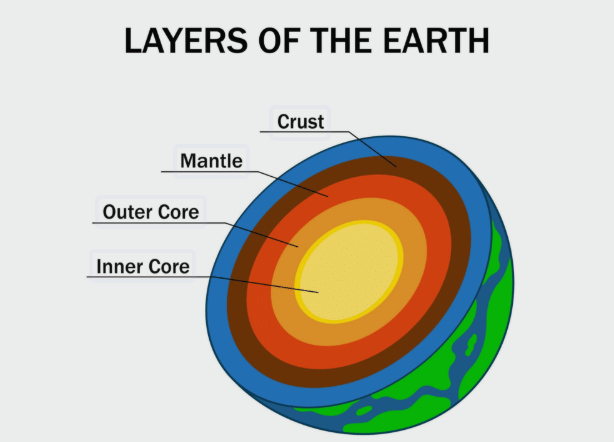
The Earth’s Layers
This image is a diagram showing the different layers of the Earth.
11 00 PM IST - 14 Mar'26
The Indian Constitution
The Constitution is the "Rule Book" of India.
- Dr. B.R. Ambedkar is called the Father of the Indian Constitution.
- It was adopted on 26th November 1949 and came into force on 26th January 1950 (Republic Day).
- Preamble: It is the "Introduction" to our Constitution that says India is a Sovereign, Socialist, Secular, and Democratic Republic.
10 30 PM IST - 14 Mar'26
Important Topics to Cover -Social and Political Life
- The Constitution: Knowing our Fundamental Rights and Duties.
- Government: How the Parliament, State Government, and Local Panchayats work.
- Judiciary: How our courts (Supreme Court and High Courts) keep us safe.
10 00 PM IST - 14 Mar'26
Important Topics to Cover - Geography
- The Solar System: Learning about the Sun, Earth, and other planets.
- Globe and Maps: Understanding Latitudes, Longitudes, and how to read a map.
- Environment: Topics like Air, Water, and different types of forests.
- Agriculture: Different types of crops grown in India and Punjab.
09 30 PM IST - 14 Mar'26
Important Topics to Cover - History
- The First Cities & Societies: Focus on the Indus Valley Civilization (Harappan Culture).
- Delhi Sultans & Mughals: Know the famous kings like Akbar and Shah Jahan.
- Revolt of 1857: This is very important, especially the parts that happened in Punjab.
- National Movement: The story of how Gandhiji and other leaders won India's freedom.
09 00 PM IST - 14 Mar'26
Paper 2 Social Studies Important Questions, Mega Practice, Notes
Now we will be starting with the Social Studies section for the PSTET Paper 2 Exam 2026. In this part of the live blog, we will discuss important Social Studies questions, share short notes for quick revision, and provide practice questions for you to attempt.
08 00 PM IST - 14 Mar'26
Topper’s Strategy to Attempt the Paper
- In Science, many questions are fact-based (e.g., "Which vitamin deficiency causes scurvy?"). Answer these first to save time for Maths calculations.
- Keep your rough work organized on the side. This prevents "silly mistakes" like adding 2 instead of 3.
- Toppers always stick to Class 6th to 8th NCERT textbooks. Most PSTET questions are picked directly from these books.
- Give about 1 minute per question. If a math problem is taking too long, mark it for later and move to Science.
07 45 PM IST - 14 Mar'26
Paper 2 Science Practice Questions with Answers - 4
Which are true when milk changes into curd? (i) state changes from liquid to semi-solid, (ii) it changes colour, (iii) it changes taste, (iv) change cannot be reversed
(A) (i) and (ii)
(B) (ii) and (iii)
(C) (i), (iii) and (iv)
(D) (i) to (iv)
Which of the food items are "energy giving foods"? (i) Wheat, (ii) Ghee, (iii) Iodised salt, (iv) Spinach
(A) (i) and (iv)
(B) (ii) and (iv)
(C) (i) and (ii)
(D) (iii) and (iv)
Which of the following set of substances contain acids?
(A) Grapes, lime water
(B) Vinegar, soap
(C) Curd, milk of magnesia
(D) Curd, vinegar
07 30 PM IST - 14 Mar'26
Paper 2 Science Practice Questions with Answers - 3
Which of the following is wastewater?
(A) Water trickling from a damaged tap
(B) Water coming out of a shower
(C) Water flowing in a river
(D) Water coming out of a laundry
Open drain system is a breeding place for which of the following?
(A) Flies
(B) Mosquitoes
(C) Organisms which cause diseases
(D) All of these
07 15 PM IST - 14 Mar'26
Paper 2 Science Practice Questions with Answers - 2
Selective breeding is the process of:
(A) selecting the offspring with desired properties
(B) selecting the parents with desired properties
(C) selecting an area for breeding
(D) selecting fine hair for good quality wool
Pollination refers to the:
(A) transfer of pollen from anther to ovary
(B) transfer of male gametes from anther to stigma
(C) transfer of pollen from anther to stigma
(D) transfer of pollen from anther to ovule
Water cycle does not involve which of the following?
(A) Evaporation
(B) Condensation
(C) Formation of clouds
(D) Rainwater harvesting
07 00 PM IST - 14 Mar'26
Paper 2 Science Practice Questions with Answers - 1
Which of the following raw materials is available in the air for photosynthesis?
(A) Oxygen
(B) Carbon dioxide
(C) Nitrogen
(D) Hydrogen
Choose the correct order of terms that describe the process of nutrition in ruminants.
(A) Swallowing → Partial digestion → Chewing of cud → Complete digestion
(B) Chewing of cud → Swallowing → Partial digestion → Complete digestion
(C) Chewing of cud → Swallowing → Mixing with digestive juices → Digestion
(D) Swallowing → Chewing and mixing → Partial digestion → Complete digestion
Which statement is not correct in the case of an electric fuse?
(A) Fuses are inserted in electric circuits of all buildings
(B) There is a maximum limit on the current which can safely flow
(C) There is a minimum limit on the current which can safely flow
(D) If a proper fuse is inserted, it will blow off if current exceeds the safe limit
06 45 PM IST - 14 Mar'26
Paper 2 Maths Practice Questions with Answers - 4
A cylindrical container with diameter of base 42 cm contains sufficient water to submerge a rectangular solid of iron with dimensions 22 cm × 14 cm × 10.5 cm. Find the rise in level of the water when the solid is submerged.
Options:
(A) 7.33
(B) 1.33
(C) 2.33
(D) 2.73Correct Answer: (C)
"The progress and the improvement of Mathematics are linked with the prosperity of the state." Who said this? Options: (A) Napoleon, (B) Pluto, (C) Pythagoras, (D) Metzler
Correct Answer: (A)
"Mathematics sharpens the minds of the people in the same way as some stone sharpens the tool." Who said this? Options: (A) Bacon, (B) Hübsch, (C) Newton, (D) Galileo
Correct Answer: (B)
"Mathematics is a way to settle in mind the habit of reasoning." Who stated this? Options: (A) Whitehead, (B) Napoleon, (C) Locke, (D) None of the above
Correct Answer: (C)
Mathematics as a subject becomes dull due to the lack of: Options: (A) Mathematics Club, (B) Mathematics Laboratory, (C) Mathematics Library, (D) All of the above
Correct Answer: (D)
06 30 PM IST - 14 Mar'26
Paper 2 Maths Practice Questions with Answers - 3
Which of the following is true? Options: (A) The sum or difference of a rational number and an irrational number is an irrational number, (B) The product or quotient of a non-zero rational number with an irrational number may be a rational or an irrational number, (C) If we add or subtract two irrational numbers, the result is always an irrational number, (D) If we multiply or divide two irrational numbers, we always get an irrational number.
Correct Answer: (A)
Two circles of radii 5 cm and 3 cm are concentric. Calculate the length of a chord of the outer circle which touches the inner. Options: (A) 36, (B) 8, (C) 14, (D) 4
Correct Answer: (B)
Write 98 in Roman Numerals: Options: (A) LCVIII, (B) XCVIII, (C) CLVIII, (D) CXVIII
Correct Answer: (B)
06 15 PM IST - 14 Mar'26
Paper 2 Maths Practice Questions with Answers - 2
A scalene triangle has: Options: (A) No line of symmetry, (B) Only one line of symmetry, (C) Two lines of symmetry, (D) Three lines of symmetry
Correct Answer: (A)
The number Pi is:
Options: (A) a rational number, (B) a fraction, (C) an irrational number, (D) a whole number
Correct Answer: (C)
The Hindu-Arabic numbers are also called:
Options: (A) Complex numbers, (B) Decimal Numbers, (C) Whole numbers, (D) Counting numbers
Correct Answer: (B)
06 00 PM IST - 14 Mar'26
Paper 2 Maths Practice Questions with Answers - 1
A two digit number is obtained by multiplying the sum of the digits by 8. Also, it is obtained by multiplying the difference of the digits by 14 and adding 2. Find the number. Options: (A) 86, (B) 27, (C) 68, (D) 72
Correct Answer: (D)
Which one of the following statements is NOT false? Options: (A) There is no rational number with absolute value negative, (B) Every rational number has a reciprocal, (C) There is no rational number with reciprocal negative, (D) There is no rational number which equals its reciprocal
Correct Answer: (A)
If 1/2 is subtracted from a number and difference is multiplied by 4, the result is 5. Find the number.
Options: (A) 8, (B) 7/4, (C) 4, (D) 3/4
Correct Answer: (B)
05 45 PM IST - 14 Mar'26
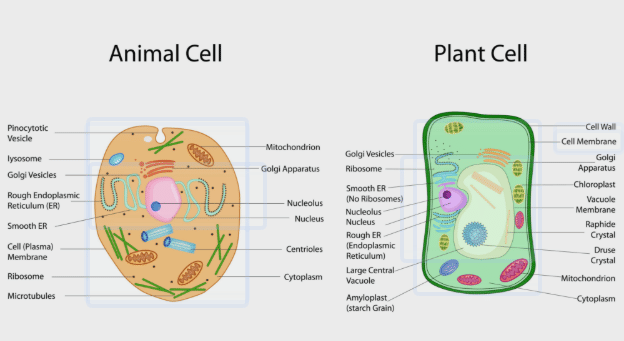
Science - The Human Cell
This image depicts the primary components of animal and plant cells.
05 30 PM IST - 14 Mar'26
Important Topics to Focus On - Science
- Food & Nutrition: Components of food (vitamins, proteins), deficiencies, and sources.
- The World of the Living: Basic unit of life (Cell), microorganisms, and human body systems.
- Materials: Metals and non-metals, and materials we use every day.
- Moving Things: Concepts of force, motion, work, and energy.
- Natural Phenomena: Light (reflection/refraction), sound, and magnets.
- Pedagogy: Aims of science teaching, observation methods, and using teaching aids like lab equipment.
05 15 PM IST - 14 Mar'26
Important Topics to Focus On - Mathematics
- Number System: Understanding natural numbers, whole numbers, negative numbers, and integers.
- Algebra: Basic identities, polynomials, and solving for "x" and "y."
- Geometry: Understanding 2-D and 3-D shapes, lines, angles, and symmetry.
- Mensuration: Formulas for area, perimeter, and volume (Circle, Triangle, Cube, Cylinder).
- Data Handling: Reading graphs, mean, median, and mode.
- Pedagogy: How to teach math, evaluation methods, and helping students who find math difficult.
05 00 PM IST - 14 Mar'26
Paper 2 Maths & Science Important Questions, Practice, Notes
Now we will be starting with the Maths and Science section for the PSTET Paper 2 Exam 2026. In this part of the live blog, we will discuss important Maths and Science questions, share short notes for quick revision, and provide practice questions that you can attempt before the exam.
04 45 PM IST - 14 Mar'26
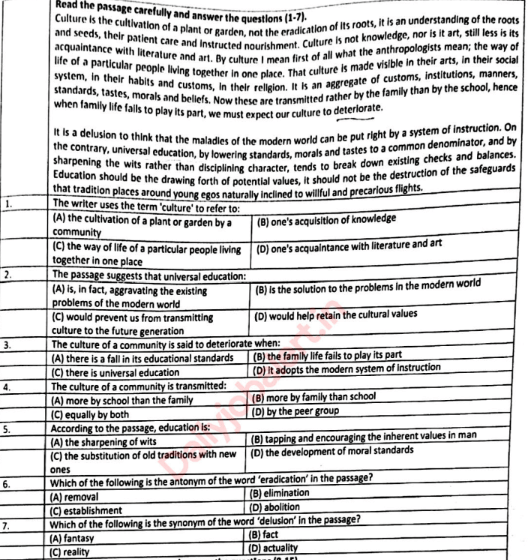
Practice Passage Question
You can practice the passage-based questions below to be better prepared:
04 30 PM IST - 14 Mar'26
Some More Passage-Based Questions with Answers
In the phrase, ‘Stores may have to cut’, there is:
(A) Modal verb
(B) Pronoun
(C) Adjective
(D) Adverb
Correct Answer: (A) Modal verb
The most appropriate meaning of the word ‘chartering’ is:
(A) Building
(B) Selling
(C) Designing
(D) Renting
Correct Answer: (D) Renting
04 15 PM IST - 14 Mar'26
Passage-Based Questions with Answers
The word ‘compounded’ means:
(A) Intensified
(B) Decelerated
(C) Confused
(D) Weakened
Correct Answer: (A) Intensified
Which of the following statements is correct in the context of the above passage?
(A) Consumers tend to get lazy when prices soar.
(B) There is increased struggle to buy pandemic pets.
(C) Nestle has stepped up its capacity.
(D) The shelves of supermarkets are empty because of panic-buying.
Correct Answer: (C) Nestle has stepped up its capacity.
Retailers have been reengineering their supply chains to:
(A) Improve their consumer base
(B) Ease the points of congestion
(C) Hike the prices
(D) Provide limited items
Correct Answer: (B) Ease the points of congestion
04 00 PM IST - 14 Mar'26
Passage to Read
First, read the passage below. We will be providing some related questions along with their correct answers for your reference:

03 45 PM IST - 14 Mar'26
English Language Practice Questions with Answers - 4
Which of the following is the immovable organ of speech?
(A) Soft Palate
(B) Uvula
(C) Lower Jaw
(D) Teeth-Ridge
Correct Answer: (D) Teeth-Ridge
While teaching Grammar, Mrs. Kumar prefers to take up examples before the children draw their own conclusions from them. Which method does she follow?
(A) Inductive Method
(B) Functional Method
(C) Deductive Method
(D) Structural Method
Correct Answer: (A) Inductive Method
Which type of teaching provides strengthening of correct language habits after the incorrect habits have been broken?
(A) Micro Teaching
(B) Situational Teaching
(C) Remedial Teaching
(D) Co-operative Teaching
Correct Answer: (C) Remedial Teaching
As an English teacher, Mr. Singh wants to understand the nature and extent of language errors and their symptoms. What type of test should be employed?
(A) Oral tests
(B) Written tests
(C) Diagnostic tests
(D) Achievement tests
Correct Answer: (C) Diagnostic tests
Which of the following is not a principle of gradation of vocabulary?
(A) Usefulness
(B) Teachability
(C) Word Frequency
(D) Structural Value
Correct Answer: (D) Structural Value
03 30 PM IST - 14 Mar'26
English Language Practice Questions with Answers - 3
Which of the following is not a component of multimedia?
(A) Graphic
(B) Object
(C) Sound
(D) Text
Correct Answer: (B) Object
Which of the following is not associated with active listening?
(A) Repeating
(B) Paraphrasing
(C) Reversing
(D) Reflecting
Correct Answer: (C) Reversing
In a diverse classroom, the best strategy to effectively teach language is:
(A) Rewarding the best learners in the class
(B) Assigning daily practice work for home
(C) Understanding needs of learners and accordingly customizing teaching
(D) Taking learners to the language laboratory at least once a week
Correct Answer: (C) Understanding needs of learners and accordingly customizing teaching
The purpose of remedial teaching is:
(A) To identify weak learners in the class or group
(B) To classify learners into various groups on the basis of ability
(C) To provide support to learners experiencing difficulties
(D) To improve the academic record of the instructor
Correct Answer: (C) To provide support to learners experiencing difficulties
'Learning to speak a language is always the shortest road to learning to read and write it.' Which principle supports this statement?
(A) Principle of imitation
(B) The oral way
(C) Priorities of language skills
(D) Give priority to sounds
Correct Answer: (B) The oral way
03 15 PM IST - 14 Mar'26
English Language Practice Questions with Answers - 2
The receptive language skills include:
(A) Listening and Speaking
(B) Speaking and Reading
(C) Listening and Writing
(D) Reading and Listening
Correct Answer: (D) Reading and Listening
The organs of speech do not include:
(A) Teeth
(B) Iris
(C) Pharynx
(D) Larynx
Correct Answer: (B) Iris
Which of the following statements is incorrect?
(A) India is a linguistically diverse country.
(B) Multilingualism is a bane.
(C) Human language is dynamic.
(D) NEP supports three-language formula.
Correct Answer: (B) Multilingualism is a bane.
The biggest challenge of teaching of English language effectively is:
(A) Poor school infrastructure
(B) Lack of good instructional material
(C) Inappropriate assessment
(D) Lack of well-trained teachers
Correct Answer: (D) Lack of well-trained teachers
Multilingual classrooms are a growing phenomenon mainly because of:
(A) The rapid advancements in ICT
(B) Parental pressure to learn foreign language
(C) Increase in mobility and migration
(D) Reach of mass media
Correct Answer: (C) Increase in mobility and migration
03 00 PM IST - 14 Mar'26
English Language Practice Questions with Answers - 1
Which of the following is not a Fundamental Principle of Language Teaching?
(A) Practice and drill
(B) Natural order of learning
(C) Selection and gradation
(D) Summative assessment
Correct Answer: (D) Summative assessment
Identify the correct statement:
(A) Transcription is a form in which a speech sound is represented.
(B) Phonetics is the study of meanings.
(C) Passive vocabulary refers to words used but not fully understood.
(D) Skimming is the technique to learn difficult words.
Correct Answer: (A) Transcription is a form in which a speech sound is represented.
A textbook is not:
(A) Easy to prepare
(B) An instructional material
(C) Presentable and attractive
(D) Tightly organized
Correct Answer: (A) Easy to prepare
The purpose of language evaluation includes:
(A) Feedback
(B) Monitoring
(C) Programme outcome/s
(D) All of the above
Correct Answer: (D) All of the above
02 45 PM IST - 14 Mar'26
A Topper's Quick Tip
When you see a question about a "diverse classroom" (a room with students from different backgrounds), the answer is almost always to "Treat diversity as a resource, not a problem." Never pick an answer that suggests separating or ignoring students who are different.
02 30 PM IST - 14 Mar'26
Quick Grammar Refresher
- Homophones: Words that sound the same but have different meanings (like, Sun and Son).
- Phonemes: These are the smallest units of sound. In English, there are 44 sounds (even though there are only 26 letters!).
- Active vs. Passive Voice:
- Active: "Ram ate the mango." (Focus on Ram).
- Passive: "The mango was eaten by Ram." (Focus on the mango).
02 15 PM IST - 14 Mar'26
Important "Exam Terms" for Pedagogy
- Remedial Teaching: This is like a "check-up." If a student is lagging behind, the teacher gives them extra help or uses a different way to explain the topic until they understand.
- Continuous and Comprehensive Evaluation (CCE): This means the teacher doesn't just wait for a final exam. They observe the student every day in class, through homework, and through activities.
- BICS vs. CALP:
- BICS: Simple "playground" talk (example, "How are you?").
- CALP: Deep "academic" language used for writing essays or science reports.
02 00 PM IST - 14 Mar'26
Acquisition vs. Learning
- Acquisition: This is "natural." Like a child learning their mother tongue by just being around family. There are no formal rules.
- Learning: This is "formal." This happens in a school where you learn grammar rules and use textbooks to master a second language (like English).
01 45 PM IST - 14 Mar'26
Topper’s Strategy to Attempt the Paper
Toppers don't just study hard; they play it smart during the exam. Here is how they usually handle the English section of Paper 2:
- For the reading comprehension, read the questions before you read the passage. This helps you "hunt" for the answers while you read, saving you a lot of time.
- If a grammar question is confusing, mark it and move on. Since there is no negative marking in PSTET, make sure you attempt every single question before the timer ends.
- If you aren't sure of an answer, look at the four options. Cross out the two that look completely wrong. Choosing between the remaining two gives you a 50% chance of being right!
01 30 PM IST - 14 Mar'26
Expert Tips for English Prep
- The PSTET often repeats the "style" of questions. Solve papers from 2023, 2024, and 2025 to understand the pattern.
- Many students ignore the teaching methods part, but it carries 15 marks. If you understand the logic of "how to teach," these are the easiest marks to get.
- Read one English editorial or a short story every day. This improves your reading speed for the exam.
- English is a scoring subject. Approach it with a clear mind, and you will find the answers are often hidden right there in the text.
01 15 PM IST - 14 Mar'26
Important Topics to Cover
The English section is usually divided into two main parts: Language Comprehension and Pedagogy of Language Development.
Language Comprehension
- Reading Unseen Passages: You will get two passages (one prose and one poem).
- Grammar Basics: Focus on Parts of Speech (Nouns, Verbs, Adjectives), Tenses, Active/Passive Voice, and Direct/Indirect Speech.
- Vocabulary: Practice Synonyms (similar words), Antonyms (opposite words), and Idioms/Phrases.
Pedagogy (Teaching Methods)
- Learning and Acquisition: How children "pick up" a language vs. how they are "taught" it.
- Principles of Language Teaching: Methods like the Direct Method or the Grammar-Translation Method.
- The Four Skills (LSRW): Listening, Speaking, Reading, and Writing.
- Challenges of Teaching: Teaching in a diverse classroom and dealing with common errors students make.
01 00 PM IST - 14 Mar'26
Paper 2 English Language Important Questions, Practice, Notes
Now we will be starting with the English section for the PSTET Paper 2 Exam 2026. In this part of the live blog, we will discuss important English language questions, provide short notes for quick revision, and share practice questions that you can attempt before the exam.
12 45 PM IST - 14 Mar'26
Founder of Differential Psychology
Differential Psychology studies the differences in intelligence, personality, abilities, and behaviour among individuals. Sir Francis Galton is considered the founder of this field because he was the first to study individual differences using measurement and statistical methods scientifically.
12 30 PM IST - 14 Mar'26
Author of "Thought and Language"
The book Thought and Language was written by Lev Vygotsky. It explains how language and thinking are connected and how social interaction plays an important role in a child’s learning and cognitive development.
12 15 PM IST - 14 Mar'26
CDP Practice Questions with Answers - 6
The concept of Mental age was firstly used by:
(A) Jensen
(B) Guilford
(C) Terman
(D) Binet
Answer: (D)
Which of the following represents the social skills given by UNICEF, UNESCO and WHO?
(A) Empathy, critical thinking and social skills
(B) Critical thinking, emotional and social skills
(C) Thinking, emotional and social skills
(D) Self-awareness, emotional and social skills
Answer: (A)
Which of the following best represents Gender equality?
(A) The process of being fair to women and men
(B) The ability to perceive existing gender differences...
(C) The absence of discrimination on the basis of a person's sex...
(D) Understanding that there are socially determined differences...
Answer: (C)
Which of the following concept of development refers to the circumstances in which development is uneven across domains?
(A) Spiral development
(B) Splintered Development
(C) Ladder development
(D) Abnormal development
Answer: (B)
Who among the following used the term learning disability for the first time?
(A) Binet
(B) Simon
(C) Galton
(D) Samuel Kirk
Answer: (D)
12 00 PM IST - 14 Mar'26
CDP Practice Questions with Answers - 5
Which of the following is not the dimension of multicultural education?
(A) Content segregation
(B) Empowering school culture
(C) Prejudice reduction
(D) Knowledge construction
Answer: (A)
The common emotional pattern of new born infant is:
(A) Affection, anger, fear, joy, attention
(B) Anger, fear, joy, curiosity
(C) Love, anger, fear
(D) Anger, attention, curiosity
Answer: (C)
Who gave two factor theory of intelligence?
(A) Spearman
(B) Thurston
(C) Guilford
(D) Vernon
Answer: (A)
11 45 AM IST - 14 Mar'26
Questions on CDP Classroom Management & Intelligence
Which of the following represents the big five classroom management strategies?
(A) Engagement, Misbehaviour, Rules, Routine, Praise
(B) Engagement, Punishment, Rules, Routine, Praise
(C) Engagement, Misbehaviour, Punishment, Routine, Praise
(D) Punishment, Misbehaviour, Rules, Routine, Praise
Answer: (A)
Raven’s progressive Matrices test is a type of ________.
(A) Verbal test
(B) Non-verbal group test
(C) Individual verbal test
(D) Verbal group test
Answer: (B)
Which of the following tools are used in formative assessment?
(A) Observation, Anecdotal records, written examination of end term
(B) Observation, Anecdotal records, document analysis
(C) Debates, Projects, written examination of end term
(D) Portfolio analysis, Quizzes, Projects (Standard FA tools)
Answer: (D)
Sense training is empathized by whom?
(A) John Dewey
(B) Pestalozzi
(C) Montessori
(D) Froebel
Answer: (C)
Information processing is most closely aligned with:
(A) Behaviourism
(B) Cognitive psychology
(C) Social Cognitive Theory
(D) Ecological theory
Answer: (B)
11 30 AM IST - 14 Mar'26
CDP Practice Questions with Answers - 4
The weightage of formative assessment in continuous and comprehensive evaluation is:
(A) 80%
(B) 50%
(C) 40%
(D) 60%
Answer: (C)
Who gave symbolic interaction theory?
(A) Emile Durkheim
(B) Karl Marx
(C) Robert Stolle
(D) Max Weber (Note: Often associated with Mead/Blumer, but Weber is the option provided here).
Answer: (D)
11 15 AM IST - 14 Mar'26
CDP Practice Questions with Answers - 3
According to which forms of learning, the consequences of behaviour produce changes in the probability that the behaviour will occur?
(A) Classical conditioning learning
(B) Operant conditioning learning
(C) Discovery learning
(D) Motivational learning
Answer: (B)
The frequency of a response increases because it is followed by the removal of an aversive stimulus represents ________ as per the operant conditioning theory.
(A) Positive reinforcement
(B) Negative reinforcement
(C) Positive punishment
(D) Negative punishment
Answer: (B)
In ________ the concept of emotional intelligence was officially coined by ________.
(A) 1995, Salovey and Smith
(B) 1990, Mayer and Griffin
(C) 1990, Salovey and Mayer
(D) 1992, Salovey and Eggen
Answer: (C)
11 00 AM IST - 14 Mar'26
CDP Practice Questions with Answers - 2
Manan steals a pen from his friend. He feels if he is not going to report these incidents to the teacher as they involve equal exchange. At what stage of moral development theory has Manan reached?
(A) Stage 1
(B) Stage 2
(C) Stage 3
(D) Stage 4
Answer: (B)
Following represents the three criteria that characterize the children who are gifted as described by Ellen Winner except:
(A) Precocity
(B) Marching to their own drummer
(C) High emotional stability
(D) A passion to master
Answer: (C)
________ are broad categories that reflect impressions and beliefs about the appropriate behaviour for females and males.
(A) Gender stereotyping
(B) Gender views
(C) Gender roles
(D) Gender Bias
Answer: (C)
10 45 AM IST - 14 Mar'26
CDP Practice Questions with Answers - 1
Which of the following represents the concept of development?
(A) Quantitative changes in the organism
(B) Qualitative changes in the organism
(C) Quantitative and qualitative changes in the organism
(D) Increase in height
Answer: (C)
The ability to reason and logically combine relationships is called _________.
(A) Transitivity
(B) Seriation
(C) Centration
(D) Conservation
Answer: (A)
The upper limit of Vygotsky's concept of the Zone of Proximal Development represents:
(A) Level of skills reached by a child working independently.
(B) Level of additional responsibility the child can accept with the assistance of More Knowledgeable Ones.
(C) Difference between work performed independently and with assistance.
(D) Level of skills that are beyond the potential of the child even if support is extended.
Answer: (B)
10 30 AM IST - 14 Mar'26
Principles of Child Development
Child development follows certain basic principles.
- Development is continuous. It starts before birth and continues throughout life.
- Development follows a sequence. For example, children first learn to crawl, then walk, and then run.
- Development moves from simple to complex skills.
- Each child develops at a different pace, but the overall pattern is similar for most children.
Teachers must understand these principles to support students properly.
10 15 AM IST - 14 Mar'26
Growth vs Development
Growth refers to physical changes in the body, such as an increase in height, weight, or size. It is quantitative and can be measured easily. Development refers to overall changes in abilities such as thinking, emotional maturity, language skills, and social behaviour. Development is qualitative and continues throughout life.
Example: A child growing taller is growth. A child learning to solve problems is development.10 00 AM IST - 14 Mar'26
Inclusive Education
This isn't just a topic; it’s a philosophy. It means every child, regardless of their physical, mental, or social background, should learn together in the same classroom. As a teacher, your job is to adapt your teaching style to meet the "special needs" of all students, not just the majority.
09 45 AM IST - 14 Mar'26
Lev Vygotsky’s Social Theory
Vygotsky taught us that children learn best through social interaction.
- Zone of Proximal Development (ZPD): This is the "sweet spot" of learning - it is the gap between what a student can do alone and what they can do with a teacher's help.
- Scaffolding: This is the temporary support you give a student (like a hint or a clue) until they can do the task by themselves.
09 30 AM IST - 14 Mar'26
Jean Piaget’s Cognitive Stages
Piaget believed children go through four stages of thinking. For Paper 2, you mainly need to know the Concrete Operational (7-11 years) and Formal Operational (11+ years) stages.
- Concrete: Kids start thinking logically, but mostly about "real" things they can see.
- Formal: This is where they start thinking about abstract ideas, "what if" scenarios, and complex logic.
09 15 AM IST - 14 Mar'26
Important Topics to Focus On
- The Big Three Theories: Jean Piaget (Cognitive), Lev Vygotsky (Social Development), and Lawrence Kohlberg (Moral Development).
- Inclusive Education: Understanding how to teach children with special needs or different backgrounds.
- Learning and Motivation: Factors that make a student want to learn and the different strategies they use to solve problems.
- Assessment and Evaluation: The difference between "Assessment for Learning" (helping them learn) and "Assessment of Learning" (grading them at the end).
- Heredity and Environment: How a child's genes and their surroundings work together to shape who they are.
09 00 AM IST - 14 Mar'26
Paper 2 Child Development & Pedagogy Important Questions, Practice, Notes
In this live blog, we will first discuss important Child Development & Pedagogy questions for the PSTET Paper 2 Exam 2026. You will also find quick revision notes on important topics along with practice questions that you can attempt before the exam.
08 45 AM IST - 14 Mar'26
Paper 2 Complete Syllabus - Download Here
If you have not already downloaded the PSTET Paper 2 syllabus 2026, this is a good time to do it. The syllabus helps you quickly revise all the important topics before the exam. You can download the complete syllabus directly from the link provided here.
08 30 AM IST - 14 Mar'26
Exam Pattern Details
The questions will appear in PSTET Paper 2 as per the following break-up:
Section
Questions
Marks
(i) Child Development & Pedagogy (compulsory)
30 MCQs
30 Marks
(ii) Language I (compulsory)
30 MCQs
30 Marks
(iii) Language II (compulsory)
30 MCQs
30 Marks
(iv) Subject-Specific
a) For Mathematics and Science teacher: Mathematics and Science - 60 MCQs of 1 mark each
b) For Social Studies teacher: Social Studies - 60 MCQs of 1 mark each
c) For Art & Craft teacher: Art & Craft - 60 MCQs of 1 mark each
d) For Physical Education teacher: Physical Education - 60 MCQs of 1 mark each
e) For Home Science teacher: Home Science - 60 MCQs of 1 mark each
f) For Urdu teacher: Urdu - 60 MCQs of 1 mark each
g) For Sanskrit teacher: Sanskrit - 60 MCQs of 1 mark each
60 MCQs
60 Marks
Total
150 MCQs
150 Marks
08 15 AM IST - 14 Mar'26
Hall Ticket Download Reminder
Candidates appearing for the exam must download their PSTET hall ticket from the official website. Make sure to carry a printed copy of the admit card along with a valid photo ID to the exam centre, as entry will not be allowed without it.
08 00 AM IST - 14 Mar'26
PSTET Paper 2 Exam 2026 Date & Timings
The Paper 2 exam will be conducted on March 15, 2026, in the afternoon shift. The exam will begin at 2:00 PM and continue until 4:30 PM.