
 CBSE Class 10 Science Answer Key 2026 Out
CBSE Class 10 Science Exam 2026: As CBSE Class 10 Science exam concluded today, February 25, 2026, a common debate has emerged among students regarding the difficulty level across sets. According to subject experts, Set 3 can be considered slightly more difficult due to more application based questions in Physics section. However, the Board follows a normalization process to ensure that students who received a tougher set are not at a disadvantage. Through this live blog, students can check the unofficial answer key for all sets prepared by CollegeDekho Science & Maths SME Mahima Gupta. The theory paper comprised 39 compulsory questions divided into three subject sections: Section A (Biology), Section B (Chemistry), and Section C (Physics). Section A comprises 16 questions of 30 marks. Section B includes 13 questions, each worth 25 marks. Section C comprises 10 questions, each worth 25 marks. As per the latest pattern, 50% of the paper comprises competency-based questions.
| Link to Submit Student Reviews |
|---|
| Click Here to Submit Your Review on CBSE Class 10 Science Exam |
CBSE Class 10 Science Answer Key 2026 (Unofficial)
Answer Key For Set 31/5/2
| Questions | Answer Key |
|---|---|
| Section B (Chemistry) 17 | (D) C 4 H 8 and C 5 H 12 |
| 18 | (D) Al 2 O 3 |
| 19 | (C) The amount of H 2 gas evolved is less. |
| 20 | (B) 2:1 |
| 21 | (D) CH 3 COONa is formed from a weak acid and strong base, making it Basic. |
| 22 | (C) C3H8 |
| 23 | (D) Magnesium and Aluminium |
| 24 | (A) Both Assertion (A) and Reason (R) are true, and Reason (R) is the correct explanation of the Assertion (A) |
Answer Key For Set 31/2/2
Questions | Answer Key |
|---|---|
Section A (Biology) 1. | (C) Asexual reproduction by breaking up of Spirogyra filaments into smaller parts |
| 2. | (D) 1: 2: 1 |
| 3. | (C) Chemotropism |
| 4. | (D) The guard cells have swelled due to inflow of water. |
| 5. | (C) Decrease in energy at higher levels |
| 6. | (B) (ii) and (iii) |
| 7. | (B) T5 |
| Section B (Chemistry) 1. | (B) Tartaric Acid |
| 2. | (D) pH falls below 5.6 |
Answer Key For Set 31/5/1
Questions | Answer Key |
|---|---|
| Section C (Physics) 30 | (A) 20 cm |
| 31. | (A) Converging lens |
| 32. | (D) Assertion (A) is false, but Reason (R) is true |
| Section A (Biology) 1. | (C) Guard Cells |
| 2. | (A) Pituitary Gland |
| 3. | (D) Glucose - Pyruvate Lack of oxygen Lactic acid + Energy |
| 4. | (C) Uterus |
| 5. | (C) 44 + XY |
| 6. | (B) DDT |
| 7. | (B) Break down complex organic substances to simple inorganic substances |
| 8. | (A) Both Assertion (A) and Reason (R) are true, and Reason (R) is the correct explanation of the Assertion (A) |
| 9. | (A) Both Assertion (A) and Reason (R) are true, and Reason (R) is the correct explanation of the Assertion (A) |
Answer Key For Set 31/5/3
Questions | Answer Key |
|---|---|
| Section A (Biology) 1. | (D) Glucose - Pyruvate Lack of oxygen Lactic acid + Energy |
| 2. | (B) DDT |
| 3. | (A) Producers |
| 4. | (C) Guard Cells |
| 5. | (B) Ozone shields earth's surface from harmful infrared radiations. |
| 6. | (C) Uterus |
| 7. | (C) 44 + XY |
| 8. | (A) Both Assertion (A) and Reason (R) are true, and Reason (R) is the correct explanation of the Assertion (A) |
| Section B (Chemistry) 17 | (D) |
| 18 | (C) |
| 19 | (B) |
| 20 | (D) |
| 21 | (D) |
| 22 | (D) |
| 23 | (C) |
| 24 | (A) |
| Section C (Physics) 30 | (A) |
| 31 | (A) |
| 32 | (D) |
Answer Key For Set 31/2/1
Questions | Answer Key |
|---|---|
| Section A (Biology) 1. | (A) 1: 2: 1 |
| 2. | (C) Chemotropism |
| 3. | (C) Asexual reproduction by breaking up of Spirogya filaments into smaller parts |
4. | (A) Starch |
| 5. | (B) (ii) and (iii) |
| 8. | (A) Both Assertion (A) and Reason (R) are true, and Reason (R) is the correct explanation of the Assertion (A) |
| 9 | (B) Both Assertion (A) and Reason (R) are true, and Reason (R) is not the correct explanation of the Assertion (A) |
| Section C (Physics) 30. | (A) Concave mirror; Nature of image-virtual |
| 31 | (B) Red, Yellow, Green, Blue, Violet |
| 32 | (B) Both Assertion (A) and Reason (R) are true, and Reason (R) is not the correct explanation of the Assertion (A) |
| Section B (Chemistry) 17. | (D) (ii) and (iii) |
| 18. | (C) X- Hydrochloric acid, Y= Hydrogen |
| 19. | (C) Green colour of the salt fades and smell of burning sulphur is evolved |
| 20. | (B) Mg reacts with water to produce H 2 gas which helps in floating. |
| 21. | (A) Less than 7 |
| 22 | (C) Sodium Hydrogen carbonate+ Tartaric acid |
| 23. | (B) The jewelry comes in contact with air, moisture, and acids and corrodes. |
| 24. | (A) Both Assertion (A) and Reason (R) are true, and Reason (R) is the correct explanation of the Assertion (A) |
Answer Key For Set 31/2/3
Questions | Answer Key |
|---|---|
| Section B (Chemistry) 17. | (C) Oxalyic Acid |
| 18. | (B) Washing Soda |
| 19. | (C) and III |
| 20. | (C) X Hydrochloric Acid, Y Carbon Dioxide |
| 21. | (C) Green colour of the salt fades and the smell of buring sulphur is evolved |
| 22. | (D) It changes colour due to rusting |
| 23. | (C) Mg rteacts with water to produce H2 gas which helps in floating |
| 24. | (A) Both Assertion and Reason are True and Reason is correct Explanation of Assertion |
Which Set CBSE Class 10 Science Question Paper 2026 was Difficult?
Based on student reactions and expert review, here is the set-wise analysis:
Set | Overall Difficulty | Toughest Section |
|---|---|---|
Set 1 | Easy to Moderate | None (Well-balanced) |
Set 2 | Moderate | Section A (Tricky MCQs) |
Set 3 | Moderate to Challenging | Section C & D (Physics Numericals) |
CBSE Class 10 Science 2026 Student Reviews from Test Centres
Here are the quick reactions from students across test centres who appeared for the paper.
Student Name | Location | Quick Review |
|---|---|---|
Aarav Mehra | New Delhi | "Physics numericals were a bit calculation-heavy, but Biology was a lifesaver. NCERT is definitely the king!" |
| Sneha Reddy | Hyderabad | "The case-study questions in Section E were tricky. They weren't direct—you really had to apply logic to those electricity circuits." |
| Ishaan Das | Kolkata | "The paper was balanced. Chemistry reactions were straightforward, though the assertion-reason questions felt like a bit of a trap." |
| Meher Kaur | Chandigarh | "I loved the new section-wise format. It made the paper feel more organized. Managed to finish 10 minutes early!" |
| Rahul G. | Bengaluru | "Moderate but lengthy. I spent too much time on the ray diagrams in Physics. Section-wise evaluation made me nervous about writing in the right spot!" |
What's next after the CBSE Class 10 Science Exam 2026?
The next major exams for CBSE Class 10 students are Hindi (March 2) and Social Studies (March 7). With these, the major subject exams of the 10th class will come to an end. You can check CBSE Class 10 SST Marks Distribution 2026 to get an idea of the list of high-priority and low priority chapetrs. The difficulty level of the Social exam is expected to be 'Moderate'.
Stay tuned to this LIVE blog for real-time updates on CBSE Class 10 Science 2026 examination for checking answer keys immediately after the exam!
CBSE Class 10 Science Exam 2026 LIVE
06 00 PM IST - 25 Feb'26
Final Wrap-Up: CBSE Class 10 Science Exam 2026 Summary
A Successful Day for CBSE Candidates. We close our live coverage for today. The CBSE Class 10 Science Exam 2026 was a fair test of knowledge with no major surprises or "out-of-syllabus" complaints.
- Key Takeaway: Students who stuck to NCERT and practiced the 2026 Sample Papers are expected to score highly.
- Official Status: No reports of paper leaks or technical glitches were reported across the country.
05 30 PM IST - 25 Feb'26
Competency Trends; Analytical Over Rote Learning
What Science 2026 Taught Us for SST & Hindi? Today's Science paper confirmed a major trend: CBSE is moving heavily toward Competency-Based Questions.
- For Hindi: Expect "Assertion-Reason" questions in the Unseen Passages (Apathit Gadyansh).
- For SST: Instead of direct "What is Democracy?" questions, expect case-study-based questions where you must analyze a situation and apply democratic principles.
- Final Word: Stick strictly to NCERT definitions. The examiners are looking for specific keywords like Federalism, Globalisation, and Sustainable Development to award full marks.
05 00 PM IST - 25 Feb'26
Social Science (March 7) | The 5-Day Power Plan
Geography Maps and History Timelines Social Science (SST) remains the most vast subject in the Class 10 curriculum. To avoid burnout, educators recommend a "subject-a-day" rotation starting tomorrow.
- Strategic Move: Start with History (Nationalism in India) and Geography (Resources), as these carry the highest weightage.
- Map Alert: Do not leave Map work for the final night! Practice labeling the major Dams, Mineral belts, and Indian National Congress sessions now. CBSE 2026 is expected to feature at least 5 marks of dedicated map questions.
04 30 PM IST - 25 Feb'26
Hindi (March 2) | The "Scoring" Language Strategy
Focus on Creative Writing & Grammar Precision With the Science exam behind them, students are now pivoting to Hindi (Course A & B). Experts suggest that the secret to a 90+ score in Hindi isn't just knowing the stories, but mastering the Writing Section (Khand ‘D’).
- Tip: Dedicate the next 48 hours to practicing Anuched Lekhan (Paragraph Writing) and Patra Lekhan (Letter Writing).
- Key Focus: Ensure you are familiar with the 2026 formats for E-mail writing and Sandesh Lekhan, as these are high-scoring areas where students often lose marks due to incorrect layouts.
04 00 PM IST - 25 Feb'26
What's Next? Preparing For Social Science
Strategy Shift for the Next Major Paper With Science behind them, students are already looking toward the next big hurdle: Social Science (SST) on March 7. Experts suggest taking a 24-hour "brain break" before diving into History and Geography. Today's "Competency-Based" trend in Science suggests that the SST paper might also feature more source-based and analytical questions.
03 30 PM IST - 25 Feb'26
Data Trends: The Toughest Chapters Of 2026
As per students’ reviews, "Electricity" and "Carbon and its Compounds" have been voted the most challenging chapters in today’s exam. Approximately 65% of students found the paper "Moderately Difficult," while 20% felt it was "Easy." Only 15% of respondents classified it as "Tough," mostly citing the Physics section's length.
03 00 PM IST - 25 Feb'26
Estimate Your Scores Using Unofficial Answer Keys
Our experts are preparing unofficial answer keys for all sets and adding them to this live blog. Students are currently tallying their MCQ responses. These keys provide a quick estimate for scores, but experts warn students that the official CBSE marking scheme often gives "step marks" for Physics calculations and Chemistry reactions. Unofficial keys may not include all of these marks.
02 30 PM IST - 25 Feb'26
Collegedekho Expert Analysis: Balanced But Conceptual
Subject experts are now analyzing Sets 1, 2, and 3. The general consensus is that the paper was well-balanced. Biology experts highlight that "Life Processes" and "Heredity" carried significant weightage as expected. The new 2026 exam pattern, which includes more application-based MCQs, seems to have tested students' conceptual depth rather than just memory.
02 00 PM IST - 25 Feb'26
First Reactions: The "NCERT Is King" Verdict
Students Weigh In on Difficulty Levels. Early feedback from students in major cities indicates that the paper was Moderate. While Chemistry was cited as "very straightforward and NCERT-based," Physics numericals on "Light" and "Electricity" were described as tricky. Many students noted that the Case-Study questions (Section E) required more logical thinking than previous years' samples.
01 30 PM IST - 25 Feb'26
Pens Down! Science Exam 2026 Concludes
Over 25 Lakh Students Feel Relief. Students across thousands of CBSE centers have finished their 80-mark Science theory paper. As they leave the exam halls, our experts will provide the initial exam feedback.
01 00 PM IST - 25 Feb'26
Last 30 Minutes: The Race Against Time
Revision Mode Kicks in as we enter the final 30-minute window, the atmosphere at exam centers is one of intense focus. Students are advised to double-check their chemical equations in Section B for balancing errors and ensure all biological diagrams in Section A are neatly labeled. Proctors are beginning the final rounds of answer sheet verification.
12 30 PM IST - 25 Feb'26
The Final Countdown: Crunch Time For Numericals
High-Weightage Sections Underway With only one hour remaining, students are currently deep into the most challenging parts of the paper. Reports from exam coordinators suggest that Section C (Physics) and Section D (Long Answers) are the primary focus right now. Educators remind students to keep an eye on the clock for those 5-mark Biology diagrams and multi-step Physics calculations.
12 00 PM IST - 25 Feb'26
The Final Push: Invigilators on High Alert
As the clock strikes noon, students have officially entered the final 90 minutes of the Science paper. Early reports from exam centers indicate that most students are currently tackling Section C and D, which typically house the heavyweight Physics numericals and Biology long-answer questions. Invigilators report a calm but focused atmosphere across centers.
11 32 AM IST - 25 Feb'26
Upcoming Exam Details for CBSE Class 10 Students
As the Science exam ends today, the upcoming two major exams are Hindi (Course A & B) and Social Studies. SST exam also know as Social Studies is the major exam than Hindi that is scheduled to be conducted on March 7.
10 46 AM IST - 25 Feb'26
Exam commenced peacefully at all exam centres
CBSE 10th Science exam has commenced, and there are no untoward incidents reported at any exam centre so far. Once the exam concludes, the unofficial answer key shall be updated on this page.
10 13 AM IST - 25 Feb'26
CBSE 10th Science: Students entered exam halls
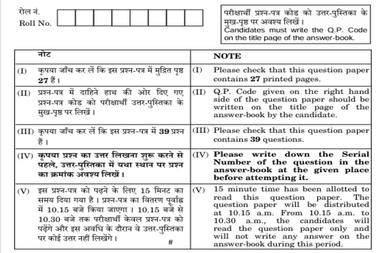
Students have entered the exam hall, and the exam begins with the distribution of question papers at 10:15 AM. Students will start answering the questions from 10:30 AM onwards.
09 59 AM IST - 25 Feb'26
Is CBSE Class 10 Science Paper 2026 Leaked?
No paper leak case has been registered with respect to the CBSE 10th Science exam 2026. As there are multiple sets of question papers, the chances of a leak are almost nil.
09 34 AM IST - 25 Feb'26
Entry into the Exam Hall begins
Students are now being allowed into the exam hall. The final countdown for the exam begins now. Question papers will be distributed from 10:15 AM onwrads so that students get 15 minutes to read the questions.
09 11 AM IST - 25 Feb'26
Final Checklist for CBSE Class 10 Science
Topic Final Check Chemistry Are your state symbols $(s, g, aq)$ added to all reactions? Physics Did you draw the arrows on your ray diagrams? Biology Are labels (Nephron/Heart) only on the right-hand side? Rule Did you leave space to start Physics/Chemistry/Bio on NEW pages? 09 09 AM IST - 25 Feb'26
Gate closes at 10 AM at all Exam centres
The entry into the exam hall starts at 9:30 AM, followed by the closure of the gate at 10 AM. No student will be allowed after the gate closure. The exam begins at 10:30 AM.
09 04 AM IST - 25 Feb'26
CBSE 10th Science: List of resources to be provided after the exam
The following resources will be provided to students after the exam -
- Science unofficial answer key for all sets
- Student reviews
- Subject expert opinion on question paper
09 00 AM IST - 25 Feb'26
The "Mind Reset" & CBSE Class 10 Science 2026 Exam Hall Entry
Entry into the examination hall is now officially open. This is the moment to transition from "Revision Mode" to "Execution Mode." If you encounter a question that looks unfamiliar, do not panic; remember that 50% of the paper is competency-based, meaning the answer is often hidden within the provided context or diagram. Take your seat, arrange your stationery, and focus on steady, rhythmic breathing to keep your analytical mind sharp.
08 30 AM IST - 25 Feb'26
Strategic Reading & Case-Study Prioritization
Expert Tip: As you prepare to enter the hall, commit to a "Top-Down" reading strategy for the 10:15 AM reading window. Instead of glancing at MCQs, focus entirely on Section E (Case-Based Questions). These four-mark questions often contain dense data; reading them now allows your subconscious to process the information while you later breeze through the simpler objective questions.
08 00 AM IST - 25 Feb'26
The "Positive Visualization": Expert Tip
Spend these last few minutes visualizing yourself writing a neat paper. Remind yourself that you have covered the NCERT key topics. Trust your preparation.
07 30 AM IST - 25 Feb'26
The "15-MINUTE" MCQ Scan: Expert Tip
During the 10:15 AM reading time, scan the Assertion-Reasoning questions first. These require the most logical "quiet time." Decide on your answers then, so you can simply tick them off when the writing bell rings at 10:30 AM.
07 00 AM IST - 25 Feb'26
CBSE Class 10 Science Exam 2026: "Section-Wise" Buffer
Expert Tip: As you prepare to leave, remind yourself: start a New Section (Physics/Chem/Bio) on a fresh page. Clearly write "SECTION B: CHEMISTRY" in large, bold letters at the top to ensure the specialized examiner finds your work easily.
06 30 AM IST - 25 Feb'26
The "No-Calculator" Reminder: Critical Alert
Calculators are strictly prohibited. For Physics numericals, do your rough work on the right-hand margin of the answer sheet and do not erase it. Examiners sometimes give partial marks for correct calculation steps even if the final result is slightly off.
06 00 AM IST - 25 Feb'26
Biological Magnification" Alert: Probable Topic
In the 'Our Environment' section, be ready to explain why the highest concentration of pesticides is found in humans. Use the term "Trophic Levels" and explain that these chemicals are non-biodegradable.
05 30 AM IST - 25 Feb'26
Ohm's Law Graph (V-I)
Expert Insight: In Physics, if you draw the V-I graph, it must be a straight line passing through the origin. The slope of this graph represents the Resistance (R). If the axes are swapped (I-V), the slope is 1/R. Read the graph labels carefully!
05 00 AM IST - 25 Feb'26
Drawing The "Female Reproductive System"
Expert Tip: If asked to draw the female reproductive system, ensure you label the Fallopian Tube (Oviduct) as the site of fertilization. Forgetting this specific label often leads to a half-mark deduction in 5-mark diagram questions.
04 30 AM IST - 25 Feb'26
The "Corrosion" Chemistry Duo: Expected Question
Focus on the colors of corrosion. Black coating on Silver ($Ag_2S$) and Green coating on Copper (CuCO3 . Cu(OH)2). Mentioning the specific chemical formula of the coating will set you apart in the 1-mark observation section.
04 00 AM IST - 25 Feb'26
Dispersion Vs. Scattering: Expert Tip
Know the difference! Dispersion causes the Rainbow (splitting of light), while Scattering causes the Blue Sky and Red Sunset. Do not use these terms interchangeably; they represent different physical phenomena of light.
03 30 AM IST - 25 Feb'26
Hormonal Feedback Mechanism: Probable Topic
Biology experts suggest a 2-mark question on the "Feedback Mechanism" of insulin. Be prepared to explain how the timing and amount of hormone released are regulated by the sugar levels in the blood.
03 00 AM IST - 25 Feb'26
The "Retrievable" Formula Sheet
Expert Tip: If you are still awake, do not read new chapters. Look only at your "Cheat Sheet" for Resistivity (p), Refractive Index (n = c/v), and Magnification (m = -v/u). Close your eyes and visualize the derivation of R in series/parallel one last time.
02 30 AM IST - 25 Feb'26
Saponification Vs. Hydrogenation
Expert Insight: Don't confuse these two "ation" processes. Hydrogenation is the addition of H2 to vegetable oils (unsaturated) to make vanaspatighee (saturated) using a Nickel catalyst. Saponification is the alkaline hydrolysis of esters. Both are 2-mark staples in Carbon compounds.
02 00 AM IST - 25 Feb'26
Magnetic Field Direction: The "Electron" Trap
Expert Tip: In Magnetic Effects, if a question mentions an electron moving in a field, remember the "Current" direction is opposite to the electron's motion. Use Fleming’s Left-Hand Rule based on the current direction, not the electron direction, to find the force.
01 30 AM IST - 25 Feb'26
Biology: The "Alveoli" Vs. "Villi" Comparison
Expected Question: A high-probability comparison question involves the structural adaptation of Alveoli (Lungs) and Villi (Small Intestine). Both increase surface area for exchange. Use the keyword "Richly supplied with blood vessels" to secure full marks in this 3-mark analytical question.
01 00 AM IST - 25 Feb'26
Power Of Lens & Combination Logic
Probable Topic: In Physics, be ready for a numerical on a "Combination of Lenses." If two lenses of power P1 and P2 are placed in contact, the net power P = P1 + P2. Ensure you use the correct signs: (+) for Convex and (-) for Concave.
12 30 AM IST - 25 Feb'26
The "Amphoteric" Chemistry Trap
Expert Insight: Experts warn that students often forget the dual nature of certain oxides. Memorize the reactions of Aluminum Oxide (Al2O3) and Zinc Oxide (ZnO) with both acids and bases. A common 3-mark question involves writing these specific "Amphoteric" reactions to show both acidic and basic behavior.
12 00 AM IST - 25 Feb'26
The "Section-Wise" Mental Map
Final Expert Tip: Remind yourself one last time: Physics, Chemistry, and Biology must stay in their separate sections. If you find a Biology question easy, don't jump to start it in the Physics section!
11 30 PM IST - 24 Feb'26
The 10 AM Gate Closure: Critical Alert
Gates at all exam centers will close at 10 AM sharp. Do not aim for 10 AM; aim to be at the center by 9:15 AM to avoid last-minute panic or traffic delays.
11 00 PM IST - 24 Feb'26
The "Transparent" Policy
Rule Reminder: Only transparent water bottles and transparent pencil boxes are allowed. All electronic items, including smartwatches, are strictly banned.
10 30 PM IST - 24 Feb'26
Revisit The "10% Law" of Energy
Probable Topic: In the 'Our Environment' section, a numerical on energy transfer between trophic levels is expected. If 20,000 J is at the Producer level, only 20 J reaches the Tertiary consumer.
10 24 PM IST - 24 Feb'26
Physics Numerical Mastery - Sign Convention Table
Expert Tip: In the 2026 Science paper, 50% of Physics marks come from numericals. Use this table to avoid the "Silly Sign Error."
Physical Quantity Symbol Concave (Mirror/Lens) Convex (Mirror/Lens)
Object Distance u Always Negative (−) Always Negative (−)
Focal Length f Negative (−) Positive (+) Image Distance v Negative (−) (if Real) Positive (+) (Always for Mirror)
Image Distance v Positive (+) (if Virtual) Positive (+) (for Lens, Real)
Height of Object h1 Positive (+) Positive (+) Height of Image h2 Negative (−) (Inverted) Positive (+) (Erect)
10 00 PM IST - 24 Feb'26
Calculate Your "Sleep Quota"
Expert Tip: Science requires high analytical focus. Ensure at least 7 hours of sleep. A tired brain is more likely to make "silly mistakes" in balancing equations or reading circuit diagrams.
09 30 PM IST - 24 Feb'26
Final Bag Check: The Admit Card
Essential Tip: Place your Original Admit Card in a transparent pouch along with your school ID. CBSE 2026 rules are strict; no entry without the physical hard copy, even if you have a digital version.
09 00 PM IST - 24 Feb'26
The "Activity 1.1" Warning
Expert Insight: Experts predict a Case-Based question on Magnesium ribbon burning. Remember: The white powder formed is Magnesium Oxide (MgO), and the ribbon must be cleaned with sandpaper to remove the protective layer of basic magnesium carbonate.
08 30 PM IST - 24 Feb'26
CBSE 10 Science 2026: Biology- Nephron Vs. Neuron
Expected Question: These two are often confused under pressure. A 3-mark question on the structure/function of the Nephron is highly probable for 2026. Ensure you know the difference between reabsorption (Nephron) and impulse transmission (Neuron).
08 00 PM IST - 24 Feb'26
CBSE 10 Physics 2026: Mastering Sign Conventions
Expert Tip: Before sleeping, do a mental run-through of the Cartesian Sign Convention. Remember: Object distance (u) is always negative. For a Concave Mirror, f is negative; for a Convex Mirror, $f$ is positive. A sign error here ruins the entire numerical.
07 30 PM IST - 24 Feb'26
The "Competency" Clarity Check
Expert Insight: With 50% of the marks now tied to competency-based questions, experts suggest spending your final hours looking at the "Inference" parts of NCERT activities. Don't just memorize the steps; understand why the lime water turned milky or why the light ray bent toward the normal.
07 00 PM IST - 24 Feb'26
CBSE Class 10 Science Exam Tip 2026
- Case-Based Questions: Expect at least two 4-mark case studies. One is likely from "Our Environment" (focusing on the 10% Law or Ozone depletion) and one from "Electricity" (household circuits).
- Diagrams: Always use a sharp pencil and label on the right side.
06 40 PM IST - 24 Feb'26
CBSE Class 10 Science 2026: Expected Question 8
(i) State Ohm's Law and plot a V-I graph for a metallic conductor.
(ii) Three resistors of 2Ω, 3Ω, and 6Ω are connected in parallel. Calculate the equivalent resistance of the combination.
06 20 PM IST - 24 Feb'26
Expected CBSE Class 10 Science 2026 Question 7
A person is unable to see objects clearly beyond 2 meters.
(i) Name the defect of vision they are suffering from.
(ii) List two causes of this defect.
(iii) How can it be corrected? Draw a ray diagram for the correction.
06 00 PM IST - 24 Feb'26
CBSE Class 10 Science 2026: Final Preparation Strategy
- Solve the 2026 Official Sample Paper: It contains the exact "Competency" level you will face.
- Practice the "Comparison" Table: Board examiners love tables (e.g., Aerobic vs. Anaerobic, Metal vs. Non-metal).
- Check Your Units: Re-read every Physics numerical to ensure you haven't written cm instead of m.
05 40 PM IST - 24 Feb'26
CBSE Class 10 Science 2026: Expected Question 6
A pure tall pea plant (TT) is crossed with a pure short pea plant (TT).
(i) What is the phenotype of the F1 generation?
(ii) Using a Punnett square, show the F2 generation and state the Genotypic and Phenotypic ratios.
05 20 PM IST - 24 Feb'26
Final 10-Minute "Diagram Arrow" Check
In the rush of the exam, 30% of students forget to draw arrows on ray diagrams or circuit diagrams. Use your final buffer time to ensure every light ray and every current flow (I) has a clear direction arrow.
05 00 PM IST - 24 Feb'26
The 15-Minute "Reading Order"
Expert Insight: Don't read the paper from Q1 to Q39. Read Section E (Case Studies) and Section D (Long Answers) first. This seeds the complex problems in your subconscious, allowing your brain to process them while you breeze through the MCQs.
04 40 PM IST - 24 Feb'26
CBSE Class 10 Science 2026 Expected Question 5
Why is it necessary to separate oxygenated and deoxygenated blood in mammals and birds? Explain the concept of Double Circulation in humans.
04 20 PM IST - 24 Feb'26
The "3-R" and "5-R" Environmental Shift
Expert Insight: The "Our Environment" section has shifted from simple 3-Rs (Reduce, Reuse, Recycle) to the more modern 5-Rs (Refuse, Repurpose). Using the updated terminology shows the examiner you are studying from the latest 2026 syllabus updates.
04 00 PM IST - 24 Feb'26
CBSE 10 Science 2026 Expected Question 4
Draw a neat diagram of the Human Nephron and label: Glomerulus, Bowman’s Capsule, and Tubular part. Explain how urine is formed in the human body.
03 40 PM IST - 24 Feb'26
Mendel’s Dihybrid Cross Ratio (9:3:3:1)
Expert Insight: Do not just memorize the ratio; practice drawing the Punnett Square. In 2026, questions are expected to ask for the genotypic ratio of specific offspring within the cross, which requires a perfectly drawn table.
03 20 PM IST - 24 Feb'26
CBSE Class 10 Science 2026 Expected Question 3
A solution 'X' turns orange-red when tested with a universal indicator, while solution 'Y' turns dark blue.
(i) Which solution has a higher hydrogen ion [H+] concentration?
(ii) What happens when 'X' and 'Y' are mixed? Name the reaction.
03 00 PM IST - 24 Feb'26
Hack for Assertion-Reasoning Questions
Expert Insight: These questions now make up nearly 10% of the objective section. Use the "Connection Test": read the Assertion, add the word "because" in your head, then read the Reason. If it doesn't sound like a logical explanation, the answer is likely "B" (both true but no connection).
02 40 PM IST - 24 Feb'26
CBSE Class 10 Science 2026 Expected Question 2
Describe the Chlor-Alkali process with a balanced chemical equation. Name the products formed at the anode and cathode. Why is this process called "Chlor-Alkali"?
02 20 PM IST - 24 Feb'26
Chemistry: The "State Symbols" Edge
Expert Insight: For high-scoring students (aiming for 95+), writing state symbols (s, l, g, aq) in chemical equations is the "secret sauce." While not always mandatory, it demonstrates a level of precision that impresses examiners.
02 00 PM IST - 24 Feb'26
CBSE Class 10 Science Exam 2026: Expected Question 1
Identify the substance oxidized and the substance reduced in the following reaction:
MnO2 + 4HCl → MnCl2 + 2H2O + Cl2
Explain the reaction in terms of gain/loss of oxygen and hydrogen.
01 40 PM IST - 24 Feb'26
CBSE Class 10 Physics 2026: The "Unit-Or-Zero" Warning
Expert Insight: In the 2026 marking scheme, a numerical answer without its unit (e.g., writing "5" instead of "5 Ampere") can result in a deduction of 0.5 to 1 full mark. Always re-check your units (Ω, V, W, J, m) in the final 10 minutes.
01 20 PM IST - 24 Feb'26
Mandatory 75% Attendance Rule
Expert Insight: The 2026 guidelines strictly enforce a 75% attendance minimum to be eligible for the admit card. Schools are now required to upload monthly attendance data to the CBSE portal; "dummy" attendance is becoming increasingly difficult to maintain.
01 00 PM IST - 24 Feb'26
Re-Evaluation Limitation on Sections
Expert Insight: CBSE has clarified that if you lose marks because you wrote in the wrong section, you cannot appeal this during re-evaluation or verification. This error is considered a "student procedural failure," and the zero-mark penalty is final.
12 40 PM IST - 24 Feb'26
Competency-Based Questions (CBQ) At 50%
Expert Insight: Half of your paper is now designed to test application over memory. Instead of asking "What is a lens?", a CBQ might provide a medical report of a patient with blurred vision and ask you to calculate the power of the lens required for their glasses.
12 20 PM IST - 24 Feb'26
CBSE Class 10 Science 2026: Section-Wise Pre-Labeling Strategy
Expert Insight: Experts advise spending the first 2 minutes of the exam clearly labeling your answer booklet: "SECTION A: BIOLOGY," "SECTION B: CHEMISTRY," and "SECTION C: PHYSICS." This "physical mapping" prevents the high-stress mistake of writing in the wrong area.
12 00 PM IST - 24 Feb'26
Zero Tolerance For Section Mixing
Expert Insight: As of 2026, answer sheets are physically scanned or sorted by subject specialty. If you write a Physics answer (e.g., Ohm's Law) inside the Biology section, the examiner (a Biology expert) is instructed to award zero marks, even if the answer is 100% correct.
11 40 AM IST - 24 Feb'26
May Session: An Improvement Opportunity
The Rule: The second board exam in May is primarily for improvement and compartment categories. Expert Insight: Students can appear for up to three subjects in the May session to improve their scores. The best of the two scores will be reflected in your final result. Think of February as your "Main" and May as your "Upgrade."
11 20 AM IST - 24 Feb'26
The Dual-Exam Mandate: Exam 1 Is Compulsory
The Rule: CBSE now offers two Board Exam sessions per year (Feb and May).
Expert Insight: Appearing in the first session (February) is mandatory. Students cannot "skip" the February exam to directly sit for the May session. If you miss three or more subjects in the first session, you will be placed in the "Essential Repeat" category and must wait until 2027 to reappear.
11 00 AM IST - 24 Feb'26
CBSE Class 10 Science Exam 2026: The 2.5-Hour Finish Target
Expert Insight: Aim to finish the 80-mark paper in 150 minutes. This leaves 30 minutes for the "Re-check & Underline" phase. Use a pencil to underline keywords like Electrolysis, Synapse, or Refraction to help the examiner spot your correct points instantly.
10 45 AM IST - 24 Feb'26
Magnification (m) Sign Convention
Expert Insight: In Physics, the sign of $m$ tells the whole story.
Negative (-) m: Real and Inverted image.
Positive (+) m: Virtual and Erect image.
|m| > 1: Magnified; |m| < 1: Diminished.
10 30 AM IST - 24 Feb'26
CBSE 10th Chemistry 2026 Color-Change Observations
Expert Insight: Many "Identify the Substance" questions are based on color. Be ready for:
- Ferrous Sulphate (Green → Brown)
- Copper Sulphate (Blue → White/Colorless)
- Lead Nitrate (Colorless → Yellow precipitate)
10 15 AM IST - 24 Feb'26
The "BECAUSE" Test For Assertion-Reason
Expert Insight: To solve these tricky 1-mark questions, read the Assertion, add the word "because," and then read the Reason. If the sentence makes logical sense as a whole, the answer is "A." If both are true but don't connect, it’s "B."
10 00 AM IST - 24 Feb'26
pH Values Of Common Substances
Expert Insight: Memorize the exact pH of the "Big Five": Gastric Juice (1.2), Lemon Juice (2.2), Pure Water (7.4), Milk of Magnesia (10), and Sodium Hydroxide (14). These are frequently used in Assertion-Reasoning questions.
09 45 AM IST - 24 Feb'26
Section E: The "Hidden" Easy Marks
Expert Insight: The 3 Case-Based questions (4 marks each) are often the longest to read but the easiest to solve. Experts suggest tackling these immediately after MCQs while your mind is fresh, rather than leaving them for the final rush when you might misread the data.
09 30 AM IST - 24 Feb'26
Ray Diagram Arrow Necessity as per Experts
Expert Insight: A ray diagram without arrows is technically just a set of lines. Arrows indicate the direction of light, which is essential for the "Sense of Light" logic. Missing arrows often lead to a 1-mark deduction per diagram.
09 15 AM IST - 24 Feb'26
Precision In Heredity Terminology
Expert Insight: Avoid vague language. Do not use terms like "pure-bred" or "mixed." Use scientific terms: Homozygous, Heterozygous, Genotype, and Phenotype. Using correct terminology is a key differentiator between a 90% and a 100% scorer.
09 00 AM IST - 24 Feb'26
NO Colors In Biology Diagrams
Expert Insight: Students often lose time using crayons or sketch pens. CBSE evaluators prefer neat, pencil-drawn diagrams with single-sided labeling. Focus on accuracy (e.g., the direction of blood flow in the heart) rather than artistic beauty.
08 45 AM IST - 24 Feb'26
Physics Numericals: THE "G-F-S-U" METHOD
Expert Insight: To ensure full marks in Physics, follow the expert-recommended sequence:
- Given (list values with units)
- Formula (state the formula used)
- Substitution (show the math)
- Unit (final answer must have a unit like Ω, W, or m).
08 30 AM IST - 24 Feb'26
The "UNBALANCED EQUATION" ZERO-MARK RULE: Expert Insight
In Chemistry, a chemical equation is only "correct" if it is balanced. Even if your conceptual explanation is perfect, writing an unbalanced equation for a reaction like Roasting or Saponification can lead to a loss of the entire mark for that step.
08 15 AM IST - 24 Feb'26
NCERT Activities As Case Studies: Expert Insight
Experts warn that nearly 90% of Case-Based Questions in Section E are framed around the "Activity" boxes in the NCERT. Don't just read the text; understand the observations and results of experiments like the Action of Saliva on Starch or the Burning of Magnesium Ribbon.
08 00 AM IST - 24 Feb'26
High Probability Biology Topics: The "Diagram" Section
- Life Processes: and the Human Heart (Double Circulation) are top contenders for 5-mark questions.
- Reproduction: Comparative study of Binary Fission and Budding; parts of a flower.
- Heredity: Mendel’s Monohybrid/Dihybrid crosses. Use terms like Homozygous and Phenotype—vague language loses marks.
07 45 AM IST - 24 Feb'26
Expected "Chemistry High-Probability" Topics
Based on the 2026 Sample Papers and expert analysis, focus on these specific clusters:
- Chemical Reactions: Balancing equations is non-negotiable. Expect a question on Double Displacement or Redox reactions.
- Metals & Non-Metals: Difference between Roasting and Calcination; Electron-dot structures for ionic compounds.
- Carbon Compounds: Functional groups, Saponification vs. Esterification, and the cleansing action of soap.
07 30 AM IST - 24 Feb'26
CBSE Class 10 Science 2026 Weightage & Question Types
The 80-mark theory paper is heavily weighted toward Competency-Based Questions (50%), focusing on application rather than rote memorization.
Component Weightage Question Types Competency-Based 50% Case studies, source-based integrated questions, real-life MCQs. Objective-Type 20% Fact-based MCQs, Assertion-Reasoning. Subjective 30% Traditional Short (2-3 marks) and Long (5 marks) answers. 07 15 AM IST - 24 Feb'26
Mandatory CBSE Class 10 Science 2026 Section-Wise Answer Writing
From 2026, CBSE has enforced a strict Subject-Specific Sectioning rule for the Science paper.
- The Rule: Your answer booklet must be physically divided into three distinct parts: Biology, Chemistry, and Physics.
- The Penalty: Answers written in the "wrong" section (e.g., a Physics numerical written in the Biology section) will not be evaluated.
- Strategy: Use the 15-minute reading time to mentally group the 39 questions into their respective subjects.
07 00 AM IST - 24 Feb'26
CBSE Class 10 Science Exam Pattern 2026 Recap
Stay calm and strategic. You have 3 hours to tackle 39 questions:
- Section A: 20 MCQs (Quick wins, but read carefully!)
- Section B: 6 Very Short Answer (2 marks each)
- Section C: 7 Short Answer (3 marks each)
- Section D: 3 Long Answer (5 marks each - use diagrams!)
- Section E: 3 Case-Based (4 marks each)
06 45 AM IST - 24 Feb'26
OUR ENVIRONMENT: The 10% Energy Law
Proposed by Raymond Lindeman, this law states that only 10% of the energy available at one trophic level is transferred to the next.
- Example: * Producer (10,000 J) → Herbivore (1,000 J) → Carnivore (100 J) → Top Predator (10 J).
- The remaining 90% is lost as heat to the environment or used for metabolic processes.
06 30 AM IST - 24 Feb'26
MAGNETIC EFFECTS: Fleming’s Left-Hand Rule
This rule predicts the direction of force on a current-carrying conductor in a magnetic field (The Motor Principle). Stretch your thumb, forefinger, and center finger mutually perpendicular:
- Forefinger: Magnetic Field (B).
- Center-finger: Current (I).
- Thumb: Thrust or Force (F).
06 15 AM IST - 24 Feb'26
REPRODUCTION: Binary Fission vs. Budding
These are the "frequent flyers" of the MCQ section.
- Binary Fission (Amoeba): The nucleus divides first (karyokinesis), followed by the cytoplasm (cytokinesis), resulting in two equal-sized daughter cells.
- Budding (Yeast): A small outgrowth (bud) forms on the parent body. The nucleus divides, and one daughter nucleus moves into the bud, which eventually detaches.
06 00 AM IST - 24 Feb'26
Electricity: Series vs. Parallel Resistance
Master the math to master the marks.
- Series (Rs = R1 + R2 + ...): Current remains the same throughout; voltage is divided.
- Parallel (1/Rp = 1/R1 + 1/R2 + ...): Voltage remains constant across all resistors; current is divided.
Pro-Tip: In parallel, the total resistance is always less than the smallest individual resistor.
05 45 AM IST - 24 Feb'26
Life Processes: The Pathway of Air
Respiration isn't just breathing; it's an engineering marvel.
- The Path: Nostrils → Pharynx →Larynx → Trachea → Bronchi → Bronchioles → Alveoli.
- The Alveoli: These are thin-walled, balloon-like structures surrounded by a vast network of capillaries.
- Efficiency: Their structure maximizes the surface area for gas exchange. If spread out, human alveoli would cover roughly 80 square meters!
05 30 AM IST - 24 Feb'26
Carbon Compounds: Functional Groups Recap
Functional groups are the "personality" of a carbon molecule. You must be able to identify the suffix and the structural formula for the big four:
Functional Group Formula Suffix Example Alcohol -OH -ol Ethanol (CH_3CH_2OH) Aldehyde -CHO -al Ethanal (CH_3CHO) Ketone >C=O -one Propanone (CH_3COCH_3) Carboxylic Acid -COOH -oic acid Ethanoic acid (CH_3COOH) 05 15 AM IST - 24 Feb'26
Light: Focus On Ray Diagrams For Concave Mirrors
This is the "special case" for concave mirrors. While most positions produce real and inverted images, placing an object between the Pole (P) and the Principal Focus (F) results in a unique outcome.
- Ray Diagram Logic: 1. One ray travels parallel to the principal axis and passes through F after reflection. 2. Another ray passes through the Center of Curvature (C) and reflects back on itself. 3. Since these rays diverge in front of the mirror, they must be extended backward to meet.
- Image Characteristics: Virtual, erect, and highly magnified.
- Real-world Application: This is why concave mirrors are used as shaving mirrors or by dentists to see larger images of teeth.
05 00 AM IST - 24 Feb'26
The "Blue Box" Checklist: Ncert’s Hidden Gems
Experts warn that "Blue Box" in-text questions are often converted into 3-mark application questions. Quickly flip through your NCERT for these boxes, especially in the Electricity and Life Processes chapters.
04 45 AM IST - 24 Feb'26
Competency-Based Questions: Analyze The 50% Weightage Shift
As per the 2026 pattern, half the paper is application-based. Review case studies involving Ohm’s Law in household circuits and Genetics (Mendel’s dihybrid cross). Don't just memorize definitions; understand the "why" behind the process.
04 30 AM IST - 24 Feb'26
Physics Numerical Alert: Master Mirror & Lens Formulae
Double-check your Sign Conventions for spherical mirrors and lenses. Remember, a negative focal length always indicates a concave lens/mirror.
04 15 AM IST - 24 Feb'26
Chemistry Formula Marathon: Focus On Carbon & Its Compounds
Unit I (Chemical Substances) carries 25 marks. Ensure you have memorized the functional groups and the difference between Saturated and Unsaturated Hydrocarbons. Practice balancing at least 10 complex equations from the NCERT exemplar.
04 00 AM IST - 24 Feb'26
The Early Bird Strategy: Prioritize High-Weightage Biology Diagrams
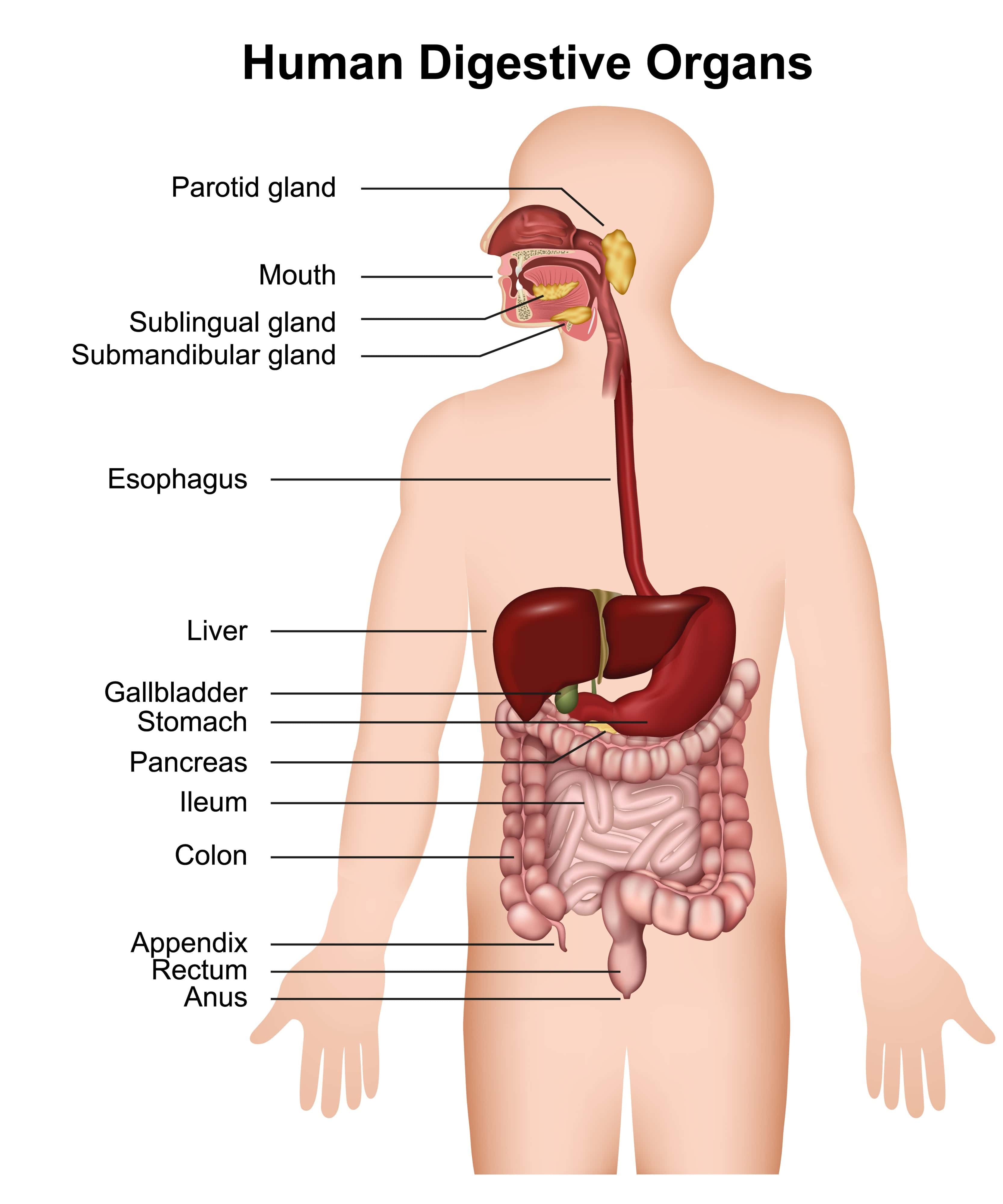
Start your morning by mastering the "scoring" diagrams. For the 2026 paper, examiners expect precision in labeling. Focus specifically on the Human Alimentary Canal, the Respiratory System, and the Structure of a Nephron.