

 AP Inter 2nd Year Botany Answer Key 2026 (OUT) LIVE: Solved Paper Now Available
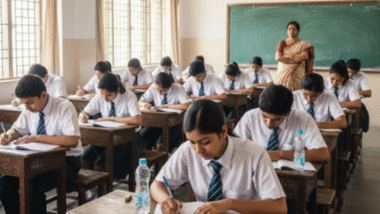
AP Inter 2nd Year Botany Exam 2026 : Board of Intermediate Education, Andhra Pradesh has conducted the AP Inter 2nd Year Botany Exam 2026 today, February 28 . Through this live blog, students can check the unofficial answer key provided by CollegeDekho's SME Samiksha Rautela, who has more than 5 years of experience in analyzing the Biology paper of the NEET exam and various board exams. Along with answer key, detailed student reviews have been added.
AP Inter 2nd Year Botany Answer Key 2026 (Unofficial)
| Question (Section A) - 2 Mark Questions | Answer |
|---|---|
| 1. What are porins? What role do they play in diffusion? | Porins are large proteins that form huge pores in the outer membranes of plastids, mitochondria, and some bacteria. They facilitate facilitated diffusion by allowing molecules up to the size of small proteins to pass through the membrane. |
| 2. Define the Law of Limiting Factors proposed by Blackman. | Blackman’s Law states: "If a chemical process is affected by more than one factor, then its rate will be determined by the factor which is nearest to its minimal value; it is the factor which directly affects the process if its quantity is changed." |
| 3. What is conjugation? Who discovered it and in which organism? | Conjugation is a mode of sexual reproduction (genetic recombination) in bacteria where genetic material is transferred from a donor to a recipient cell through direct contact. It was discovered by Lederberg and Tatum in the bacterium Escherichia coli (E. coli). |
| 4. Explain the terms phenotype and genotype |
|
| 5. Distinguish between heterochromatin and euchromatin. Which of the two is transcriptionally active? |
|
| 6. What is the difference between exons and introns? |
|
| 7. What are cloning vectors? Give an example. |
Cloning vectors are DNA molecules (like plasmids or bacteriophages) used as a vehicle to artificially carry foreign genetic material into another cell, where it can be replicated.
Example: pBR322 or Ti plasmid. |
| 8. Name the Nematode that infects the roots of tobacco plants. Name the strategy adopted to prevent this infestation. |
|
| 9. What is meant by 'hidden hunger'? | Hidden hunger is a form of malnutrition where people consume enough calories to stay alive but their diet lacks essential micronutrients like vitamins and minerals (e.g., Iodine, Iron, Zinc, Vitamin A). |
| 10. Name any two industrially important enzymes. |
|
AP Inter 2nd Year Botany Exam 2026: Quick Facts
The following table displays quick facts related to AP Inter Second Year Botany Exam 2026:
Particulars | Details |
|---|---|
Name of the Exam | Andhra Pradesh Intermediate Second Year Board Examination |
Conducting Body | Board of Intermediate Education, Andhra Pradesh |
Exam Date | February 28, 2026 |
Exam Time | 9 AM to 12 PM (3 Hours) |
Exam Mode | Offline (Pen-and-Paper) |
Question Paper Type | Descriptive and Objective mix (Standard Board Format) |
Total Marks | 60 Marks (Theory) 40 Marks (Practical) |
Section-wise Marks | • Section A: 20 Marks (VSAQs) • Section B: 24 Marks (SAQs) • Section C: 16 Marks (LAQs) |
Total Number of Questions | 21 Questions |
Section-wise Questions | • Section A: 10 Questions (All mandatory) • Section B: 6 Questions (Out of 8) • Section C: 2 Questions (Out of 3) |
Marking Scheme | • VSAQs: 2 Marks each • SAQs: 4 Marks each • LAQs: 8 Marks each |
Negative Marking | No Negative Marking |
AP Inter 2nd Year Botany Exam 2026 LIVE
12 27 PM IST - 28 Feb'26
Explain the steps involved in the formation of a root nodule.
Root nodule formation is a symbiotic process between Rhizobium bacteria and legume roots:
- Recognition and Attachment: Roots secrete chemical attractants (flavonoids). Bacteria aggregate near root hairs and attach via rhicadhesin proteins.
- Root Hair Curling: Bacteria release "Nod factors" that cause the root hair to curl around the bacteria.
- Infection Thread Formation: Bacteria invade the root hair. The host cell membrane invaginates, forming an infection thread that carries bacteria toward the inner cortex.
- Nodule Initiation: Bacteria reach the cortical and pericycle cells, stimulating them to divide.
- Bacteroid Formation: Bacteria are released into the cells, stop dividing, and enlarge into bacteroids. These cells then form the mature, functional nodule containing leghaemoglobin.
12 20 PM IST - 28 Feb'26
"Transpiration is a necessary evil". Explain.
This phrase, coined by Curtis, highlights that while transpiration has unavoidable negative effects, it is vital for plant survival.
Why it is "Evil": It causes a massive loss of water (over 98% of absorbed water is transpired), which can lead to wilting, desiccation, and even death under drought conditions. It consumes energy that could otherwise be used for growth.
Why it is "Necessary":
- It creates the transpiration pull required for the ascent of sap.
- It facilitates the absorption and distribution of mineral salts.
- It regulates leaf temperature by providing a cooling effect.
- It maintains cell turgidity, helping in the structural integrity of the plant.
12 12 PM IST - 28 Feb'26
Student Review 1: Paper Easy to Moderate
Rupa from Vijayawada shared that the paper was easy to moderate. 2 mark questions were pretty easy, but the 8 mark questions were slightly hard.
12 02 PM IST - 28 Feb'26
Exam Ends: Student Reviews Shortly
Botany exam has concluded, and students will come out of the exam centre in 5-10 minutes. Student reviews shall be added here shortly.
11 34 AM IST - 28 Feb'26
Exam ends shortly; Student reviews to be Collected
Currently, the CollegeDekho team is waiting at an exam centre located in Poranki - Vijayawada. The exam ends in 30 minutes, and student reviews shall be collected and added here.
09 53 AM IST - 28 Feb'26
Exam underway peacefully in all district
The Botany exam has commenced peacefully in all distrcts, and no cases have been registered on question paper leak so far.
09 00 AM IST - 28 Feb'26
AP Intermediate Class 12 Botany Exam 2026 Starts
The exam has begun. Candidates have time till 12 PM to finish the paper.
08 00 AM IST - 28 Feb'26
AP Intermediate Class 12 Botany Exam 2026 Reporting Time
Candidates are reporting to the examination venue. The document verification process is ongoing. Candidates are being sent to their respective seats after successful document verification.
07 00 AM IST - 28 Feb'26
AP Intermediate Class 12 Botany Exam 2026: The 2-Mark "No-Loss" Objective List
Section A (VSAQs) has no internal choice. You must get 10/10 to reach 60/60. These specific terms are currently trending for the 2026 paper:
Porins: Proteins that form large pores in outer membranes.
Water Potential: Value for pure water is Zero.
Guttation: Liquid water loss via Hydathodes (differentiate it from Transpiration vapor).
Start/Stop Codons: AUG (Start); UAA, UAG, UGA (Stop).
Plasmolysis: Protoplast shrinkage in a Hypertonic solution.
Bio-reactors: Vessels for large-scale production (100–1000 liters).
06 00 AM IST - 28 Feb'26
"Diagram-Only" Sprint
In the 4-mark Section B, the board often uses diagrams as "score-deciders." If you are running out of time, spend 30 minutes just practicing these 5 essential sketches:
Kranz Anatomy: Label Bundle Sheath and Mesophyll cells clearly.
Root Nodule Formation: Must show the infection thread and leghaemoglobin.
Bacterial Conjugation: Show the F-plasmid transfer through the sex pilus.
Structure of pBR322: Label the antibiotic resistance genes (amp^R, tet^R) and restriction sites.
Transcription Unit: Clearly mark the Promoter, Structural Gene, and Terminator.
05 00 AM IST - 28 Feb'26
AP Intermediate Class 12 Botany Exam 2026: The "High-Yield" LAQ Lock-In
Based on the final BIEAP blueprint, your 8-mark Section C is essentially guaranteed if you master the following three "Gunshot" areas. You only need to answer 2 out of 3, so perfect these:
Molecular Biology & Biotech: The Steps in r-DNA Technology (Isolation to Product) and the Tools of r-DNA (Restriction Enzymes/Vectors) are alternating favorites.
Plant Physiology: Glycolysis (EMP Pathway) and Krebs Cycle (TCA Cycle).
Expert Hack: For these, do not just write text. The flowcharts are what carry the 8 marks. If you miss the flowchart, you miss the score.
Plant Breeding: Tissue Culture technique and its advantages.
04 00 AM IST - 28 Feb'26
Time Management: * Section C: 45 Mins
Section B: 75 Mins
Section A: 30 Mins
Revision: 30 Mins (Check diagrams and spellings!)
03 00 AM IST - 28 Feb'26
AP Intermediate Class 12 Botany Exam 2026: Ethylene in Plants
Focus on Fruit Ripening and Triple Response as the primary physiological effects for 4-mark questions.
02 00 AM IST - 28 Feb'26
AP Intermediate Class 12 Botany Exam 2026: Plasmolysis Definition
Focus on the keyword "Hypertonic solution." Without this word, the definition is incomplete.
01 00 AM IST - 28 Feb'26
Genetic Code Features
If asked for 4 marks, list: Triplet, Universal, Non-ambiguous, and Degenerate.
12 00 AM IST - 28 Feb'26
AP Intermediate Class 12 Botany Exam 2026 Today
AP Board will conduct AP Intermediate Class 12 Botany Exam 2026 today, February 28, from 9 AM to 12 PM. The examination will be held for Botany Paper II.
11 00 PM IST - 27 Feb'26
Linkage Discovery
Always credit T.H. Morgan. Mention "Drosophila" for extra impact in 2-mark answers.
09 00 PM IST - 27 Feb'26
Codon Alert
Memorize the Start codon (AUG) and the three Stop codons (UAA, UAG, UGA). This is a frequent 2-mark filler.
08 45 PM IST - 27 Feb'26
AP Intermediate Class 12 Botany Exam 2026: Correct Question Numbers
BIEAP examiners are strict. Double-check that your answer sheet number matches the question paper exactly.
08 30 PM IST - 27 Feb'26
No Negative Marking
Answer every single VSAQ in Section A. If you're unsure, write the most relevant definition you know.
08 15 PM IST - 27 Feb'26
AP Intermediate Class 12 Botany Exam 2026: One Answer per Page
For 8-mark questions, start each on a fresh page. It makes the paper look organized.
07 45 PM IST - 27 Feb'26
AP Intermediate 12th Botany Exam 2026: Pencil for Diagrams
Never draw diagrams with a pen. Use a sharp pencil and label only on the right side of the sketch.
07 30 PM IST - 27 Feb'26
Section-Wise Order
Start with Section C (8 marks) while your mind is fresh. It requires the most writing and detailed diagrams.
07 15 PM IST - 27 Feb'26
AP Intermediate 12th Botany Exam 2026: Guttation vs. Transpiration
This is a classic "Difference" question. Remember: Guttation = Liquid via Hydathodes; Transpiration = Vapor via Stomata.
07 00 PM IST - 27 Feb'26
AP Intermediate 12th Botany Exam 2026: The PCR Secret
For 2-mark questions, simply writing "Polymerase Chain Reaction" isn't enough. Add: "Used for gene amplification."
06 45 PM IST - 27 Feb'26
RNA Polymerases
For 4 marks, list all three (I, II, III) and their specific functions (rRNA, mRNA/hnRNA, tRNA).
06 30 PM IST - 27 Feb'26
AP Intermediate 12th Botany Exam 2026: Incomplete Dominance
Always use the Mirabilis jalapa (4 o’clock plant) example. The F2 phenotypic ratio 1:2:1 is the keyword here.
06 15 PM IST - 27 Feb'26
Bacterial Conjugation
Focus on the role of the F-plasmid and the Sex Pilus. Identifying the donor as F^+ and recipient as F^- is crucial.
06 00 PM IST - 27 Feb'26
AP Intermediate 12th Botany Exam 2026: Root Nodule Formation Diagram
In SAQs, a diagram is mandatory here. Ensure you label the Infection Thread and Leghaemoglobin.
05 45 PM IST - 27 Feb'26
Transpiration "The Necessary Evil"
When answering this 4-mark question, use two distinct headings: "Why it is Evil" and "Why it is Necessary." This helps the examiner award full marks quickly.
05 30 PM IST - 27 Feb'26
AP Intermediate 12th Botany Exam 2026: Kranz Anatomy (C4 Plants)
This is a recurring 4-mark favorite. Practice the diagram showing the Bundle Sheath cells and Mesophyll cells.
05 15 PM IST - 27 Feb'26
Biotechnology Blueprint
This unit carries the highest weightage (~12-14 marks). It is the "scoring engine" of the Senior Inter paper.
05 00 PM IST - 27 Feb'26
AP Intermediate 12th Botany Exam 2026: r-DNA Tools vs. Process
Don't confuse these. Tools focus on Restriction Enzymes/Vectors; Process focuses on the steps (Isolation --> Fragmentation --> Ligation).
04 45 PM IST - 27 Feb'26
Glycolysis "Must-Draw"
If Glycolysis is asked, you must draw the flow chart. Mention it occurs in the cytoplasm and produces a net of 2 ATP.
04 30 PM IST - 27 Feb'26
AP Intermediate 12th Botany Exam 2026: The 8-Mark Rule
Section C is highly predictable. Master just three topics: r-DNA Technology, Glycolysis/Krebs Cycle, and Tissue Culture. One of these will be on your paper.
04 15 PM IST - 27 Feb'26
AP Inter Class 12 Botany Exam 2026: Short Notes on Gene Revolution
Refers to the use of biotechnology and genetic engineering to develop superior crop varieties with higher yields and disease resistance.
04 00 PM IST - 27 Feb'26
AP Inter Class 12 Botany Exam 2026: Short Notes on Apoplast vs. Symplast
Apoplast is the pathway of water through cell walls and intercellular spaces; Symplast is the pathway through the interconnected protoplasts via plasmodesmata.
03 45 PM IST - 27 Feb'26
AP Inter Class 12 Botany Exam 2026: Short Notes on Pleomorphic Bacteria
Bacteria that can naturally alter their shape or size in response to environmental conditions. Example: Acetobacter.
03 30 PM IST - 27 Feb'26
Short Notes on Point Mutation
A mutation that involves a change in a single base pair of DNA. Example: Sickle Cell Anemia where Valine replaces Glutamic acid.
03 15 PM IST - 27 Feb'26
AP Inter Class 12 Botany Exam 2026: Short Notes on Start and Stop Codons
AUG is the universal start codon; UAA, UAG, and UGA are stop (nonsense) codons that terminate protein synthesis.
03 00 PM IST - 27 Feb'26
Short Notes on Genetic Code Characteristics
The code is a triplet, universal, non-ambiguous, and "degenerate" (multiple codons coding for one amino acid).
02 45 PM IST - 27 Feb'26
AP Inter Class 12 Botany Exam 2026: Short Notes on Porins
Large protein channels found in the outer membranes of plastids, mitochondria, and some bacteria that allow small molecules to pass through.
02 30 PM IST - 27 Feb'26
AP Inter Class 12 Botany Exam 2026: Short Notes on Guttation
The loss of water in liquid droplets through specialized pores called Hydathodes, occurring when root pressure is high and transpiration is low.
02 15 PM IST - 27 Feb'26
Short Notes on Plasmolysis
The shrinkage of the protoplast away from the cell wall when a plant cell is placed in a hypertonic solution (water moves out).
01 45 PM IST - 27 Feb'26
AP Inter Class 12 Botany Exam 2026: Short Notes on Mass Flow Hypothesis
Proposed by Munch, it suggests that sugar translocation in phloem occurs from Source (leaves) to Sink (roots) due to a turgor pressure gradient.
01 30 PM IST - 27 Feb'26
AP Inter Class 12 Botany Exam 2026: Short Notes on Plant Growth Phases
Growth follows a sigmoid curve consisting of a lag phase (slow), log/exponential phase (rapid), and a stationary phase (growth slows as resources deplete).
01 15 PM IST - 27 Feb'26
Short Notes on Bt Cotton
A transgenic crop containing the Cry gene from Bacillus thuringiensis, which produces a protein toxic to bollworms, reducing the need for chemical pesticides.
01 00 PM IST - 27 Feb'26
AP Inter 12th Botany Exam 2026: Short Notes on Conjugation in Bacteria
A horizontal gene transfer process where genetic material (plasmid) is passed from a donor (F^+) to a recipient (F^-) through a cytoplasmic bridge or sex pilus.
12 45 PM IST - 27 Feb'26
Short Notes on Physiological Effects of Gibberellins
These hormones promote internode elongation (bolting), break seed dormancy, and are used to increase the size of fruits like grapes.
12 30 PM IST - 27 Feb'26
AP Inter 12th Botany Exam 2026: Short Notes on DNA vs. RNA
DNA is a double-stranded molecule containing Deoxyribose sugar and Thymine; RNA is usually single-stranded, containing Ribose sugar and Uracil.
12 15 PM IST - 27 Feb'26
Short Notes on Incomplete Dominance
A genetic phenomenon where the F1 hybrid shows a phenotype intermediate between parents. Example: Mirabilis jalapa (Red x White = Pink), with a 1:2:1 phenotypic ratio.
12 00 PM IST - 27 Feb'26
AP Inter 12th Botany Exam 2026: Short Notes on Root Nodule Formation
A symbiotic process where Rhizobium bacteria Curle root hairs, form an infection thread, and stimulate cortical cells to form nodules containing Leghaemoglobin for Nitrogen fixation.
11 45 AM IST - 27 Feb'26
Short Notes on C3 vs. C4 Plants
C4 plants (e.g., Maize) possess Kranz Anatomy and a more efficient CO_2 fixation pathway than C3 plants (e.g., Rice), making them more productive in tropical climates.
11 30 AM IST - 27 Feb'26
Short Notes on Transpiration is a Necessary Evil
It is called "evil" because it leads to excessive water loss and wilting, but "necessary" as it creates transpirational pull for sap ascent and cools leaf surfaces.
11 15 AM IST - 27 Feb'26
AP Inter 12th Botany Exam 2026: Short Notes on Tissue Culture Technique
The cultivation of plant cells or tissues on a synthetic nutrient medium under sterile conditions. Key stages involve explant selection, callus formation, organogenesis, and micropropagation.
11 00 AM IST - 27 Feb'26
Short Notes on Krebs Cycle (TCA Cycle)
Occurs in the mitochondrial matrix; it starts with the condensation of Acetyl CoA and Oxaloacetic Acid (OAA) to form Citric acid, releasing CO_2 and generating ATP, FADH_2, and NADH.
10 45 AM IST - 27 Feb'26
AP Inter 12th Botany Exam 2026: Short Notes on Glycolysis (EMP Pathway)
A 10-step process occurring in the cytoplasm where one molecule of Glucose is partially oxidized to form two molecules of Pyruvic acid, with a net gain of 2 ATP and 2NADH_2.
10 30 AM IST - 27 Feb'26
Short Notes on Steps in r-DNA Technology
The process involves isolation of genetic material, fragmentation of DNA, isolation of the desired fragment, ligation into a vector, transfer into a host, and large-scale product extraction using bioreactors.
10 15 AM IST - 27 Feb'26
AP Inter 12th Botany Exam 2026: Short Notes on Tools of r-DNA Technology
Includes Restriction Enzymes (molecular scissors like EcoRI), DNA Ligase (joining enzyme), Cloning Vectors (plasmids like pBR322), and competent hosts (usually E. coli).
10 00 AM IST - 27 Feb'26
AP Intermediate 2nd Year Botany Exam 2026: Most Important Question and Answer 25
Question: What are Methanogens?
Answer: Bacteria found in the rumen of cattle and sewage sludge that produce Methane (Biogas).09 45 AM IST - 27 Feb'26
AP Intermediate 2nd Year Botany Exam 2026: Most Important Question and Answer 24
Question: Transgenic Plants definition
Answer: Plants whose DNA is modified using genetic engineering techniques to include a foreign gene.09 30 AM IST - 27 Feb'26
AP Intermediate 2nd Year Botany Exam 2026: Most Important Question and Answer 23
Question: Point Mutation example
Answer: Sickle Cell Anemia (Substitution of Glutamic acid by Valine).09 15 AM IST - 27 Feb'26
Most Important Question and Answer 22
Question: Linkage discovery
Answer: Discovered by T.H. Morgan in Drosophila.09 00 AM IST - 27 Feb'26
AP Intermediate 2nd Year Botany Exam 2026: Most Important Question and Answer 21
Question: What is a Nucleotide?
Answer: A combination of a Nitrogenous base + Pentose sugar + Phosphate group.08 45 AM IST - 27 Feb'26
AP Intermediate 2nd Year Botany Exam 2026: Most Important Question and Answer 20
Question: Codons for Start and Stop
Answer: Start: AUG. Stop: UAA, UAG, UGA.08 30 AM IST - 27 Feb'26
Most Important Question and Answer 19
Question: Genetic material of Viruses
Answer: Mention TMV (RNA) and T4 Bacteriophage (DNA).08 15 AM IST - 27 Feb'26
AP Intermediate 2nd Year Botany Exam 2026: Most Important Question and Answer 18
Question: What are Porins?
Answer: Large proteins that form pores in the outer membranes of plastids, mitochondria, and some bacteria to allow small molecules through.08 00 AM IST - 27 Feb'26
Underline Keywords
In 4 and 8-mark answers, underline technical terms like Restriction Endonuclease, Kranz Anatomy, or Totipotency.
08 00 AM IST - 27 Feb'26
Most Important Question and Answer 17
Question: Guttation vs. Transpiration
Answer: Guttation is loss of water in liquid form through Hydathodes; Transpiration is loss as vapor through Stomata.07 45 AM IST - 27 Feb'26
AP Intermediate 2nd Year Botany Exam 2026: Most Important Question and Answer 16
Question: Definition of Plasmolysis
Answer: Shrinkage of protoplast from the cell wall when placed in a Hypertonic solution.07 30 AM IST - 27 Feb'26
Most Important Question and Answer 15
Question: Full form of PCR
Answer: Polymerase Chain Reaction. Used for DNA amplification.07 15 AM IST - 27 Feb'26
AP Intermediate 2nd Year Botany Exam 2026: Most Important Question and Answer 14
Question: Water Potential of Pure Water
Answer: Zero (at standard temperature and no pressure).
07 00 AM IST - 27 Feb'26
Most Important Question and Answer 13
Question: Explain the process of conjugation in bacteria.
Answer: Discovery by Lederberg and Tatum. Transfer of genetic material (Plasmid) through a Conjugation tube (Sex pilus) from F+ (Donor) to F- (Recipient).
06 45 AM IST - 27 Feb'26
AP Inter 2nd Year Botany Exam 2026: Most Important Question and Answer 12
Question: Definition of Gene Revolution
Answer: The application of biotechnology to improve crop yields and quality (Third Green Revolution).06 30 AM IST - 27 Feb'26
Most Important Question and Answer 11
Question: Write the physiological responses of gibberellins in plants.
Answer: Bolting (internode elongation), breaking seed dormancy, increasing fruit size (grapes), and malting process in brewing industry.
06 15 AM IST - 27 Feb'26
AP Inter 2nd Year Botany Exam 2026: Most Important Question and Answer 10
Question: Differentiate between DNA and RNA.
Answer: DNA: Double-stranded, Deoxyribose sugar, Thymine. RNA: Single-stranded, Ribose sugar, Uracil.
06 00 AM IST - 27 Feb'26
AP Inter 2nd Year Botany Exam 2026: Most Important Question and Answer 9
Question: Explain Incomplete dominance with an example.
Answer: Example: Mirabilis jalapa (Four o'clock plant). Crossing Red (RR) and White (rr) flowers produces Pink (Rr) offspring in F1. F2 ratio is 1:2:1.
05 45 AM IST - 27 Feb'26
AP Inter 2nd Year Botany Exam 2026: Most Important Question and Answer 8
Question: Explain the steps involved in the formation of a root nodule.
Answer: Rhizobium contact --> Root hair curling --> Infection thread formation --> Nodule initiation in cortex --> Mature nodule with Leghaemoglobin.
05 30 AM IST - 27 Feb'26
Most Important Question and Answer 7
Question: Explain why Transpiration is called a "necessary evil."
Answer: Evil: Causes massive water loss and wilting. Necessary: Creates transpirational pull for ascent of sap, cools leaf surface, and maintains turgidity.
05 15 AM IST - 27 Feb'26
AP Inter 2nd Year Botany Exam 2026: Most Important Question and Answer 6
Question: Tabulate the differences between C3 and C4 plants.
Answer: C3 has PEP carboxylase absent; C4 has it present. C4 shows Kranz anatomy; C3 does not. C4 is more efficient in high temperatures.
05 00 AM IST - 27 Feb'26
AP Inter 2nd Year Botany Exam 2026: Most Important Question and Answer 5
Question: Describe the tissue culture technique and its advantages.
Answer: Steps: Preparation of Explant --> Sterilization --> Callus formation --> Organogenesis. Advantages: Micropropagation, Virus-free plants, Somatic hybridization.
04 45 AM IST - 27 Feb'26
Most Important Question and Answer 4
Question: Explain the reactions of Krebs cycle (Citric Acid Cycle).
Answer: Occurs in Mitochondrial Matrix. Mention the formation of Citrate, Isocitrate, $\alpha$-ketoglutarate, Succinyl CoA, Succinate, Fumarate, Malate, and OAA.
04 30 AM IST - 27 Feb'26
AP Inter 2nd Year Botany Exam 2026: Most Important Question and Answer 3
Question: Give an account of Glycolysis. Where does it occur? What are the end products?
Answer: Occurs in Cytoplasm. End products: 2 molecules of Pyruvic acid. Mention the 10-step enzymatic reaction converting Glucose to Pyruvate.
04 15 AM IST - 27 Feb'26
Most Important Question and Answer 2
Question: Explain various steps involved in r-DNA technology.
Answer: Steps: Isolation of DNA --> Fragmentation --> Ligation into vector --> Transfer to host --> Selection of transformants --> Large scale production in Bioreactors.
04 00 AM IST - 27 Feb'26
AP Inter 2nd Year Botany Exam 2026: Most Important Question and Answer 1
Question: Give a brief account of the tools of recombinant DNA technology.
Answer: Focus on: (1) Restriction Enzymes (Molecular scissors), (2) DNA Polymerases, (3) Ligases, (4) Vectors (e.g., Plasmids), and (5) Competent Host cells.