
- We’re on your favourite socials!




Top tech companies like Microsoft, Google, and OpenAI now prioritize real-world projects, AI fluency, cloud skills, and problem-solving over grades alone. Discover how Chitkara University prepares engineering students for high-growth tech careers through industry-focused learning.
Thousands of engineering graduates apply to technology companies each year. A fraction hear back and a smaller fraction receive offers. For students and parents, the question is what separates candidates who succeed. Recruiters at Microsoft, Google, and OpenAI monitor the ability to think about problems and demonstrate it through work
Shift in Technical Hiring
Mastering data structures and algorithms with a college name was once enough to enter a technology company. That has changed. Academic performance matters for shortlisting, but it stops being the factor after that. Engineers who get noticed arrive with evidence of having built something. This is a shift in what a Computer Science degree delivers. Elements that stand out include project work, familiarity with cloud infrastructure, and exposure to AI and machine learning systems.
AI Fluency as a Baseline
Knowing how to code was once a point of distinction. In 2026, AI fluency is a baseline expectation. Roles require engineers to work with AI tools, interpret model behaviour, and integrate systems into applications. Demand for engineers who work with data and models exists in healthcare, finance, logistics, supply chain, and climate technology. The World Economic Forum places AI and machine learning specialists among roles in demand through 2030. Positions such as ML Engineer, AI Product Specialist, and AI Safety Researcher are hired at OpenAI, Google DeepMind, and Microsoft Research.
Skills Roadmap for Undergraduates
The roadmap to these roles includes:
Programming foundations.
Knowledge of mathematics and statistics.
Experience with machine learning frameworks.
Familiarity with cloud platforms.
Project work that demonstrates thinking.
A program must build these layers from the first year. A degree that does not offer exposure to AI, machine learning, and cloud infrastructure leaves graduates prepared for roles in the next decade.
Engineering Education
Engineering education in India evolved with the technology landscape. The IITs, NITs, and PEC Chandigarh carry academic foundations and research cultures. Aspirants must examine what a program delivers: whether areas are integrated from the start, whether students work with tools companies use, and whether there is engagement with industry. Chitkara University has built industry input into how programs are designed and how the curriculum is updated.
Training Environments
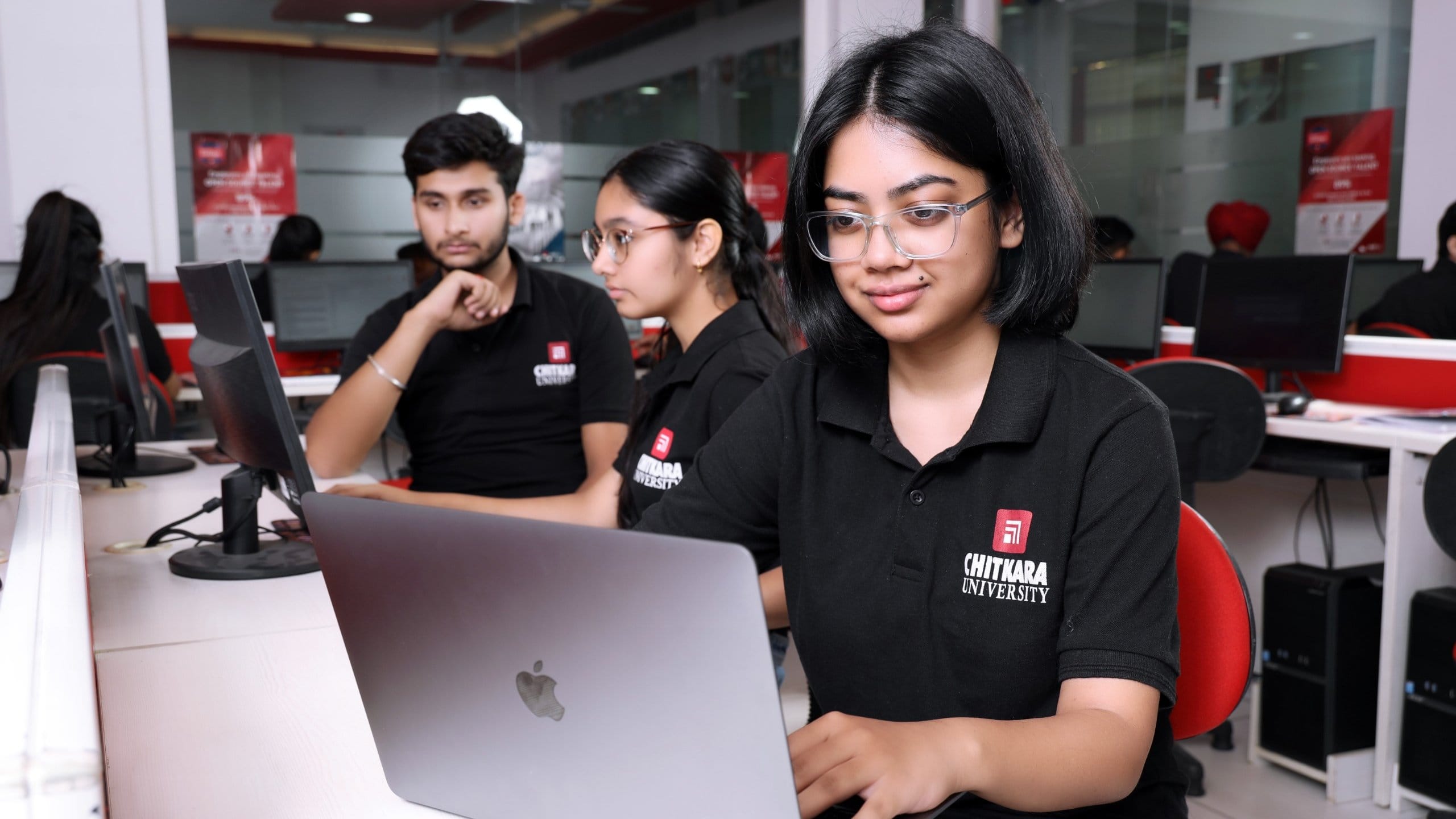
Chitkara University’s B.E. CSE with Specialisation in AI and Machine Learning was developed with Microsoft. Students train on Microsoft Azure, Power BI, and Cognitive Services. They work on projects and receive mentorship from Microsoft professionals and faculty. The curriculum was co-developed with Microsoft to reflect platforms the company uses to build and deploy AI systems.
The B.E. CSE with Specialisation in AI and Future Technologies extends into IoT, robotics, cybersecurity, blockchain, and cloud computing. The curriculum is updated based on industry input. Students have access to GPU systems, machine learning labs, and cloud computing environments. The campus includes a startup incubation centre and a network that includes Amazon, Google, Microsoft, and Deloitte. From the third year, semester exchanges and internships extend the environment.
Outcomes and Trajectories
Getting hired at Microsoft, Google, or OpenAI before 25 happens every year. Students spend undergraduate years building skills and working on problems. Students who get noticed are not always the ones with grades. They are the ones who built things and took on problems. For parents weighing a program, the question is whether the program is aligned with where hiring is going and whether students get time with tools companies use.
About Chitkara University
Chitkara University is a UGC-recognised and NAAC A+ accredited private university with campuses in Punjab and Himachal Pradesh, recognised among India's leading institutions by NIRF, QS World University Rankings, and Times Higher Education. It offers undergraduate and postgraduate programs across Engineering, Business, Healthcare, Pharmacy, Design, Architecture, Hospitality, and emerging technologies including Artificial Intelligence, Data Science, and Machine Learning.
The University's academic model integrates internships, live industry projects, and research into core curricula, supported by 2,000+ campus recruiters and 300+ international academic and industry partners. Global Pathway programs, developed in partnership with leading universities in the United States, Australia and Canada, allow students to complete part of their degree abroad. With a focus on innovation, entrepreneurship, and applied learning, Chitkara University prepares graduates for careers in India and internationally.
FAQs
Chitkara University’s B.E. CSE program is designed with a strong focus on industry-aligned skills such as AI, machine learning, cloud computing, and system design. Chitkara University integrates project-based learning, ensuring students graduate with practical evidence of building real-world solutions, which is a key expectation in top tech company hiring processes.
Yes, Chitkara University offers a B.E. CSE with Specialisation in AI and Machine Learning. The program includes training in tools and platforms such as Microsoft Azure, Cognitive Services, and Power BI, helping students develop AI fluency as a core engineering skill from early semesters.
Chitkara University integrates industry exposure through live projects, internships, mentorship programs, and collaborations with leading technology companies. The curriculum is co-developed with industry input, including partnerships like Microsoft, ensuring students work with tools and workflows used in real enterprise environments.
At Chitkara University, students build a layered skill set that includes programming fundamentals, mathematics and statistics, machine learning frameworks, cloud platforms, and hands-on project development. The emphasis is on applying these skills to solve real-world problems and demonstrate technical thinking through projects.
Graduates from Chitkara University’s B.E. CSE program can pursue roles such as Software Engineer, Machine Learning Engineer, AI Product Specialist, Cloud Engineer, and Data Scientist. With strong project portfolios and industry exposure, students are prepared for opportunities in companies like Microsoft, Google, OpenAI, and other global technology firms.

- Colleges in Patiala
- Chitkara University
- Securing Early Career Success at Microsoft Google and OpenAI
