
- We’re on your favourite socials!


Many students planning government careers ask whether a Kalinga University degree is accepted for government jobs. This guide explains the university’s recognition, eligibility for major government exams, and what graduates should know before applying for public sector positions.
- Recognition of Kalinga University
- Kalinga University Approval by Professional Bodies
- Kalinga University Eligibility for Government Exams
- Government Job Opportunities After Kalinga University
- Role of Kalinga University Academic Performance
- Documents Required During Government Job Applications
- Kalinga University Scholarships and Financial Support
- Kalinga University Fee Structure and Education Planning
- Kalinga University Campus Environment and Academic Support
- Kalinga University Cutoff and Academic Eligibility
- Things Kalinga University Students Should Keep in Mind
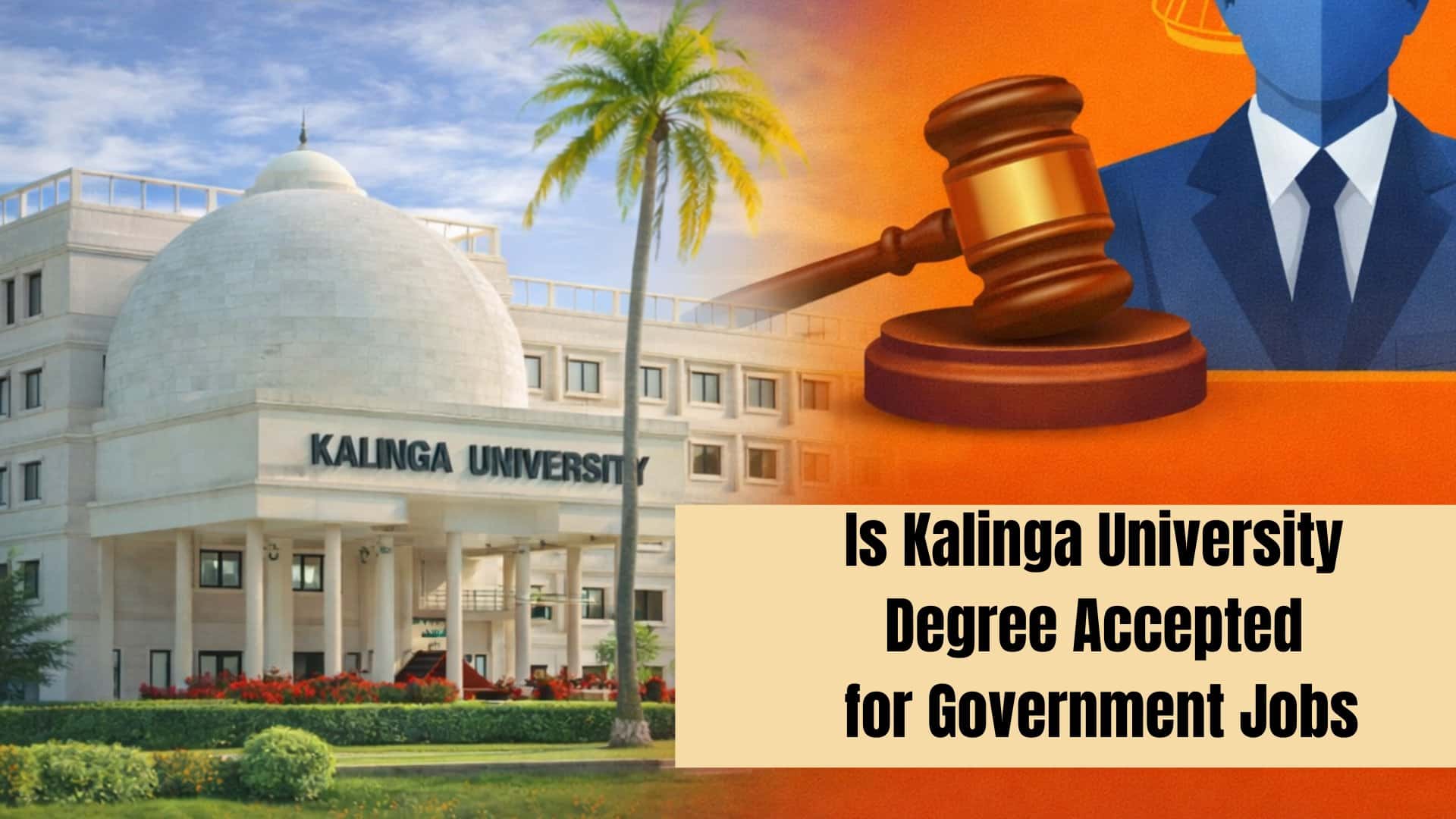
One of the main questions that students top students mind before choosing an university or taking admission in a university is related to the acceptance of the degree in government jobs. If you are an aspirant planning to proceed with your Kalinga University admission process, then this question will definitely be on top of your mind.
Government jobs have always been a popular career option among students as they are comparatively more stable and rewarding. Some of the most common and popular careers that student want to pursue are in the banking sector, railways, public sector companies, civil services, or in state government jobs. Before taking admission in any university, students want to know if the university is recognized in government jobs or not.
This article will give you a clear view on whether the degree from Kalinga University is accepted in government jobs or not, and what students should know about the university.
Recognition of Kalinga University
The first and foremost factor to be considered in regards to the acceptance of the degree for government jobs is the recognition of the university.
Kalinga University is recognized by the University Grants Commission (UGC). This ensure that the marksheet issued by the Kalinga University is valued. UGC recognition of the university is important because it ensures that the university operates in accordance with the regulations laid out for higher educational institutions in India.
If a university is recognized by the UGC, it implies that:
- The degree offered by the university is valid in India.
- The students can seek higher education in other recognized institutions.
- The graduates can appear for the examination of government jobs, for which a recognized degree is mandatory.
Kalinga University Approval by Professional Bodies
Apart from UGC recognition, some professional courses also require approval from statutory bodies.
Kalinga University courses and certain programmes are aligned with guidelines from bodies such as:
- AICTE (for technical education norms)
- PCI (for pharmacy programmes)
- BCI (for law programmes)
These approvals ensure that the courses follow prescribed academic standards and professional regulations.
Such recognition strengthens the credibility of the degree for further studies and employment.
Kalinga University Eligibility for Government Exams
Students who graduate from Kalinga University can generally apply for government exams where the eligibility condition states:
“Bachelor’s degree from a recognised university.”
This includes exams conducted by organisations such as:
- Union Public Service Commission (UPSC)
- Staff Selection Commission (SSC)
- Banking recruitment bodies
- State Public Service Commissions
- Railway Recruitment Boards
However, eligibility always depends on the specific exam notification.
For example, some posts require specific degrees such as engineering, law, or pharmacy.
Government Job Opportunities After Kalinga University
Students graduating from the university may pursue several government career paths depending on their qualification.
Civil Services
Graduates can apply for UPSC examinations if they meet the eligibility requirements. A recognised bachelor’s degree is the basic requirement for the exam.
Banking Sector
Students can appear for banking recruitment exams conducted for positions such as:
- Probationary Officer
- Clerk
- Specialist Officer
Graduates from recognised universities are eligible to apply.
State Government Jobs
Many state government departments recruit graduates for administrative and technical positions.
Eligibility usually requires a recognised university degree.
Public Sector Units
Some public sector organisations recruit engineers, management graduates, or specialists based on qualifications and entrance tests.
Importance of Kalinga University Course Recognition
While university recognition is important, students should also consider whether their specific course meets professional requirements.
For example:
- Law graduates may need to meet Bar Council regulations to practice law.
- Pharmacy graduates must meet PCI guidelines to work in licensed pharmaceutical roles.
Understanding course recognition is important when planning both government and private sector careers.
Role of Kalinga University Academic Performance
Even though the degree is recognised, success in government job exams depends on:
- Competitive exam preparation
- Academic understanding
- Consistent study discipline
Most government recruitment processes involve written exams, interviews, and document verification.
Having a recognised degree allows you to apply, but clearing the exam requires strong preparation.
Documents Required During Government Job Applications
Documentation is a major step while applying for government positions. Candidates may need to submit the following:
- Degree certificate
- Final marksheets
- Identity proof
- Category certificates (if applicable)
These documents are verified during the recruitment process. As the next step, the original copies are often the first choice of verification. Therefore, students should be extremely careful and keep their academic records safe.
Kalinga University Scholarships and Financial Support
Some students worry about the financial cost of education while preparing for government careers.
Kalinga University scholarships are comprehensive and allow options that may help reduce the financial burden and allow students to prepare for their competitive exams for government positions better.
Scholarships may be based on academic merit or other eligibility conditions.
Kalinga University Fee Structure and Education Planning
Understanding the fee structure helps students plan their education more effectively.
Students who plan to prepare for government exams often try to manage both academics and competitive exam preparation during their college years.
Kalinga University Campus Environment and Academic Support
The campus environment also plays an important role in student preparation.
Kalinga University campus offers:
- Academic departments
- Library facilities
- Study resources
- Seminar halls
Students preparing for government exams can use library resources and academic guidance during their course.
Kalinga University Cutoff and Academic Eligibility
Some government positions require specific academic qualifications or minimum marks.
Cutoff and academic requirements may vary depending on the job role.
Students should review eligibility conditions carefully before applying for any examination.
Things Kalinga University Students Should Keep in Mind
Before making the final decision regarding which university to join, one must consider the following points.
- Firstly, the university must be approved by the relevant authority.
- Secondly, the university must ensure that the chosen course is approved.
- Thirdly, one must understand that clearing government exams demands hard work along with academic studies.
- A degree from Kalinga University is acceptable for applying to government jobs, as the university is approved by the UGC.
- A degree from the university is acceptable for applying to various competitive exams.
One must note that success in government jobs is not just based on the degree. It is important to understand the patterns of the examination, which also plays an important role.
If you are planning to take up higher studies along with government jobs, then understanding the university can help you take the right decision regarding your future.
FAQs
Yes, a degree from Kalinga University is generally accepted for government jobs because the university is recognised by the University Grants Commission (UGC). Government recruitment exams usually require candidates to hold a degree from a recognised university. Since Kalinga University operates under UGC recognition, its degrees are considered valid for many government examinations. However, candidates must always check the eligibility conditions mentioned in the specific recruitment notification before applying.
Yes, graduates from Kalinga University can apply for UPSC examinations if they meet the eligibility requirements mentioned in the exam notification. The Civil Services Examination requires candidates to have a bachelor’s degree from a recognised university. Since Kalinga University is recognised by UGC, its graduates can generally meet this requirement. However, candidates must also satisfy other criteria such as age limit and nationality.
Yes, students who complete their graduation from Kalinga University can apply for exams conducted by organisations such as SSC and banking recruitment agencies. These exams typically require a bachelor’s degree from a recognised university. Since Kalinga University meets this requirement, graduates can appear for positions such as SSC CGL, banking probationary officer exams, and clerical recruitment tests, provided they fulfil the other eligibility conditions.
Yes, professional degrees such as engineering, law, and pharmacy from Kalinga University can be used to apply for government jobs where those qualifications are required. However, certain professions may require additional approvals from regulatory bodies. For example, law graduates must follow Bar Council guidelines to practice law, and pharmacy graduates must meet Pharmacy Council regulations. Students should verify the requirements for their specific profession before applying.
Yes, the course you choose can influence which government jobs you can apply for. Some recruitment processes require general graduation, while others require specialised degrees like engineering, law, or pharmacy. For example, engineering graduates may apply for technical posts in public sector units, while law graduates may pursue judicial services examinations. Students should select their course carefully based on their long-term career plans.

- Colleges in Raipur
- Kalinga University
- Is Kalinga University Degree Accepted for Government Jobs
