
- We’re on your favourite socials!


Kalinga University provides programmes in engineering, management, law, pharmacy, science and commerce after Class 12. These programmes are recognised. The admissions are based on merit. Some courses may require you to take the KALSEE exam. The university has campus facilities.
- Kalinga University UG Courses Offered
- Kalinga University Recognitions
- Merit-Based and Entrance-Based Admission at Kalinga University
- Kalinga University Fee Structure
- Kalinga University Campus Infrastructure and Student Facilities
- Sustainable Initiatives at Kalinga University
- Skill Development and Industry Exposure at Kalinga University
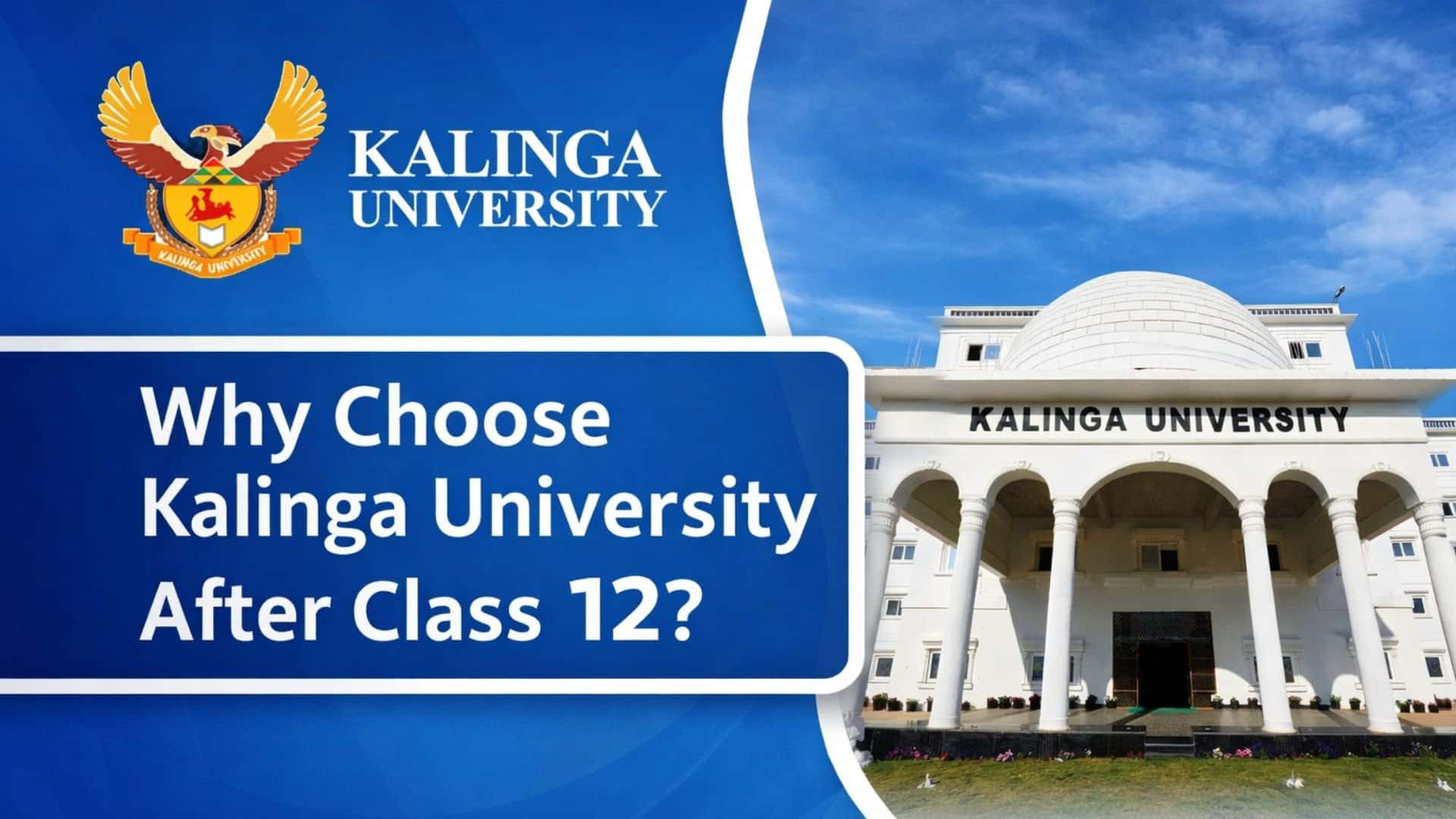
It is completely normal to feel unsure about your future after completing Class 12. The process of selecting the university for your studies is a really big decision because it will determine your future career path.
Kalinga University in Raipur is an university, which offers UGC-approved engineering, management, law, pharmacy, science, arts, commerce and information technology programs. Kalinga University's increasing academic recognition as an institution of education has resulted in its placement within the NIRF Ranking 2025 system, which assigns institutions to the 101-150 range.
Kalinga University creates a learning environment that helps students develop their skills while preparing them for their future careers through academic programs that combine classroom instruction with practical work experience. The Kalinga Scholastic Entrance Examination (KALSEE) serves as an admission test for some programs at Kalinga University while other programs at Kalinga University use merit-based admissions that evaluate student performance in Class 12.
This guide helps you assess Kalinga University's suitability for your goals and career aspirations when you research universities after completing Class 12 because it provides complete information about courses and admissions at Kalinga University, together with details about campus life and employment statistics at Kalinga University.
Kalinga University UG Courses Offered
- Engineering & Technology: B.Tech (CSE, AI & ML, Civil, Mechanical, Electrical)
- Management & Commerce: BBA, B.Com (General and Banking & Finance)
- Science: B.Sc (Medical/Non-Medical, Biotechnology, Forensic Science), BCA
- Law: Integrated BA LL.B, BBA LL.B
- Pharmacy: B.Pharmacy, D.Pharmacy
- Arts & Humanities: BA (Liberal Arts, Journalism, Film Making)
- Education & Allied: B.Ed, B.P.Ed, B.Lib
Students from PCM, PCB, Commerce and Arts backgrounds can choose from the programmes at Kalinga University:
Kalinga University Course Options Overview:
| Courses | Courses Available | Duration |
| PCM (Science – Maths) | B.Tech (CSE, AI & ML, Civil, Mechanical, Electrical) | 4 Years |
| PCB (Science – Biology) | B.Pharmacy, Pharma D, B.Sc (Biotech, Forensic) | 3–6 Years |
| Commerce | BBA, B.Com (General / Banking & Finance) | 3 Years |
| Arts / Any Stream | BA (Liberal Arts, Journalism, Film Making), BCA | 3 Years |
| Integrated Law | BA LL.B, BBA LL.B | 5 Years |
| Education | B.Ed, B.P.Ed | 2 Years |
Kalinga University Recognitions
Kalinga University courses are recognised by statutory bodies such as:
Approval Body | Importance |
| UGC | Ensures degree validity nationwide |
| AICTE | Required for technical/engineering courses |
| BCI | Mandatory for law programmes |
| PCI | Required for pharmacy programmes |
| NAAC Accreditation | Quality assessment indicator |
Note: Recognition ensures that degrees are valid for studies and employment.
Merit-Based and Entrance-Based Admission at Kalinga University
- For some courses at Kalinga University admission is based on Class 12 or graduation marks.
- For programmes at Kalinga University you need to take the KALSEE exam.
- Some courses at Kalinga University require subjects, like PCM for engineering or PCB for pharmacy.
Kalinga University Admission Criteria
Programme | Minimum Eligibility | Entrance Requirement |
| B.Tech | 10+2 with PCM | KALSEE (where applicable) |
| B.Pharmacy | 10+2 with PCB | Merit / KALSEE |
| BBA / B.Com | 10+2 | Merit-based |
| BA / B.Sc | 10+2 | Merit-based |
| Integrated Law | 10+2 | As per norms |
Kalinga University Fee Structure
Kalinga University fees is not too high. If you compare them to universities that offer courses that take a long time to complete Kalinga University fees are pretty moderate. It really depends on what program you want to study and how long it takes to finish at Kalinga University. Some programs at Kalinga University like the ones that're more academic or professional can be a bit pricey. If you want to study something like science or get a diploma at Kalinga University the fees are usually lower.
Programme Level | Typical Duration | Fee (Rs) |
| Diploma (D.Pharmacy, DCA, Engineering Diploma) | 1–3 Years | Rs 20,000 – Rs 2.1 Lakhs |
| Undergraduate (BA, B.Com, BBA, B.Sc, BCA) | 3 Years | Rs 1.2 – Rs 3.8 Lakhs |
| Professional UG (B.Tech, B.Pharmacy) | 4 Years | Rs 4.2 – Rs 6.2 Lakhs |
| Integrated Programmes (BA LL.B / BBA LL.B / Pharma D) | 5–6 Years | Rs 5.7 – Rs 8.1 Lakhs |
| Postgraduate (MA, M.Sc, MBA, MCA, M.Tech) | 1–2 Years | Rs 40,000 – Rs 2.7 Lakhs |
| Doctoral (Ph.D.) | 3–5 Years | As per university norms |
Kalinga University Campus Infrastructure and Student Facilities
Kalinga University campus offers a great environment with:
- Modern classrooms and laboratories
- Library and digital resources
- Sports and cultural facilities
- Hostels with amenities
- Clubs and student societies
Sustainable Initiatives at Kalinga University
Sustainability Area | Initiative Focus |
| Green Campus | Environmental awareness activities |
| Community Engagement | Social responsibility initiatives |
| Student Participation | Involvement in sustainability programmes |
Skill Development and Industry Exposure at Kalinga University
Component | Purpose |
| Workshops | Practical skill enhancement |
| Guest Lectures | Industry exposure |
| Internships | Real-world experience |
| Placement Training | Interview readiness |
| Project-Based Learning | Application of concepts |
So if you are wondering if Kalinga University is right for you after Class 12, this guide will help you decide if Kalinga University is what you need. Kalinga University is a university that offers various programs such as science, commerce, arts or engineering at Kalinga University. They have undergraduate and professional programs to choose from at Kalinga University. The University has a vast campus and also encourages students to participate in extra-curricular activities.
Before you apply for Kalinga University admission, think about what you want to study. Check if you are eligible for the course, how much it costs and what do you want to pursue further.
Explore Related Pages
FAQs
Course eligibility depends on the stream background, such as PCM, PCB, Commerce, or Arts. After Class 12, students can apply for B.Tech, BBA, B.Com, BA, B.Sc, BCA, B.Pharmacy, D.Pharmacy, integrated BA LL.B, BBA LL.B, and education programs like B.Ed and B.P.Ed. For example, pharmacy requires PCB, while B.Tech requires PCM. Students who meet the basic requirements from any stream can enroll in integrated legal programs. Before applying, students should check the criteria for specific subjects.
For some programs, including technical and professional courses, Kalinga University conducts the Kalinga Scholastic Entrance Examination (KALSEE). However, not all courses require KALSEE. Some undergraduate programs admit students based on merit, meaning that their Class 12 performance determines entry. Admission requirements vary by program and faculty. Since these requirements can change each year, students should check the latest admissions rules for their specific course.
Kalinga University is recognised by the UGC (University Grants Commission). Depending on the type of professional programs previously mentioned, BCI, PCI and other appropriate governing bodies approve of Kalinga University's programs. Generally accepted degrees can be used, as long as the appropriate regulatory requirements are followed to take exams for further education, graduate level studies, or employment opportunities. It would be advisable for any student considering taking a government job or going to a graduate school to verify that their degree from Kalinga University meets the requirements of the agency or institution where they apply to take a test or would like to attend school.
Yes, internship opportunities are frequently available from professional programs such as law, engineering, management, and pharmacy at Kalinga University. Internships may be made available through student driven applications, industry partnerships or placement cell programs. There are many advantages to completing an internship; however, the primary benefit is to increase your employability and ability to find a job. Students should take part in internships to improve their practical experience and prepare themselves for industry while they are enrolled in university.
When it comes to scholarships, they can be awarded based on how well you do in school, how you perform in admissions, or because you fit into a certain category. But here's the thing - the rules can change every year. So, it's really important for students to check the official admission brochure or talk to the admission office to get the latest information on who's eligible, what documents they need, and when the deadlines are. You should also find out if the scholarship is just for the first year or if you can get it again every year. This way, you can plan ahead and make the most of the opportunities available to you.

- Colleges in Raipur
- Kalinga University
- Kalinga University Why Choose This University After Class 12
