
- We’re on your favourite socials!


Planning to pursue a PhD at Kalinga University? This guide explains the available PhD specializations, admission process, eligibility criteria, research facilities, and fee structure in simple language to help students understand the program before applying.
- Understanding PhD Programs at Kalinga University
- Duration of PhD at Kalinga University
- Kalinga University PhD Specializations
- Kalinga University PhD Fee Structure
- Kalinga University Admission Process for PhD
- Eligibility for Kalinga University PhD Programs
- Research Facilities at Kalinga University Campus
- Role of Kalinga University Scholarships for PhD Students
- Importance of Kalinga University Cutoff and Eligibility
- Research Process During the PhD Program
- Career Opportunities After PhD from Kalinga University
- Tips for Students Considering a PhD
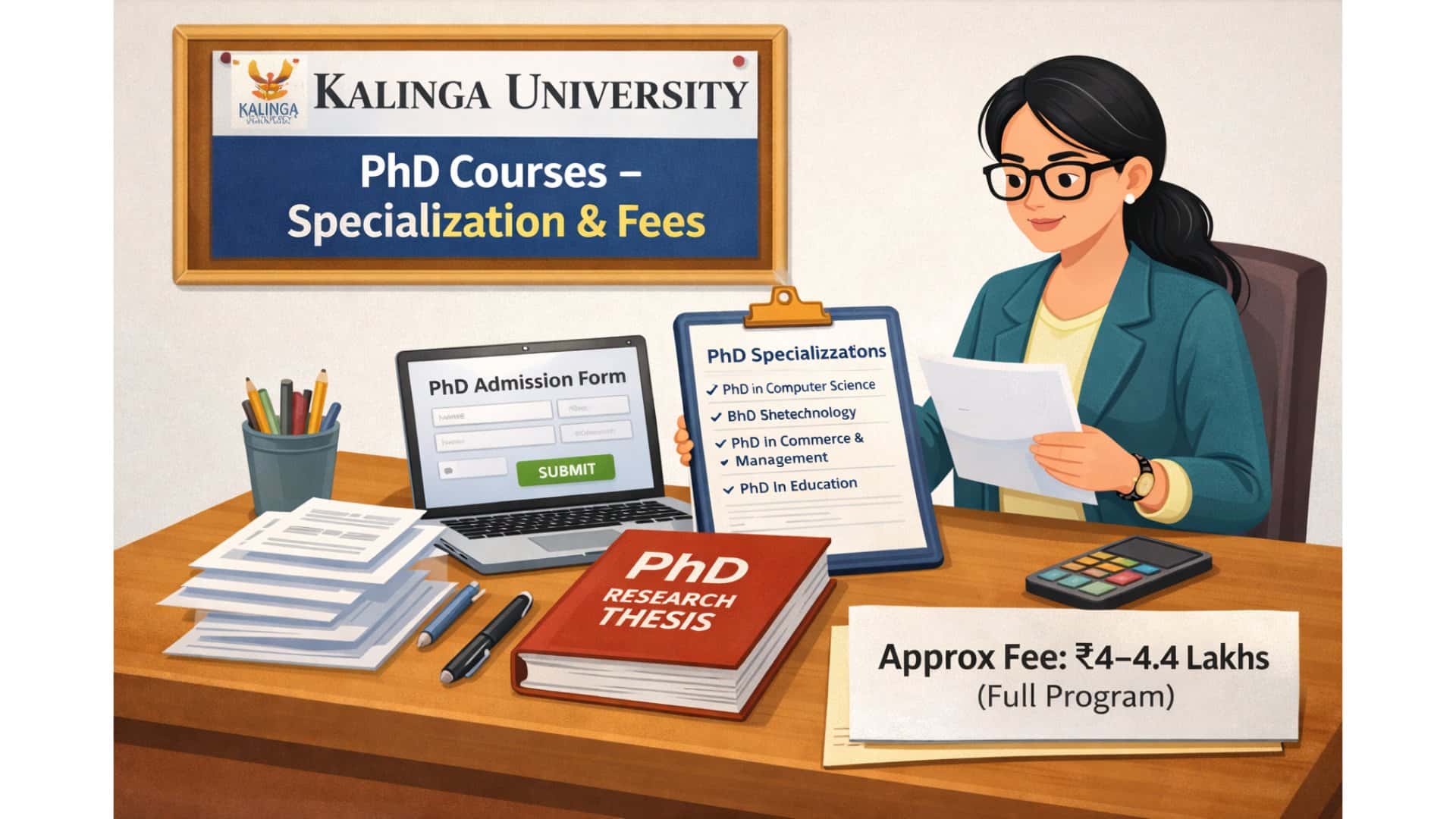
For the students who wish to continue their studies even after the completion of the master’s course and wish to receive a doctoral degree, the option of pursuing a PhD is available. Pursuing a PhD is one of the significant options for the students as they can explore their knowledge in the chosen field.
There are various PhD courses available at Kalinga University. The doctoral-level courses at Kalinga University are available for the students who wish to explore the knowledge in various fields of study such as science, commerce, law, technology, etc. This article is intended to provide information about the courses in simpler terms.
Understanding PhD Programs at Kalinga University
The highest form of academic qualification is the "PhD," which stands for "Doctor of Philosophy." The university offers "PhD" courses that concentrate on research-based learning and not traditional classroom learning.
The typical activities that are expected from the students who are pursuing their "PhD" are:
- Working with a research supervisor
- Independent research
- Publishing research
- Submission of a thesis after the completion of the course
The university offers "PhD" courses in various fields. This is part of the various academic courses that the university offers.
Duration of PhD at Kalinga University
PhD programs at Kalinga University generally follow a structured timeline.
Mode | Duration |
Full- Time PhD | 3 years |
Part- Time PhD | 4 years |
Full-time research scholars normally focus on their research work most of the time, whereas part-time research scholars might continue their work along with their research work.
According to the available information regarding the academic sector, the total amount that might be charged for the course of PhD might range between ₹4.03 lakh.
Kalinga University PhD Specializations
The university also offers a PhD program in various academic disciplines.
Some of the specializations that the university offers for a PhD program:
PhD in Computer Science
This is the area of research in computing technology and the development of software and data systems.
2. PhD in Biotechnology
This is the area of research in the fields of biology and genetics.
3. PhD in Chemistry
This is the area of research in chemistry and chemical science.
4. PhD in Botany
Research in botany includes the field of plant biology, genetics, and environmental science.
5. PhD in Commerce
Research in commerce involves finance, economics, accounting systems, and management of businesses.
6. PhD in Law
Research in law involves constitutional laws, criminal laws, and legal policies.
7. PhD in Education
Research in education involves teaching methodologies and education policies.
Kalinga University PhD Fee Structure
Understanding the Kalinga university fees structure is important for students planning doctoral studies. PhD fees are usually divided into semester payments or academic milestones.
Based on official academic information, the fee structure may look like this:
Semester | Full-Time PhD Fee | Part-Time PhD Fee |
Semester 1 | ₹80,000 | ₹50,000 |
Semester 2 | ₹80,000 | ₹50,000 |
Semester 3 | ₹80,000 | ₹50,000 |
Semester 4 | ₹60,000 | ₹50,000 |
Semester 5 | ₹50,000 | ₹50,000 |
Semester 6 | ₹50,000 | ₹50,000 |
This results in an approximate total cost of around ₹4.03 lakh for the program.
Other costs that may be levied include examination fees or thesis submission fees, depending on the stage of the research.
Kalinga University Admission Process for PhD
The admission process for the PhD program at the Kalinga University involves the following steps:
Step 1: Application
Applicants need to submit the application form along with their academic documents and research interest.
Step 2: Entrance Test
The admission for the PhD program is often based on the results of the Kalinga Scholastic Entrance Examination (KALSEE) or similar assessment techniques.
Step 3: Interview or Research Discussion
Applicants may be required to undergo an interview or research discussion in the case of the PhD program.
Step 4: Final Admission
Applicants are required to complete the Kalinga University admission formalities once selected for the course.
Students with NET, GATE, SLET, and MPhil qualifications are exempted from the entrance exam according to the university norms.
Eligibility for Kalinga University PhD Programs
To apply for a PhD course, the following criteria need to be fulfilled:
- Master’s degree in relevant discipline
- 55% marks in master’s degree for general candidates
- 50% marks in master’s degree for reserved candidates
Moreover, the candidates need to qualify in the entrance test or meet the exemption criteria as prescribed by the university.
Research Facilities at Kalinga University Campus
Research scholars spend most of their time carrying out studies, collecting data, and preparing research papers. The Kalinga University campus has academic facilities.
Some of the research resources available include:
- Academic libraries with research journals
- Laboratories for scientific research
- Faculty guidance and research supervision
- Seminar halls for research presentations
These facilities help scholars develop research skills and complete their doctoral studies successfully.
Role of Kalinga University Scholarships for PhD Students
It is to be noted that research programs can extend over many years. Financial assistance is hence necessary for many students. Scholarships provided by the university can include Kalinga University scholarships or research fellowships, depending on the eligibility criteria and performance.
Scholarships can be offered to:
- Meritorious students
- Research scholars with good academic performance
- Research scholars working on research projects
Financial assistance enables the research scholars to focus more on research without worrying too much about the expenses.
Importance of Kalinga University Cutoff and Eligibility
Before entering into doctoral courses, it is important for students to know about the Kalinga university cutoff and eligibility criteria. The eligibility criteria will help students understand that they have enough academic knowledge to proceed with their research work.
Cutoff levels may vary depending on:
- Marks obtained in master’s degree
- Performance in entrance tests
- Quality of research proposals
By satisfying these eligibility criteria, it is easy for students to be selected for PhD courses.
Research Process During the PhD Program
The different stages that are commonly followed by the PhD students at Kalinga University are as follows:
- Coursework in research methodology
- Selection of research topic
- Approval by research advisory committee
- Data collection and analysis
- Research publication and seminars
- Thesis submission and final defense
Each stage helps scholars develop deeper understanding of their subject and contribute original research.
Career Opportunities After PhD from Kalinga University
Completing a PhD opens many professional opportunities.
Some common career paths include:
- University professor or lecturer
- Research scientist
- Academic consultant
- Policy researcher
- Corporate research analyst
A doctoral degree is especially valuable for students who want to work in teaching or research institutions.
Tips for Students Considering a PhD
Students planning doctoral studies should think carefully before applying.
Helpful tips include:
- Choose a research topic you genuinely enjoy
- Find a qualified research supervisor
- Plan your finances for the duration of the program
- Stay consistent with research and academic writing
PhD courses require commitment, patience, and research skills.
Kalinga university courses for PhD offer opportunities for research in different academic fields. The university offers specializations in science, technology, law, commerce, education, etc. Students can do research in any area of their choice.
The students can understand the admission procedure of Kalinga University, study the fees structure of Kalinga university, know about the different courses of Kalinga university, and understand the eligibility criteria in order to prepare themselves for the PhD courses effectively.
For the students who are keen about research and academic development, the PhD course at Kalinga University is a stepping stone for a long academic or research career.
FAQs
Kalinga University offers PhD programs in several academic disciplines such as computer science, biotechnology, chemistry, botany, commerce, law, and education. Each specialization focuses on advanced research within its field and allows students to explore topics related to their academic interests. The exact list of PhD subjects may vary depending on departmental research facilities and faculty availability. Students should review the available Kalinga university courses before applying so they can choose a research area that aligns with their academic background and career goals.
The duration of the PhD program at Kalinga University usually depends on whether the student is enrolled full-time or part-time. Full-time research scholars typically complete their doctoral studies in around three years, while part-time scholars may take about four years. However, research timelines can sometimes vary depending on the complexity of the research topic and the progress made by the student. Doctoral programs involve coursework, research work, thesis preparation, and final defense before the degree is awarded.
The Kalinga university fees structure for PhD programs generally includes semester-wise tuition fees along with certain academic charges related to research activities. Based on available information, the total cost of a PhD program may be around four lakh rupees for the entire course duration. Fees may differ slightly depending on whether the program is full-time or part-time. Students should always check the latest fee details from the university before applying to ensure they understand the financial commitment involved in pursuing doctoral research.
The Kalinga University admission process for PhD programs usually includes multiple stages. Students first submit an application form along with academic records and research interests. Candidates may then appear for an entrance examination conducted by the university. After clearing the entrance test, shortlisted applicants often attend an interview or research proposal discussion with faculty members. The final admission decision is based on academic qualifications, entrance exam performance, and the quality of the proposed research topic.
To apply for a PhD program at Kalinga University, candidates generally need a master’s degree in a relevant subject. Most programs require a minimum of 55 percent marks for general category students and around 50 percent for reserved categories. Apart from academic qualifications, applicants may also need to qualify the university’s entrance examination unless they hold certain national-level research qualifications that may grant exemption. Meeting these eligibility criteria is essential before applying for doctoral studies.

- Colleges in Raipur
- Kalinga University
- Kalinga University PhD Courses with Specilization and Fees
