
- We’re on your favourite socials!


 Dehradun (Uttarakhand)
 Gallery

Related News

TG CPGET 2026 Application Form Releasing Today: Check Important Dates
TG CPGET 2026 Application Form: This year, 2026, the TG CPGET Application Process is scheduled to commence today, May 15, 2026, from the official website itself. On behalf of the Telangana Council of Higher Education, Osmania University will be conducting the entrance test for admissions to various postgraduate/PG diploma/five-year integrated programs in the universities of Telangana state.

TG DOST Phase 2 Counselling Dates 2026: Check detailed schedule for registraion, web options & seat allotment
TG DOST 2026 Phase 2 Counselling: The Telangana Degree Online Service (TG DOST) has released the entire schedule for Phase 2 counselling 2026-27 for undergraduate admission. The students who were not able to get seats during Phase 1 counselling, those who are willing to improve their assigned college/course, and those who have not registered themselves yet can now register in the Phase 2 counselling session.

TG DOST Seat Allotment Result 2026 OUT: Phase 1 allotment download link; Reporting schedule & process
- Status of TG DOST Seat Allotment 2026: Click here to Download
TG DOST Phase 1 Seat Allotment 2026: Key Details
| Particulars | Details |
| Seat allotment release time | 4:25 PM |
| Details required to download |
|
| Seat acceptance dates | May 14 to 23, 2026 |
| Seat acceptance mode |
|
| Can I accept the seat in Phase 1 and participate in Phase 2 as well for better allotment? | Yes. If you are looking for a better option, you dont need to lose the seat allotted in Phase 1. You can retain the seat and participate in Phase 2 as well |
| Phase 2 counselling start date | May 15, 2026 |
| Fresh registration guidelines for Phase 2 |
|
The official website of TG DOST 2026, i.e., dost.cgg.gov.in, might encounter server issues due to heavy traffic. Students are advised to wait patiently and check the seat allotment status.

NEST Admit Card 2026 to be Released on May 15: Official Time & Important Instructions
NEST Admit Card 2026: The hall ticket for NEST 2026 will be available from May 15, 2026, at the official website of the exam, www.nestexam.in. Students who have successfully applied for enrolment in the five-year Integrated M.Sc. courses at NISER Bhubaneswar and UM-DAE CEBS Mumbai would be eligible to access the hall ticket for NEST 2026 through their login details.
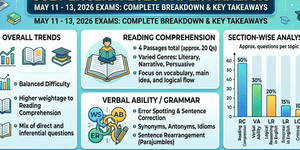
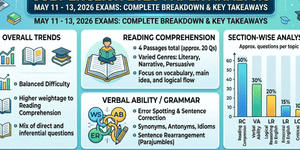
CUET English 2026 Paper Analysis: List of Questions asked from May 11 to 13; Most Important Topics
CUET English 2026 tests held from May 11 to May 13 showed an increasing trend of difficulty levels in the shift-wise test papers with respect to paper patterns, which transitioned from Easy-Moderate to Moderate-Tough. The students felt that NTA had made an effort to ensure that vocabulary, grammar, and comprehension sections were adequately covered.
Top Courses at Maya Devi University
Related Questions
Related News







Similar Colleges


Explore More Engineering Colleges in Uttarakhand
By Degree
By Specialization
By Degree
By Specialization

