
- We’re on your favourite socials!


 Bengaluru (Karnataka)
 Gallery

GATE No Longer Required for M.Tech Admissions at IISc Bangalore
IISc Bangalore has announced admissions for its MTech programme for the academic year 2024-25. In a significant departure from the norm, IISc has declared that qualifying in the Graduate Aptitude Test in Engineering (GATE) is not a prerequisite for admission to this programme.
The MTech programme is open to graduates from any Centrally Funded Technical Institution who have completed a minimum four-year course and have secured a minimum CGPA of 8.0 out of 10 or its equivalent. The programme offers a total of 37 seats across various specialisations, including Artificial Intelligence, Computational & Data Sciences, Electronics and Communication Engineering, Electronic Systems Engineering, Electronic Product Design, Mechanical Engineering, Semiconductor Technology, and Robotics and Autonomous Systems.
The selection process for the MTech will be based on Career Analysis Marks, which will carry a 70% weightage, and performance in an interview, which will carry a 30% weightage. The online application process will commence on March 20, 2024, and the last date for online submission of applications is April 29, 2024.
IISc Bangalore wins the Prestigious Praj IISER Mimamsa 2026
IISc Bangalore has won the prestigious National Level Science Competition, Praj-IISER Pune ‘Mimamsa 2023’. The grand finale was held at the CV Raman Auditorium, IISER Pune on Sunday, 9th April 2023, where Dr. Pramod Chaudhari, founder and executive chairman of Praj Industries, presented the Winner’s Trophy and Certificates to the winning team. The three-day finale involved problem-solving rounds that required participants to focus on critical thinking and science fundamentals.
This year's Mimamsa competition witnessed a remarkable increase in participation, with 1384 teams represented by over 4800 students from around 450 colleges across the country. Notably, there was a significant rise in the participation of all-girls teams, with 332 teams making it to the finals - a 66% increase from the previous year. The four teams that made it to the finals were IISc Bangalore, IIT Bombay, IIT Delhi, and IIT Madras. Since 2019, Praj Industries has been associated with Mimamsa, contributing to the competition's scale-up in all aspects. In the past three years, Mimamsa has grown by 375% in terms of student participation and by 312% in terms of institute participation.
Prof. Jayant Udgaonkar, Director, IISER Pune, expressed his delight in continuing the association with Praj Industries, who have agreed to sponsor the Mimamsa science competition for another three years. With Praj's support, the competition's profile as the nation's premier science competition has grown significantly, and the organisers hope to forge ahead with this unique industry-academia collaboration.
In his valedictory address, Dr. Pramod Chaudhari, founder chairman of Praj Industries, extended his congratulations to the winning team from IISc Bangalore and praised all the participants for their remarkable efforts. He expressed his pleasure in strengthening their partnership with IISER to grow Mimamsa further, highlighting the importance of focusing on science fundamentals critical for innovation and research, particularly in an era dominated by digital technologies. With an increasing participation from top-ranked institutes, Mimamsa provides an ideal platform for budding science enthusiasts to showcase their skills and demonstrate their capabilities in STEM (Science, Technology, Engineering, and Mathematics) fields.
IISC Bangalore News

Colleges Accepting CEED 2026 Score: Courses Offered & Fees
Googling for colleges accepting CEED 2026 scores? You have landed on the right page! The CEED 2026 exam was conducted on January 18, 2026, by IIT Bombay for admission into MDes and PhD design programs. You can get seats in colleges that will be accepting the CEED 2026 scores, which include IIT Bombay, IIT Delhi, IIT Kanpur, VIT Chennai, and many more. Colleges accepting the scores of CEED 2026 will shortlist the candidates based on their performance or CEED 2026 score. After the declaration of the CEED 2026 result on March 4, 2026, it is followed by a CEED 2026 merit list of qualified candidates. IIT Bombay will publish the CEED 2026 cutoff marks for Part A on January 20, 2026, in the form of mean and standard deviations. For more details on colleges accepting CEED 2026 scores, please read the full article below.
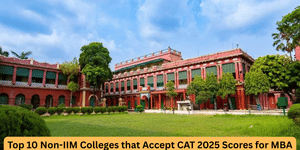
Top 10 Non-IIM Colleges that Accept CAT 2025 Scores for MBA Admissions in India
Students looking for the list of best non-IIM MBA colleges in India can consider applying to IIT Delhi, XLRI Jamshedpur, FMS Delhi, IIT Bombay, MDI Gurgaon, JBIMS, SPJIMR, IMT Ghaziabad, IIT Kharagpur, and MICA Ahmedabad.
Besides the Indian Institutes of Management (IIMs) in India, students can pursue management courses from more than 1000 colleges through the CAT exam. These non-IIM colleges that accept CAT 2025 scores for MBA admissions are renowned for providing quality education, research facilities, and placement opportunities. The average course fees at these non-IIM MBA colleges usually fall within the range of INR 3,60,000 and INR 28,00,000.
Related News

VITEEE Question Paper 2026 (Out): Day-wise Questions Asked with Answer Key
Vellore Institute of Technology is conducting the VITEEE 2026 exam from April 28 to May 3, 2026, in multiple slots. The entrance exam is scheduled in two shifts: Shift 1 (morning) from 9:30 AM to 12:00 PM, and Shift 2 (afternoon) from 2:30 PM to 5:00 PM. Reportedly, over 2.5 lakh students are appearing for VITEEE 2026 to secure an engineering seat at VIT campuses across Vellore, Chennai, Bhopal or Amaravati (Andhra Pradesh).

Will CSE Admission be Possible for 15,000 Rank in VITEEE 2026?
If you obtain a 15,000 rank in VITEEE 2026, you will likely be placed in the top bracket. However, when it comes to determining your branch and campus, VIT’s category-based fee structure along with your VITEEE rank is the deciding factor. Realistically, admission into B.Tech CSE with 15,000 rank in VITEEE 2026 is possible indeed - but the choice of campus and the tuition fee you pay will vary depending on the popularity of the branch.

VITEEE 2026 CSE Expected Safe Score and Rank Analysis
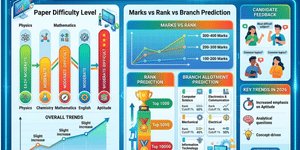
Getting a CSE seat at VIT Vellore is a great achievement for engineering aspirants. Ranked 16th in the Engineering category under the latest NIRF Rankings 2025, the institute provides great learning opportunities with excellent placements. VIT CSE average package for last year’s batch was recorded at INR 14.8 LPA, which again, is one of the key attractions for many. As the VITEEE 2026 entrance exam is underway, the most common query among students is ‘How much do I need to score to get CSE at VIT?’ The answer is not that simple. Unlike other engineering entrance exams, VIT follows a unique category-based marks vs rank system. Ideally, for Category 1, 450+ marks out of 500 can be considered a safe score for CSE branch at VIT Vellore.

KCET 2026 Rank Predictor: Expected Rank for 50, 80, 100, 120, 150 Marks
The KCET 2026 exam is over and the results are expected to be out in May 2026. While you await the results, understanding how your marks determine your rank can help you shortlist your dream college. Based on historical analysis and past year’s cutoff data, KCET 2026 rank predictor gives you a detailed breakdown of your predicted rank for 40, 80, 100, 120, 150 marks and so on. Whether your aim is to secure a spot in the top 500 rankholders, or you are looking for the best engineering colleges in the mid-score range, find out here what the KCET 2026 expected rank distribution would look like.

KCET 2026 Expected Cutoff: College-Wise & Branch-Wise Opening-Closing Ranks
To secure admission into premier engineering/ pharmacy/ agricultural colleges in Karnataka, qualifying the KCET exam is mandatory, especially for government-aided seats. As KCET 2026 concludes, many of you must be thinking ‘What is the expected cutoff for top branches?’ If you are aiming for a reputed institute, such as the RV College of Engineering, KCET 2026 expected cutoff rank for B.Tech CSE branch will likely range anywhere between 150 and 550; for B.Tech ECE branch, the predicted cutoff range is 800-2,500; and for Civil or Mechanical branch, the cutoff rank is expected to vary from 15,000 to 25,000. Based on the past year’s cutoff trends, we have shared branch-wise KCET 2026 predicted cutoff ranks in top-tier colleges, such as BMS College of Engineering, MS Ramaiah Institute of Technology, RVCE and so on. Read on to assess your admission chances!
Top Courses at IISC Bangalore
Related Questions
Admission Updates for 2026
Impact College of Engineering and Applied Sciences, Bangalore
Bengaluru (Karnataka)
Ramaiah University of Applied Sciences
Bengaluru (Karnataka)
AMC College (Administrative Management College)
Bengaluru (Karnataka)
Jain University Bangalore
Bengaluru (Karnataka)
Dayananda Sagar Institutions
Bengaluru (Karnataka)
Related News







Similar Colleges


Explore More Engineering Colleges in Karnataka
By Degree
By Specialization
By Degree
By Specialization

