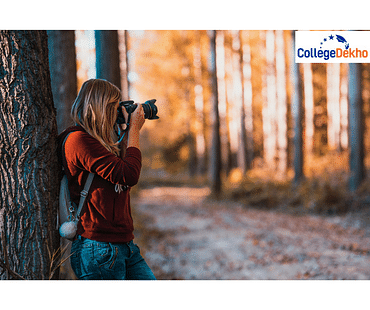
The ITI Photographer syllabus includes concepts like camera handling and shooting techniques, lighting techniques, professional and commercial photography etc. The detailed ITI photographer syllabus can be checked here in this article.
ITI Photographer Syllabus:
The syllabus of ITI photographer trade is meticulously designed to provide candidates with comprehensive training, necessary skills and extensive knowledge in photography, thereby preparing them for a successful career in the dynamic and evolving field of visual arts. ITI Photographer Trade Syllabus focuses on developing both the technical and artistic skills necessary to excel as a professional photographer. Students who successfully complete the trade can expect to be employed as an Event photographer (weddings, corporate events, etc.), Videographer/Filmmaker, Photojournalist, Studio photographer, Photography Assistant. Candidates can check this article to know more about the ITI photographer trade syllabus.
ITI Photographer Syllabus: Topics and Concepts
The detailed syllabus of ITI Photographer can be checked from the below table.
Syllabus
|
Topics
|
Related Concepts
|
|---|
Trade Theory
|
Introduction to Photography
| -
History of Photography
-
Basic principles of photography
-
Different types of cameras (Analog & Digital)
-
Introduction to lenses (prime, zoom, telephoto, macro)
-
Camera settings (Aperture, Shutter speed, ISO)
|
Lighting Techniques
| -
Basics of lighting (natural and artificial)
-
Lighting in different scenarios (indoor, outdoor, low light, studio)
-
Use of reflectors, diffusers, and softboxes
-
Understanding light sources (hard vs. soft light, colour temperature)
|
Post-production Techniques
| -
Introduction to photo editing software (Adobe Photoshop, Lightroom)
-
Basic editing techniques (cropping, exposure correction, colour balance)
-
Advanced techniques (retouching, HDR, panorama)
-
Image enhancement and restoration
-
Working with layers and masks
-
Colour correction and filters
|
Portfolio Development and Client Interaction
| -
Creating a photography portfolio
-
Understanding client needs and creative briefs
-
Working with models and clients
-
Pre-production planning and post-production workflow
|
Photographic Equipment and Accessories
| -
Camera body types (DSLR, mirrorless, compact, etc.)
-
Lenses and filters (types, use cases, cleaning, and maintenance)
-
Tripods, monopods, light metres
-
Flash and external lighting equipment
-
Memory cards and storage
|
Composition and Framing
| -
Principles of composition (rule of thirds, golden ratio, leading lines)
-
Framing the subject in different types of photography
-
Focus, depth of field, and perspective
-
Shooting techniques (long exposure, freeze, motion blur)
|
Digital Photography
| -
Introduction to digital cameras (DSLR, Mirrorless, etc.)
-
Working with sensors and resolution
-
Image formats (JPEG, RAW, TIFF, etc.)
-
Digital camera settings and their effects
-
Camera maintenance and troubleshooting
|
Photography Styles and Genres
| -
Portrait photography (studio vs. outdoor)
-
Landscape photography
-
Street and documentary photography
-
Product and commercial photography
-
Fashion photography
-
Macro photography
-
Wildlife and sports photography
|
Image Output and Printing
| -
Preparing images for print
-
File formats for printing
-
Colour calibration for printing
-
Types of printing paper and finishes
-
Photo albums and framing
|
Trade Practical
|
Basic Camera Operations
| -
Handling and operating different types of cameras
-
Using manual and auto settings
-
Adjusting ISO, aperture, and shutter speed
-
Focusing techniques (manual vs. auto)
|
Practical Photography Sessions
| -
Portrait photography (using reflectors, backdrops, posing models)
-
Landscape and nature photography (field trips, light control)
-
Macro photography (close-ups, understanding magnification)
-
Night photography (long exposure, light trails)
|
Practical Lighting Techniques
| -
Setting up studio lighting
-
Working with continuous and strobe lights
-
Portrait lighting setups (Rembrandt, Butterfly, Loop, etc.)
-
Outdoor and natural light photography
|
Post-production Practical
| -
Image correction using software
-
Batch editing for time efficiency
-
Retouching and creating composites
-
Designing photo albums
-
Preparing images for web and social media
|
Workshop Calculation and Science
|
Mathematics in Photography
| -
Focal length and depth of field calculations
-
Ratio and proportion in composition
-
Basic calculations for lens aperture (f-stop) and shutter speed
|
Science in Photography
| -
Basic optics (light, lenses, reflection, refraction)
-
Colour theory and temperature
-
Properties of light (diffraction, polarisation)
|
Engineering Drawing
|
-
| -
Drawing basic geometric shapes and figures
-
Understanding perspective and angles in photography
-
Drawing and visualising studio setups and lighting diagrams
|
Employability Skills
|
Communication Skills
| -
Verbal and non-verbal communication
-
Interpersonal communication with clients
|
Information Technology (IT) Skills
| -
Introduction to computers (hardware, software)
-
Using computer applications for photographers (photo editing, storage)
-
Basic use of the internet and social media for promotion
|
Entrepreneurship Development
| -
Basics of business management in photography
-
Building a photography business
-
Legal aspects of photography (copyright, contracts)
-
Marketing and networking as a photographer
|
Structure of ITI Photographer Trade
The distribution of training hours across ITI Photographer trade can be checked here in the below table.
Course Syllabus
|
National Training Hours
|
|---|
Trade Practical
|
840
|
Trade Theory
|
240
|
Employability Skills
|
120
|
Total
|
1200
|
Assessment for ITI Photographer Trade
Candidates can check in detail about the ITI Photographer trade assessment process from this section.
Assessment Process
The assessment process will be based on internal assessment and final assessment. The process involved is explained in detail below.
-
Internal Assessment - It is a form of continuous assessment completely based on the Formative Assessment Method. Here, the training institute will maintain a detailed individual trainee portfolio
-
Final Assessment - The final assessment will be in the form of a summative assessment. The final assessment will be conducted by the Controller of examinations, DGT. Before marking the practical examination the individual trainee’s profile will also be assessed
Method of Assessment Criteria
The following evidence will be checked as methods of assessment for ITI Photographer Trade.
-
Job Carried out in Labs / Workshops
-
Record Book / Daily Diary
-
Answer Sheet of Assessment
-
Viva-Voce
-
Progress Chart
-
Attendance and Punctuality
-
Assignment
-
Project Work
ITI Photographer Trade Marking Scheme
Candidates can follow the below table to learn about the marking scheme for internal assessment.
Grade
|
Particulars
|
|---|
60% to 75%
| -
The candidate’s work has demonstrated the attainment of an acceptable standard of craftsmanship for performance in this grade, with the assistance of occasional guidance and careful consideration for safety procedures and practices.
-
Displaying proficiency with hand tools, machine tools, and workshop equipment.
-
60–70% accuracy was attained while performing tasks other than those required by the component or job.
-
A respectable degree of uniformity and neatness in the final product.
-
Occasional assistance in finishing the task or project.
|
75% to 90%
| -
For this grade, the candidate has produced work that demonstrates reaching a reasonable standard of craftsmanship while following safety procedures and practices with minimal guidance.
-
Good proficiency with hand tools, machine tools, and workshop equipment.
-
70–80% accuracy was attained while performing tasks other than those required by the component or job.
-
A good degree of uniformity and neatness in the final product.
-
Little assistance in finishing the task or project.
|
Above 90%
| -
For this grade, the candidate has produced work that demonstrates reaching a high standard of craftsmanship while following safety procedures and practices with minimal or no guidance.
-
High level of proficiency with hand tools, machine tools, and workshop equipment.
-
More than 80% accuracy was attained while performing tasks other than those required by the component or job.
-
A high degree of uniformity and neatness in the final product.
-
No or minimal assistance in finishing the task or project.
|
Pass Regulation
When determining the results, courses lasting six months and a year are given 100% weight. Nonetheless, 50% of the total weight is applied to each exam for courses lasting two years. The minimum passing percentage for Trade Practical and Formative Assessment is 60%; however, the minimum passing percentage for other subjects is 33%.
The syllabus of ITI Photographer Trade allows candidates to have a theoretical understanding of the trade as well as practical knowledge making them proficient in the realm of visual arts. The Photographer trade facilitates technical expertise as well as industry-relevant skills, making students employable in industries like e-commerce and advertising agencies.
To get guidance for admission as a Photographer, feel free to dial our toll-free number 1800-572-9877 or fill out CollegeDekho’s
Common Application Form
. An admissions counsellor will be assigned to you to make your journey hassle-free. In case of any queries or concerns, you can write to us in the
QnA zone
.
















Similar Articles
ITI Admissions in India 2026: State-wise Dates, Online Form, Fees, Merit List, Courses and Fees
West Bengal (WBSCVT) ITI Admission 2026: Registration, Merit List, Seat Allotment
List of Government Jobs after ITI: Job Roles, Eligibility, Salary, Recruitment Process
Best ITI Courses After 12th in 2025: Stream-wise, ITI Courses List, Types of Courses
Tamil Nadu ITI Admission 2026: Eligibility, Trades Offered, Colleges List, and Counselling Process
Jharkhand ITI Admission 2025: Spot Round Admission (Ongoing), Trades Available, Top ITI Colleges, Admission Process