


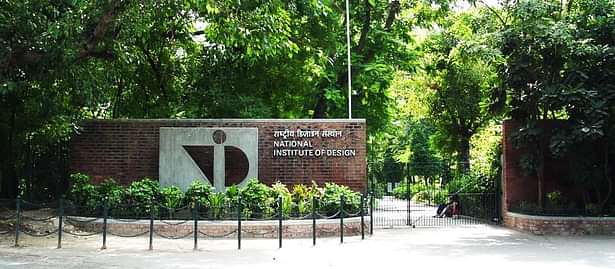
National Institute of Design (NID) Entrance Examination is conducted annually by NID Ahmedabad for seeking admissions to various design courses at National Institute of Design, Ahmedabad Gujarat. The institute works in the form of an autonomous body, under the Department of Industrial Policy and Promotion, Ministry of Commerce and Industry, Government of India. The institute is recognized by the Department of Scientific and Industrial Research, and comes under Ministry of Science and Technology, Government of India, in the form of a scientific and industrial design research organization.
Students seeking admission must know few facts about the entrance examination of National Institute of Design (NID)
1 . The NID entrance exam is split into two phases: Phase 1: The Design Aptitude Test (January) is a written examination of 100 marks for 3 hours. This is to tests the aspirant’s ability in Design Problem Solving, Visual Sense, Observation & Perception, Environmental Awareness, Mental Ability and Communication skills across a range of visual and textual questions.
2 . The institute has updated the pattern of Design Aptitude Test to be conducted on 10th January 2016.
3 . This is the first time that NID has announced a pattern. Even as basically, everything is the same in what NID is looking for in any aspirant. That is, the search is on for Creative Thinking, Critical Thinking, General Awareness & Sensitivity and Presentation Ability.
4. The type of questions and weight-age carried by them has changed. Section A - Multiple Choice Objective Type questions - 70 marks; and Section B - Subjective Type questions - 30 marks.
5. The General Ability Test consists of Quantitative Aptitude, Analytical Aptitude, English, & General Knowledge.
6. The next phase consists of Studio test, Personal Interview and Portfolio presentation. The Studio test generally has 3 parts- doodling, 3D modeling and observation tests.
7. There are 3 stages for the DAT (Design Aptitude Test) – Stage 1 (DAT or Entrance Test), Stage 2 (Studio Test) & Stage 3 (Personal Interview).
8. Design Aptitude Test (Stage 1) for all aspirants will be conducted in the following cities in India: Ahmedabad, Bengaluru, Bhopal, Chandigarh, Chennai, Dehradun, Guwahati, Hyderabad, Kolkata, Lucknow, Mumbai, Nagpur, New Delhi, Ranchi, Thiruvananthapuram, and Vijayawada.
9. Aspirants in the Overseas category (supernumerary seats) applying for either B.Des or M.Des. will have to appear for their DAT, followed by Stage 2 and Stage 3 exams, in Ahmedabad only.
10. On the basis of the scores in DAT (Stage 1), aspirants will be shortlisted. There will a call for the Studio Test (Stage 2), which will be followed by Personal Interviews (Stage 3). The final merit list will be generated, on the basis of sum total of the weighted scores obtained by the aspirants in each stage of the admissions process.
- varun.acharya@collegedekho.com
Add CollegeDekho as a Trusted Source

Are you feeling lost and unsure about what career path to take after completing 12th standard?
Say goodbye to confusion and hello to a bright future!

Was this article helpful?

















Similar Articles
List of MBA Colleges Accepting 50-60 Percentile in CAT 2025
List of Top IIMs in India 2026: Check Rankings, Cutoff, Fees, Courses Offered, Placement
List of MBA Colleges Accepting 90-95 Percentile in CAT 2025
List of Non-IIM MBA Colleges to Apply to Before and After CAT 2025 Exam
CAT Score vs Percentile 2025: Cutoff, Score & Percentile Calculator
List of MBA Colleges Accepting 80-90 Percentile in CAT 2025